
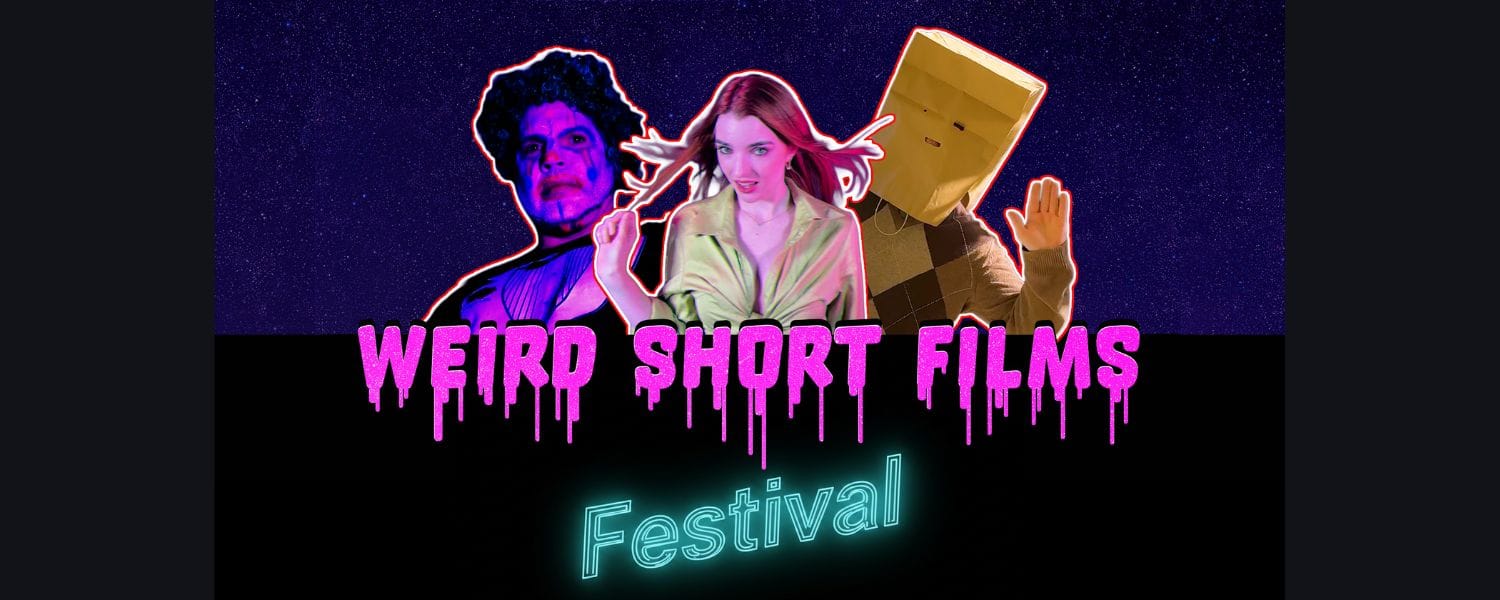
Christopher Wells on the Weird Short Films Festival and the Future of Independent Horror Cinema
In a cultural landscape saturated with formula, predictability, and algorithm-driven storytelling, Christopher Wells is carving out space for something far less comfortable—and far more alive.
As the founder of the Weird Short Films Festival, Wells isn’t just programming films. He’s creating an ecosystem where filmmakers are treated like the main event, where experimentation is rewarded, and where the strange, the unsettling, and the unexpected are not only welcomed—but celebrated.
Wells’ relationship to storytelling began long before he ever stepped behind a camera. Raised in a deeply artistic household, he grew up surrounded by creative dialogue and visual expression. His father, a painter and art teacher working in Romantic Realism, and his mother, who ran The Discovery Art Gallery and later a historical society on Long Island, instilled in him an early understanding of art as both personal practice and community responsibility.
That foundation quickly evolved into something more immersive. While interning at the Cinema Arts Centre in Huntington, Wells found himself at the center of an independent film world that felt immediate and accessible. He wasn’t just watching films—he was engaging with the people behind them, absorbing the process, and understanding the energy that exists between creator and audience. Encounters with artists like Carol Burnett left a lasting impression, reinforcing the idea that encouragement and access can shape a creative trajectory in profound ways.
By the time he reached the School of Visual Arts, filmmaking had become both a craft and a community. Wells recalls the importance of those early collaborative environments—organizing screenings, sharing feedback, and building momentum alongside other emerging creators. It was a space where ambition, structure, and mutual support intersected, proving that meaningful work doesn’t require massive infrastructure—just intention and people willing to show up.
The idea for the Weird Short Films Festival emerged from a moment of disappointment. After experiencing a festival where filmmakers were rushed through interviews and treated as an afterthought, Wells saw a gap that felt impossible to ignore. For creators who often struggle to get their work seen at all, those rare moments of recognition matter. When they’re mishandled, something essential is lost.
That realization became the blueprint.
Rather than replicating the traditional festival model, Wells built something that centers the filmmaker experience at every level. The Weird Short Films Festival treats its participants like VIPs—red carpets, dedicated interviews, and full-scale documentation ensure that each artist has the opportunity to fully inhabit their moment. It’s not just about screening a film; it’s about amplifying the person behind it.
At its core, the festival is drawn to genres that thrive outside the mainstream—horror, B-horror, psychological thrillers, and dark comedy. For Wells, these are not niche categories but some of the most creatively fertile spaces in filmmaking. Influenced by everything from The Twilight Zone to midnight movies and low-budget cult classics, he gravitates toward work that resists formula and embraces risk.
There’s a clarity in his perspective: audiences don’t need more polished repetition—they want to feel something they didn’t see coming.
That ethos extends beyond the screen. The festival itself is designed as a full cultural experience, blending film with live performance, networking, and community interaction. From burlesque acts to post-screening conversations, the event unfolds as a layered environment rather than a passive viewing experience. It begins, fittingly, at 4:20 PM—an intentional nod to the intersection of cannabis culture and creative expression that underpins the festival’s identity.
Set in Brooklyn, the festival draws heavily from its surroundings. For Wells, the city is not just a location but an ongoing source of inspiration. Its density of culture—galleries, parks, strangers, conversations—feeds directly into his work. Prospect Park, in particular, has become a recurring backdrop, a place where he can experiment freely and create without constraints. Whether he’s crafting a psychological thriller or a chaotic, cathartic short film, the environment is always part of the narrative.
Through his production company, Wells continues to develop projects that align with this sensibility. His upcoming film, Elimination Strain, explores sci-fi body horror, while other works range from intimate psychological pieces to experimental shorts shot with minimal resources. There’s a deliberate embrace of limitation in his process—a recognition that constraint can sharpen creativity rather than hinder it.
That mindset informs his advice to emerging filmmakers, which is strikingly direct: be genuine. In an industry often defined by pitching and posturing, Wells emphasizes relationship-building over self-promotion. Supporting other creators, engaging authentically, and contributing to a shared ecosystem, he argues, is far more effective than trying to shortcut the process.
At a broader level, Wells sees genre filmmaking—particularly horror and psychological storytelling—as a reflection of cultural tension. From early works like Frankenstein to contemporary films like The Substance, he points to a lineage of stories that mirror societal anxieties and challenge audiences to confront uncomfortable truths. The best films, in his view, don’t explain—they provoke.
That philosophy is embedded in the festival’s programming. Each selected film is chosen not just for technical execution, but for intention—for its ability to engage, unsettle, or resonate in a way that feels purposeful. It’s a curatorial approach that values voice over perfection and originality over convention.
As the Weird Short Films Festival prepares for its debut, Wells is focused on delivering an experience that lives up to its name. The goal is simple but ambitious: to create a space where audiences are entertained, surprised, and slightly disoriented—in the best possible way.
Looking ahead, his vision expands beyond a single event. Plans for multi-day programming, filmmaker labs, and hands-on workshops signal a broader commitment to nurturing new voices. By guiding creators through no-budget filmmaking processes and providing platforms for their work, Wells aims to build not just a festival, but a pipeline for independent storytelling.
In a world increasingly shaped by sameness, the Weird Short Films Festival stands as a reminder that there is still power in the unexpected. For Wells, “weird” isn’t a label—it’s a philosophy. Something unique. Something slightly off. Something honest.
And maybe that’s exactly what film needs right now.
