
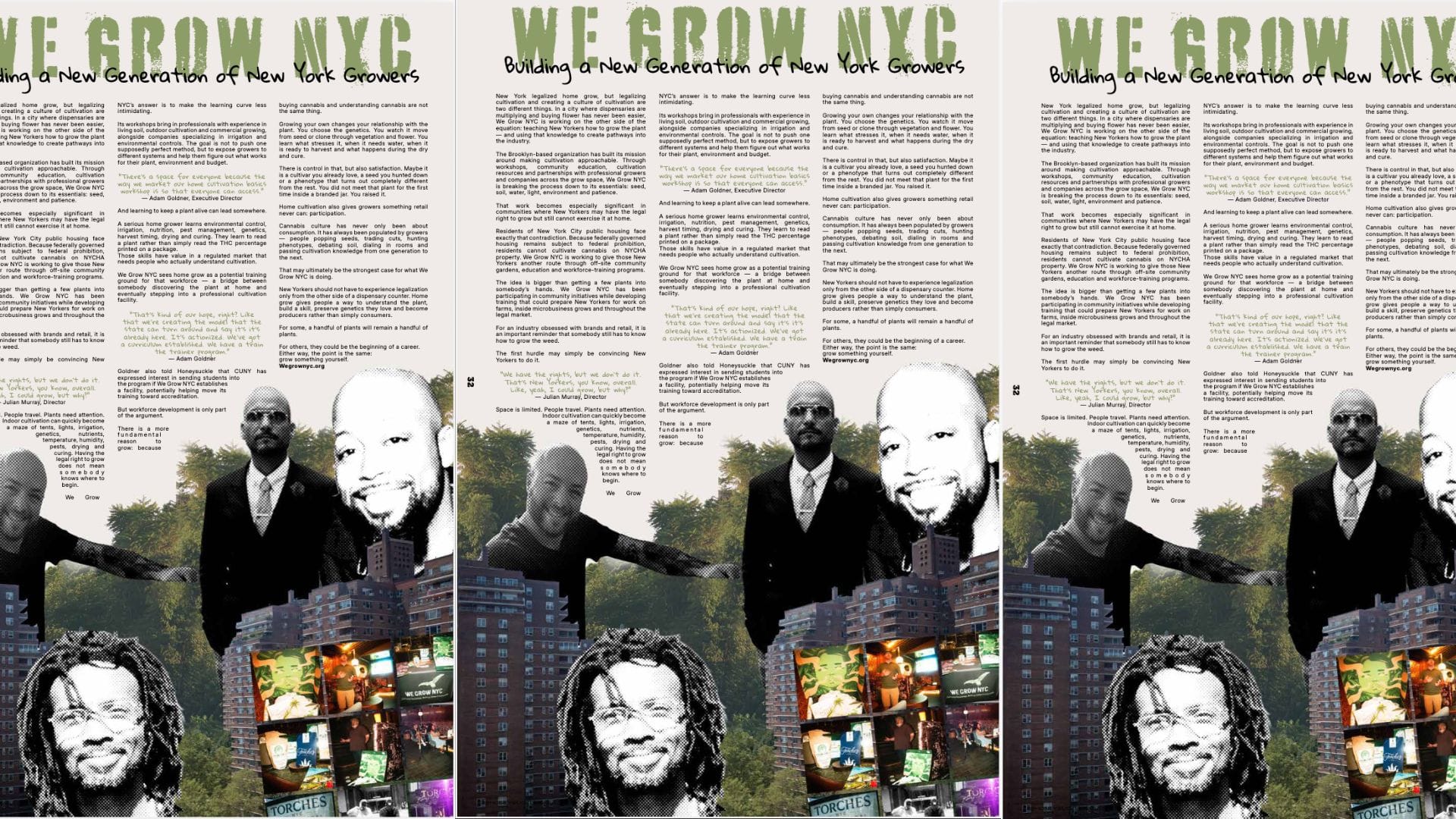
New York legalized home grow, but legalizing cultivation and creating a culture of cultivation are two different things. In a city where dispensaries are multiplying and buying flower has never been easier, We Grow NYC is working on the other side of the equation: teaching New Yorkers how to grow the plant — and using that knowledge to create pathways into the industry.
The Brooklyn-based organization has built its mission around making cultivation approachable. Through workshops, community education, cultivation resources and partnerships with professional growers and companies across the grow space, We Grow NYC is breaking the process down to its essentials: seed, soil, water, light, environment and patience.
That work becomes especially significant in communities where New Yorkers may have the legal right to grow but still cannot exercise it at home.
Residents of New York City public housing face exactly that contradiction. Because federally governed housing remains subject to federal prohibition, residents cannot cultivate cannabis on NYCHA property. We Grow NYC is working to give those New Yorkers another route through off-site community gardens, education and workforce-training programs.
The idea is bigger than getting a few plants into somebody’s hands. We Grow NYC has been participating in community initiatives while developing training that could prepare New Yorkers for work on farms, inside microbusiness grows and throughout the legal market.
For an industry obsessed with brands and retail, it is an important reminder that somebody still has to know how to grow the weed.
The first hurdle may simply be convincing New Yorkers to do it.
“We have the rights, but we don't do it. That's New Yorkers, you know, overall. Like, yeah, I could grow, but why?” — Julian Murray
Space is limited. People travel. Plants need attention. Indoor cultivation can quickly become a maze of tents, lights, irrigation, genetics, nutrients, temperature, humidity, pests, drying and curing. Having the legal right to grow does not mean somebody knows where to begin.
We Grow NYC’s answer is to make the learning curve less intimidating.
Its workshops bring in professionals with experience in living soil, outdoor cultivation and commercial growing, alongside companies specializing in irrigation and environmental controls. The goal is not to push one supposedly perfect method, but to expose growers to different systems and help them figure out what works for their plant, environment and budget.
“There's a space for everyone because the way we market our home cultivation basics workshop is so that everyone can access.” — Adam Goldner
And learning to keep a plant alive can lead somewhere.
A serious home grower learns environmental control, irrigation, nutrition, pest management, genetics, harvest timing, drying and curing. They learn to read a plant rather than simply read the THC percentage printed on a package.
Those skills have value in a regulated market that needs people who actually understand cultivation.
We Grow NYC sees home grow as a potential training ground for that workforce — a bridge between somebody discovering the plant at home and eventually stepping into a professional cultivation facility.
“That's kind of our hope, right? Like that we're creating the model that the state can turn around and say it's it's already here. It's actionized. We've got a curriculum established. We have a train the trainer program.” — Adam Goldner
Goldner also told Honeysuckle that CUNY has expressed interest in sending students into the program if We Grow NYC establishes a facility, potentially helping move its training toward accreditation.
But workforce development is only part of the argument.
There is a more fundamental reason to grow: because buying cannabis and understanding cannabis are not the same thing.
Growing your own changes your relationship with the plant. You choose the genetics. You watch it move from seed or clone through vegetation and flower. You learn what stresses it, when it needs water, when it is ready to harvest and what happens during the dry and cure.
There is control in that, but also satisfaction. Maybe it is a cultivar you already love, a seed you hunted down or a phenotype that turns out completely different from the rest. You did not meet that plant for the first time inside a branded jar. You raised it.
Home cultivation also gives growers something retail never can: participation.
Cannabis culture has never only been about consumption. It has always been populated by growers — people popping seeds, trading cuts, hunting phenotypes, debating soil, dialing in rooms and passing cultivation knowledge from one generation to the next.
That may ultimately be the strongest case for what We Grow NYC is doing.
New Yorkers should not have to experience legalization only from the other side of a dispensary counter. Home grow gives people a way to understand the plant, build a skill, preserve genetics they love and become producers rather than simply consumers.
For some, a handful of plants will remain a handful of plants.
For others, they could be the beginning of a career.
Either way, the point is the same: grow something yourself.
Read more about We Grow NYC in our current print edition.
For more visit https://wegrownyc.org/ and Instagram,
