
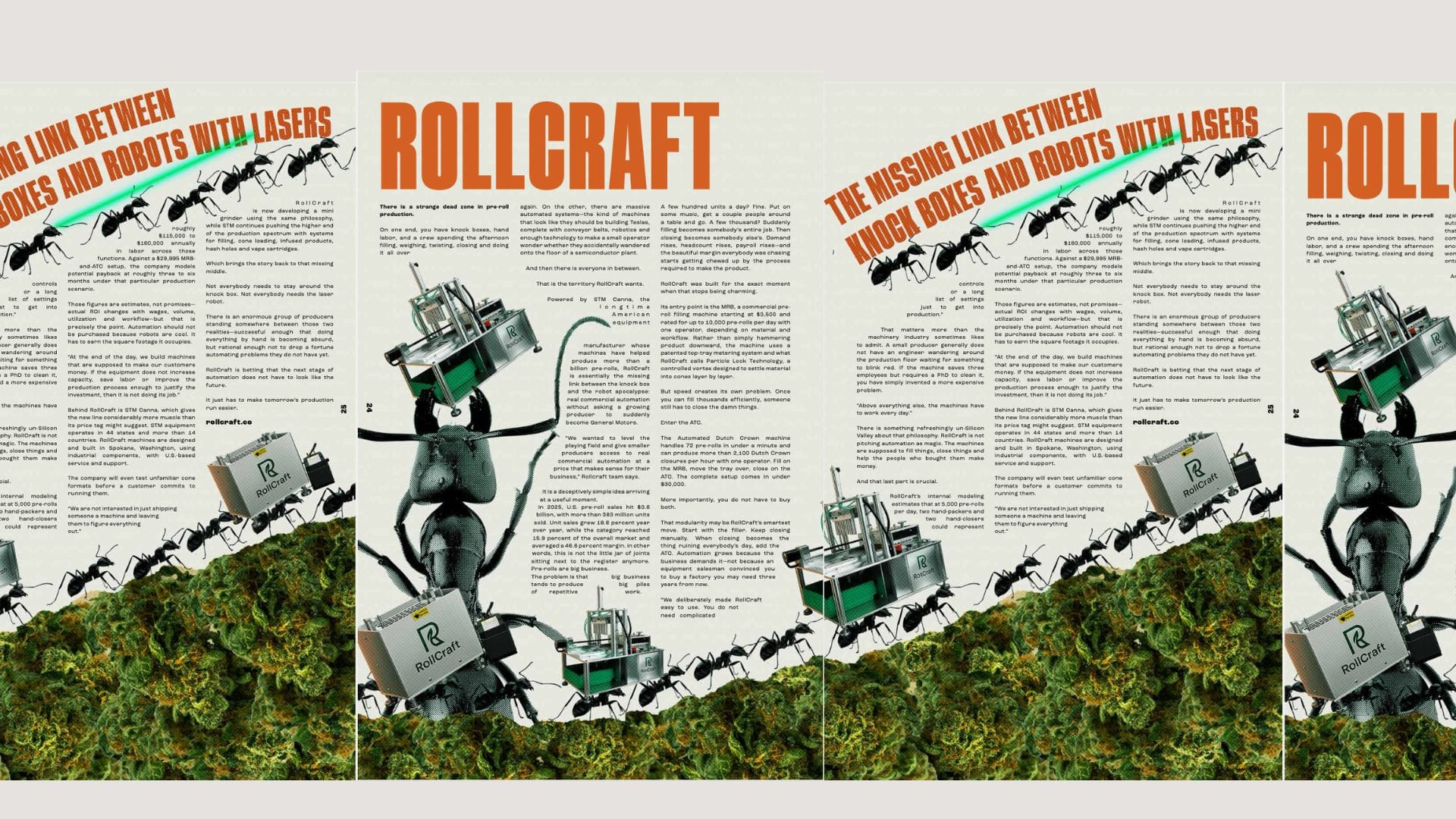
The Missing Link Between Knock Boxes and Robots With Lasers
There is a strange dead zone in pre-roll production.
On one end, you have knock boxes, hand labor, and a crew spending the afternoon filling, weighing, twisting, closing and doing it all over again. On the other, there are massive automated systems—the kind of machines that look like they should be building Teslas, complete with conveyor belts, robotics and enough technology to make a small operator wonder whether they accidentally wandered onto the floor of a semiconductor plant.
And then there is everyone in between.
That is the territory RollCraft wants.
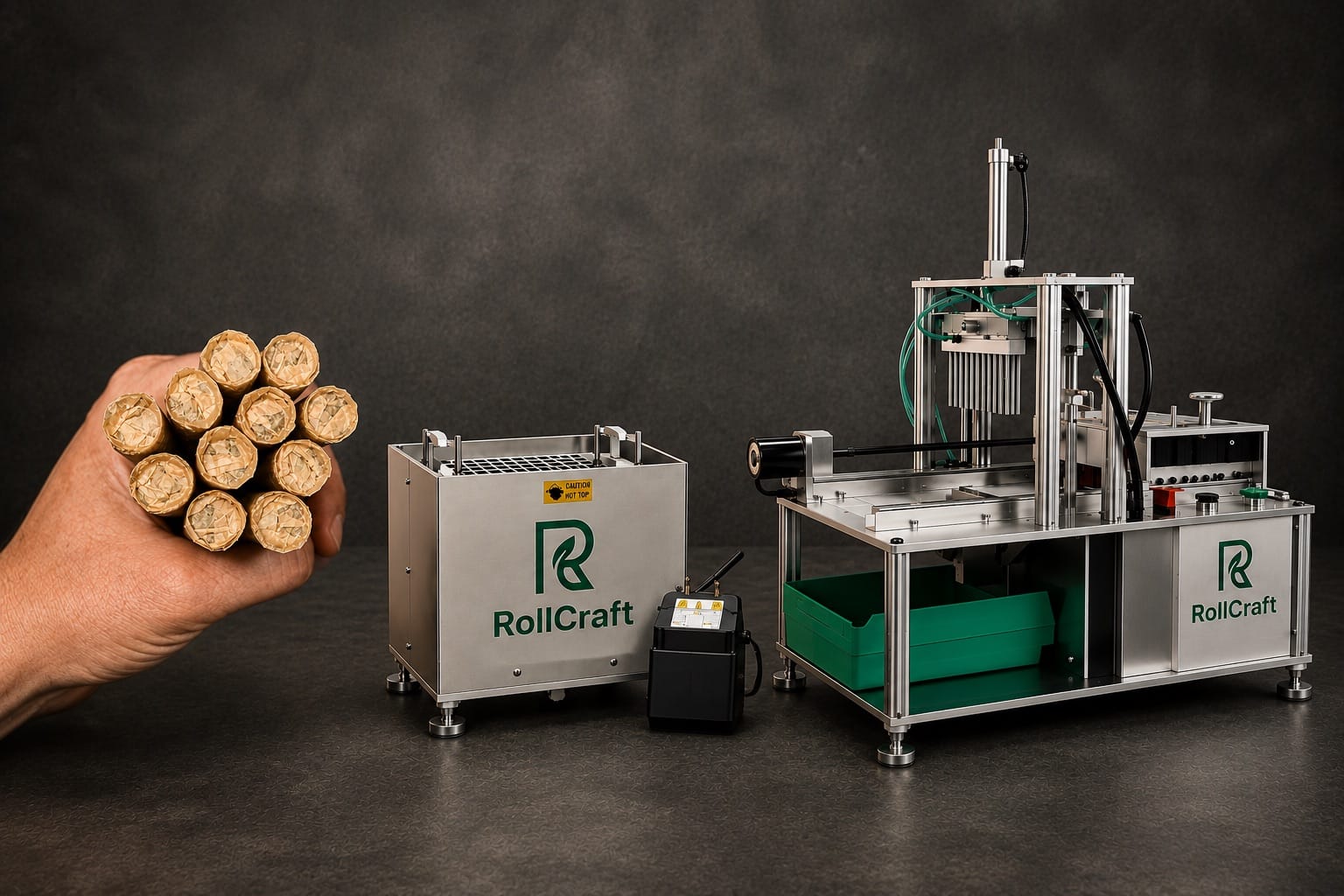
Powered by STM Canna, the longtime American equipment manufacturer whose machines have helped produce more than a billion pre-rolls, RollCraft is essentially the missing link between the knock box and the robot apocalypse: real commercial automation without asking a growing producer to suddenly become General Motors.
“We wanted to level the playing field and give smaller producers access to real commercial automation at a price that makes sense for their business.”
It is a deceptively simple idea arriving at a useful moment.
In 2025, U.S. pre-roll sales hit $3.6 billion, with more than 383 million units sold. Unit sales grew 18.6 percent year over year, while the category reached 15.9 percent of the overall market and averaged a 46.6 percent margin. In other words, this is not the little jar of joints sitting next to the register anymore. Pre-rolls are big business.
The problem is that big business tends to produce big piles of repetitive work.
A few hundred units a day? Fine. Put on some music, get a couple people around a table and go. A few thousand? Suddenly filling becomes somebody’s entire job. Then closing becomes somebody else’s. Demand rises, headcount rises, payroll rises—and the beautiful margin everybody was chasing starts getting chewed up by the process required to make the product.
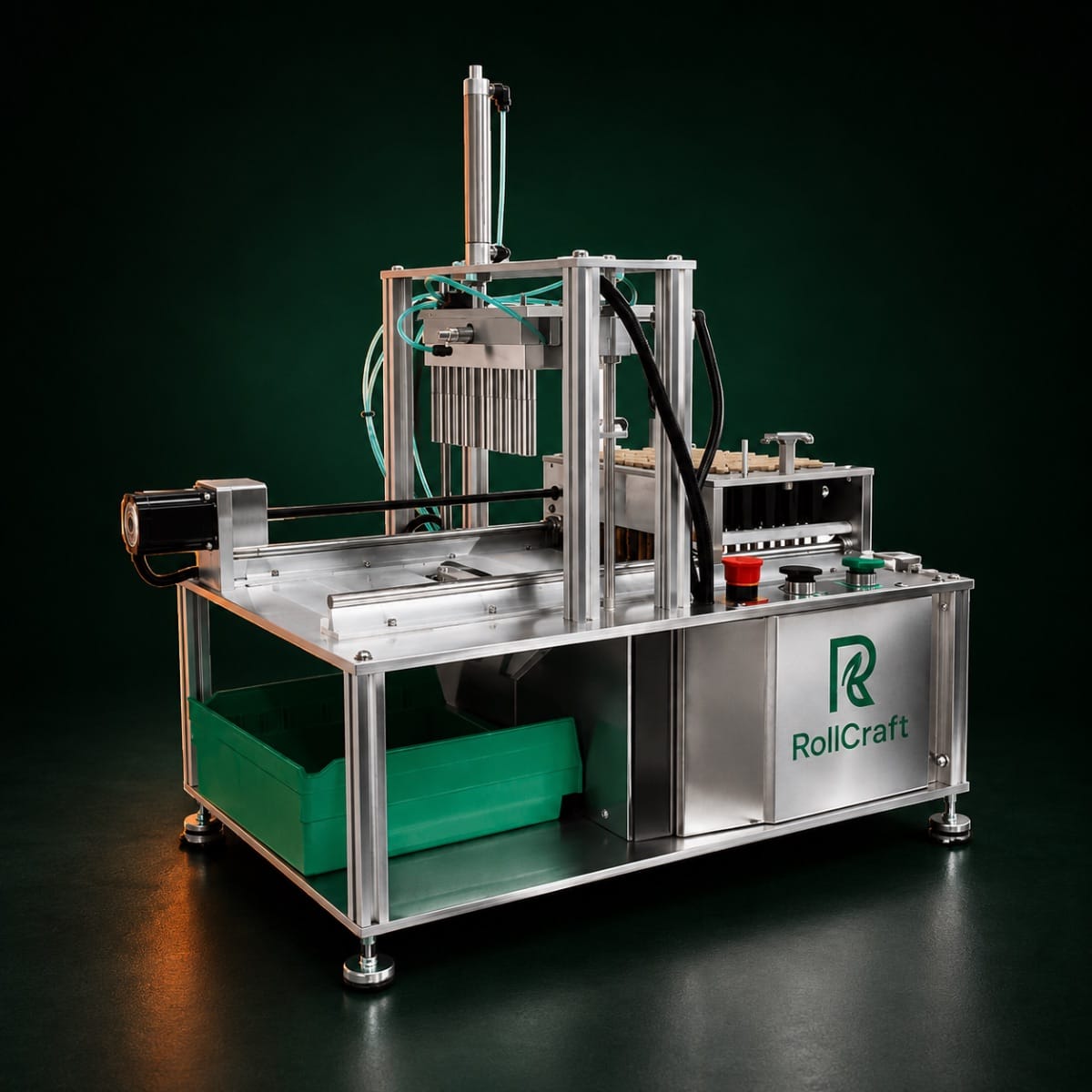
RollCraft was built for the exact moment when that stops being charming.
Its entry point is the MRB, a commercial pre-roll filling machine starting at $3,500 and rated for up to 10,000 pre-rolls per day with one operator, depending on material and workflow. Rather than simply hammering product downward, the machine uses a patented top-tray metering system and what RollCraft calls Particle Lock Technology, a controlled vortex designed to settle material into cones layer by layer.
But speed creates its own problem. Once you can fill thousands efficiently, someone still has to close the damn things.
Enter the ATC.
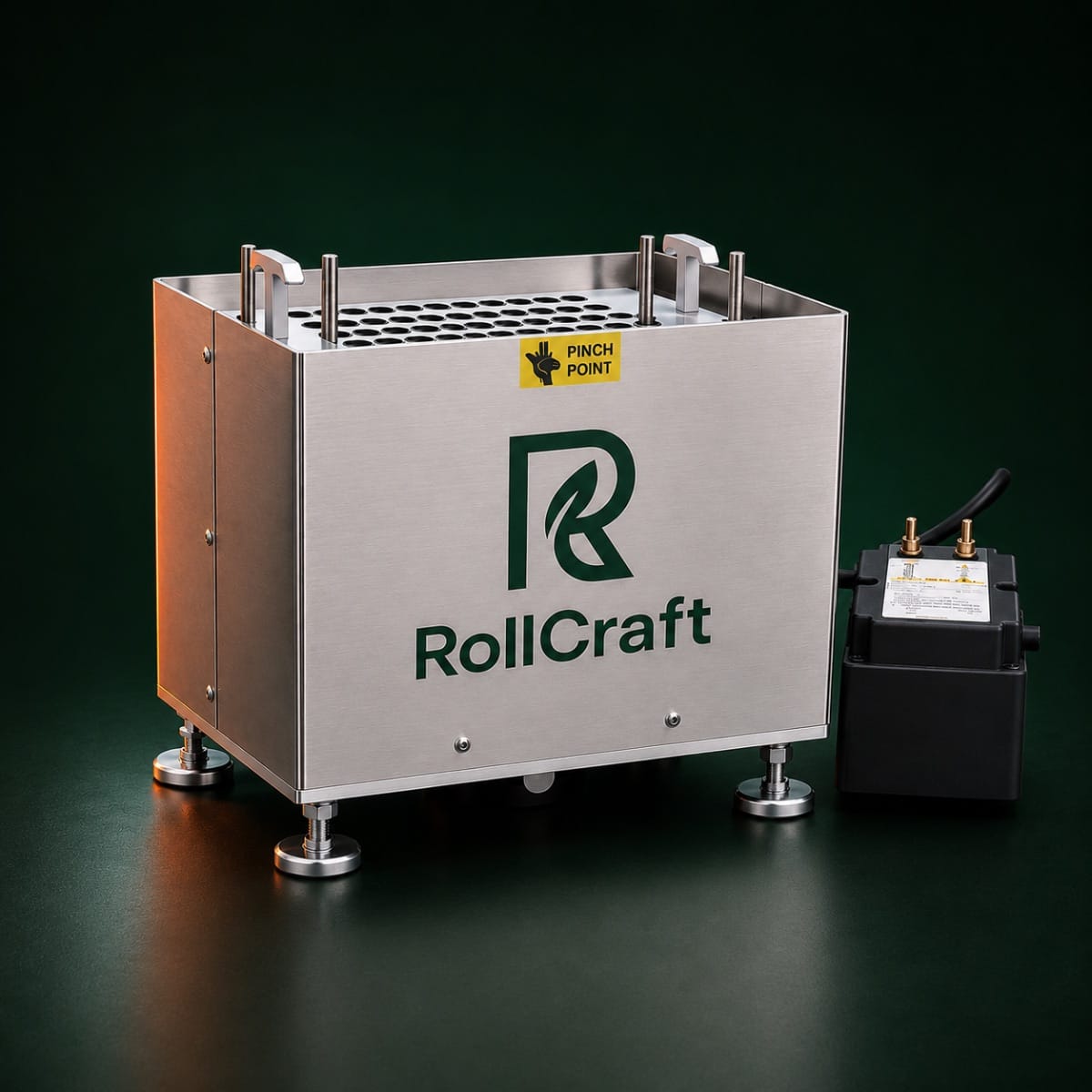
The Automated Dutch Crown machine handles 72 pre-rolls in under a minute and can produce more than 2,100 Dutch Crown closures per hour with one operator. Fill on the MRB, move the tray over, close on the ATC. The complete setup comes in under $30,000.
More importantly, you do not have to buy both.
That modularity may be RollCraft’s smartest move. Start with the filler. Keep closing manually. When closing becomes the thing ruining everybody’s day, add the ATC. Automation grows because the business demands it—not because an equipment salesman convinced you to buy a factory you may need three years from now.
“We deliberately made RollCraft easy to use. You do not need complicated controls or a long list of settings just to get into production.”
That matters more than the machinery industry sometimes likes to admit. A small producer generally does not have an engineer wandering around the production floor waiting for something to blink red. If the machine saves three employees but requires a PhD to clean it, you have simply invented a more expensive problem.
“Above everything else, the machines have to work every day.”
There is something refreshingly un-Silicon Valley about that philosophy. RollCraft is not pitching automation as magic. The machines are supposed to fill things, close things and help the people who bought them make money.
And that last part is crucial.
RollCraft’s internal modeling estimates that at 5,000 pre-rolls per day, two hand-packers and two hand-closers could represent roughly $115,000 to $160,000 annually in labor across those functions. Against a $29,995 MRB-and-ATC setup, the company models potential payback at roughly three to six months under that particular production scenario.
Those figures are estimates, not promises—actual ROI changes with wages, volume, utilization and workflow—but that is precisely the point. Automation should not be purchased because robots are cool. It has to earn the square footage it occupies.
“At the end of the day, we build machines that are supposed to make our customers money. If the equipment does not increase capacity, save labor or improve the production process enough to justify the investment, then it is not doing its job.”
Behind RollCraft is STM Canna, which gives the new line considerably more muscle than its price tag might suggest. STM equipment operates in 44 states and more than 14 countries. RollCraft machines are designed and built in Spokane, Washington, using industrial components, with U.S.-based service and support.
The company will even test unfamiliar cone formats before a customer commits to running them.
“We are not interested in just shipping someone a machine and leaving them to figure everything out.”
RollCraft is now developing a mini grinder using the same philosophy, while STM continues pushing the higher end of the production spectrum with systems for filling, cone loading, infused products, hash holes and vape cartridges.
Which brings the story back to that missing middle.
Not everybody needs to stay around the knock box. Not everybody needs the laser robot.
There is an enormous group of producers standing somewhere between those two realities—successful enough that doing everything by hand is becoming absurd, but rational enough not to drop a fortune automating problems they do not have yet.
RollCraft is betting that the next stage of automation does not have to look like the future.
It just has to make tomorrow’s production run easier.
Learn more about RollCraft online and in print found here!
Learn more at https://stmcanna.com and Youtube.
