
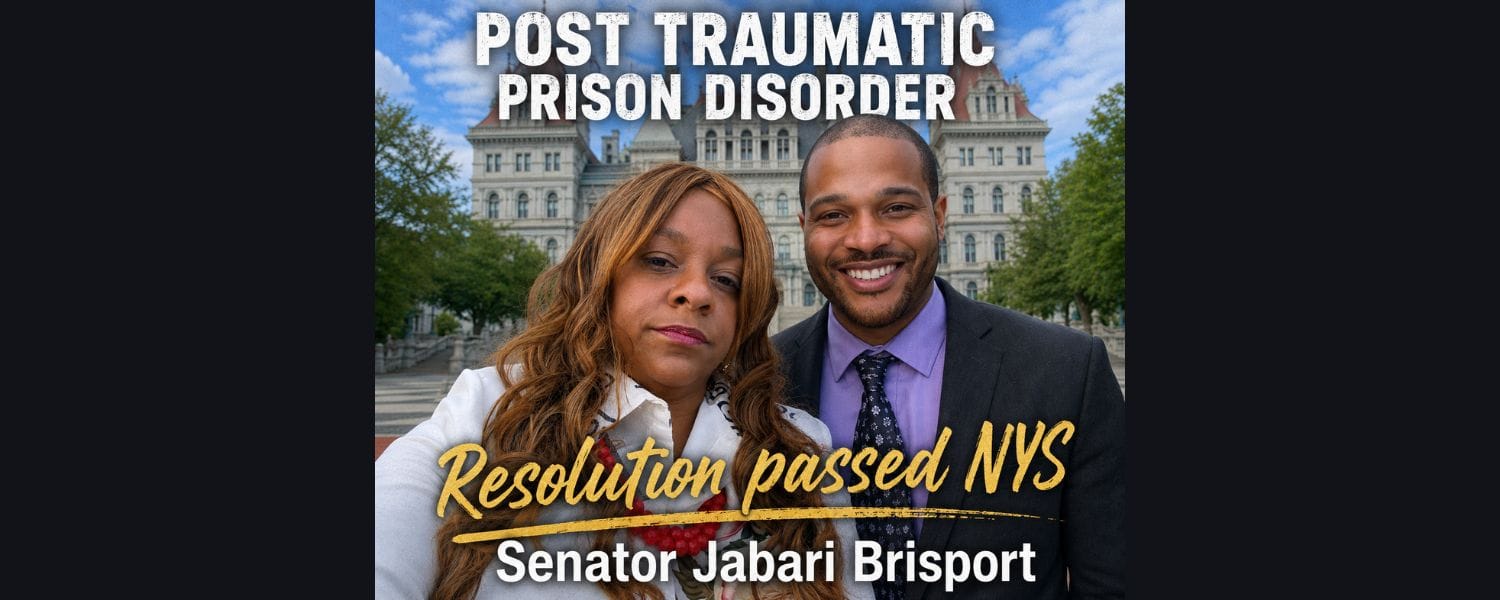
In a historic and deeply emotional moment on the floor of the New York State Senate, a resolution recognizing Post Traumatic Prison Disorder (PTPD) was passed — a powerful acknowledgment of the lasting mental, emotional, and generational impact incarceration has on individuals, children, families, and communities across this country.
At a time when Mental Health Awareness Month calls this nation to confront trauma honestly, this resolution arrives as more than legislation. It is a declaration that the lives of impacted people matter. It is recognition that survival after incarceration, foster care, family separation, violence, and systemic punishment requires healing, restoration, and humanity.
The United States remains one of the most punitive countries in the world. Mass incarceration has devastated generations of families, disproportionately impacting Black communities, poor communities, and children born into systems they did not create. The consequences of incarceration do not end at prison gates. They travel home with people. They live in our bodies, our relationships, our neighborhoods, our health outcomes, and our children’s futures.
Post Traumatic Prison Disorder (PTPD) — a groundbreaking acknowledgment of the deep psychological, emotional, and generational trauma caused by incarceration and systemic punishment in America.
This moment is larger than legislation.
It is a public recognition that mass incarceration impacts not only the incarcerated, but entire families, children, neighborhoods, and communities across this country. It acknowledges that trauma does not end when someone leaves prison. It follows people home. It impacts mental health, parenting, relationships, physical health, economic stability, and community wellness for generations. The United States remains one of the most punitive nations in the world. For decades, incarceration has become America’s response to poverty, addiction, trauma, mental illness, and social inequity. Entire communities have been destabilized by systems that punish symptoms while ignoring root causes. But there is another path.
We can legislate with humanity.
We can restructure systems rooted in punishment.
We can create healing-centered policies that believe in restoration, accountability, redemption, and second chances.
For Dr. Shawanna E. Vaughn, founder of Silent Cry Inc.
This work is deeply personal.
Born in prison to her mother Joyce A. Vaughn, her life began inside the walls of incarceration. Her childhood journey through foster care exposed the painful reality that too many vulnerable children are funneled into detention centers and prisons instead of receiving healing, support, and opportunity.
As a formerly incarcerated woman herself, Dr. Vaughn understands firsthand the long-lasting impact incarceration has on the human mind and spirit.
Yet her story is also one of extraordinary resilience. She survived. She is forever healing
She became a mother — which she calls the greatest and most meaningful role she has ever held.
She earned an honorary doctorate, authored legislation, sustained a nonprofit organization for more than twenty years, and became a national advocate for justice, mental health, and human dignity.
Dr. Vaughn often explains that healing from trauma is ongoing — much like managing diabetes. It requires care, maintenance, support, honesty, and continual work. Healing is not linear, but it is possible.“This is for every child born into adverse life experiences. This is for our parents. This is for all of us impacted by incarceration and trauma. I am my ancestors’ wildest dreams.”This resolution represents years of labor by advocates, organizers, legislators, survivors, and community leaders across the country.
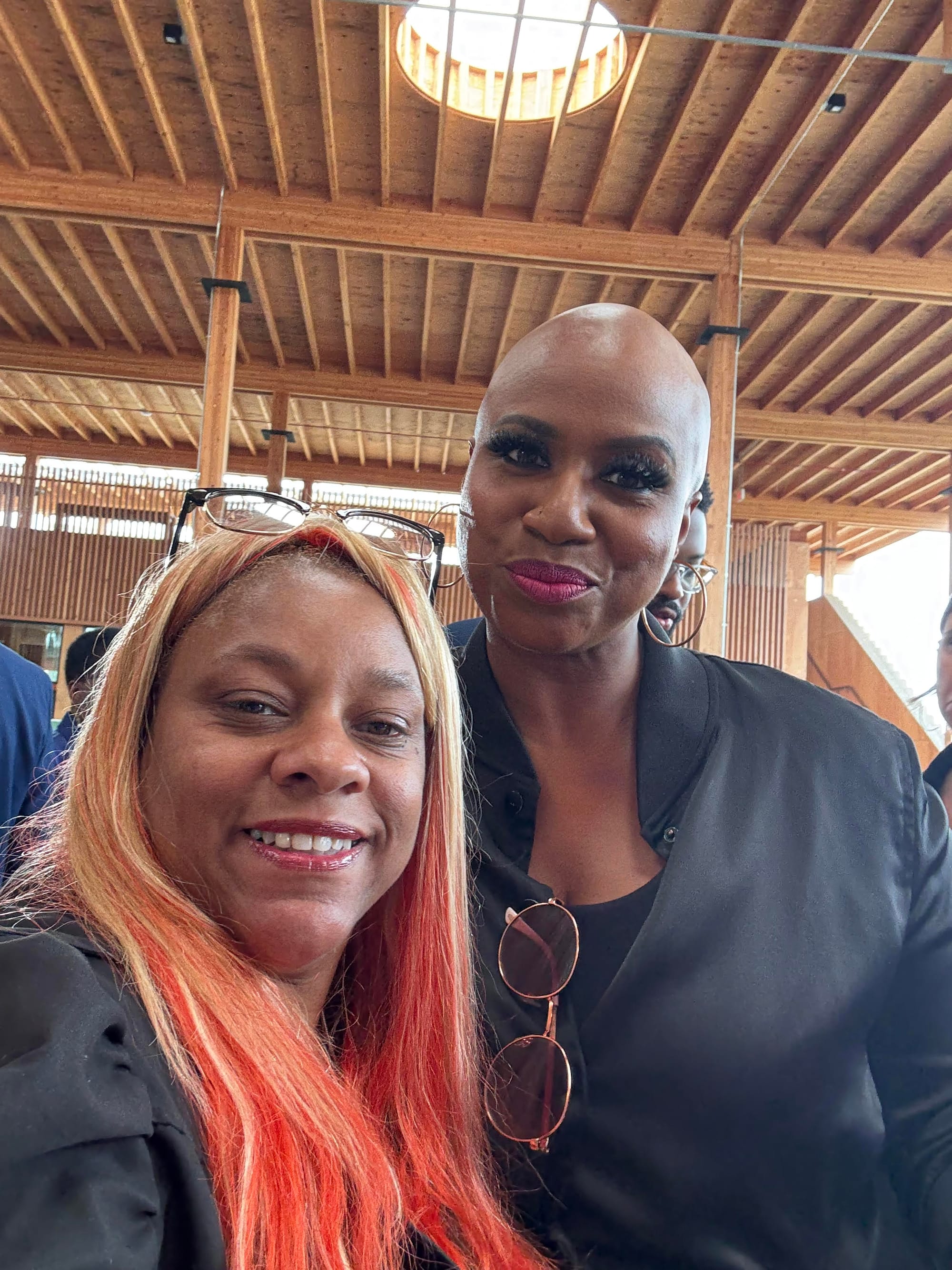
Special recognition is extended to:
- Senator Jabari Brisport of New York
- Assemblywoman Amanda Septimo of the Bronx, New York
- Representative Stephanie Young of Michigan, sponsor of the Michigan legislation
- Detroit City Council member Denzel Campbell for his diligent support and advocacy
- Congresswoman Ayanna Pressley
- Congressman Troy Carter for his extraordinary support
- Senator Dora Drake
- Britton Smith, strategist and advocate
- CORE in Washington, D.C., for advancing this work in the DMV region
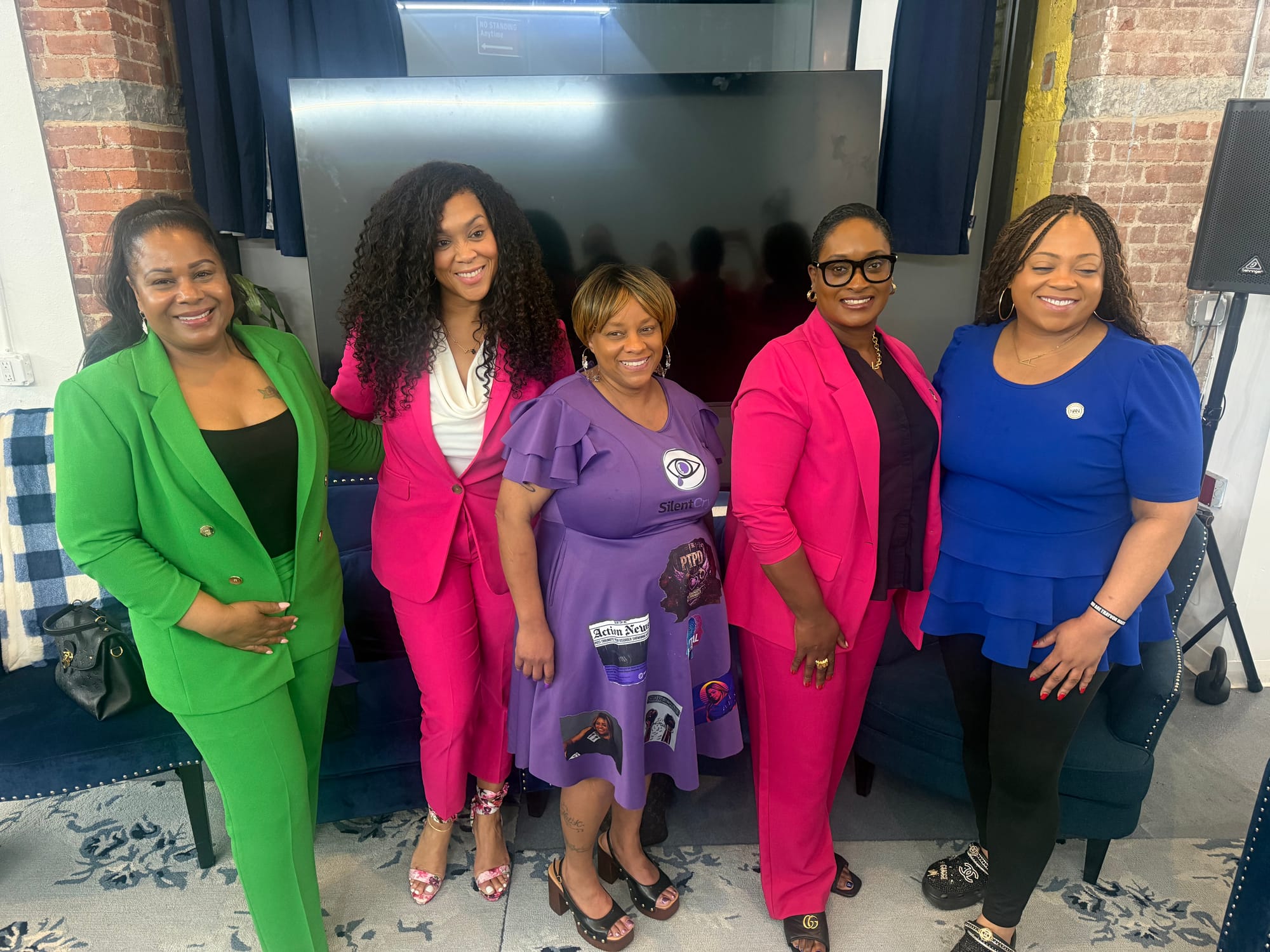
Mass incarceration does not only affect incarcerated people.
It affects mothers.
Fathers.
Children.
Grandparents.
Partners.
Neighborhoods.
And ultimately, the soul of this country.
Post Traumatic Prison Disorder is the language many survivors never had for the pain they carried.
It is the panic attacks after release.The inability to trust.The hypervigilance.The depression.The fractured relationships.The emotional shutdown.The fear of institutional systems.The trauma children absorb when parents disappear behind prison walls.The invisible wounds families carry for decades. And yet, despite all of this pain, there are people who still choose to fight for healing.Dr. Shawanna E. Vaughn is one of those people.
Dr. Vaughn also honors Hazel Dukes of the NAACP, Shanell Washington, whose work helped move the original resolution to the 2019 NAACP conference where it was nationally adopted, the National Urban League, Michael Vassar, Matthew Putman, Angela Rye, Glenn Martin, Topeka Sam, Andrea James, WCJA, Ruth McDaniels, Dr. Sabrina Jackson of Detroit, Michigan, and Dr. Coralanne Griffith-Hunte — whom she lovingly calls “my sister, my friend, and my cheerleader.”
She pays tribute to her adopted father, Albert L. Phillips Sr., the first man who truly showed her unconditional love, structure, and what fatherhood was meant to be. Though he is no longer here physically, his guidance lives through the work she does every day.
She honors her mother Joyce A. Vaughn, whose story remains forever tied to this movement.
And from Bakersfield, California — the city that helped raise her and shape her resilience — she extends heartfelt gratitude to attorneys Jennifer Floyd and Curtis Floyd for their unwavering support.
At the center of this movement is Dr. Vaughn’s documentary, Post Traumatic Prison Disorder, a deeply moving examination of incarceration’s impact on mental health, relationships, parenting, physical health, and family systems. Through stories of tragedy and triumph, the documentary reveals both the devastation incarceration causes and the extraordinary resilience people carry within them.
It is a film about pain.
But it is also a film about hope.
About redemption.
About restoration.
About second chances.
About becoming whole again after surviving systems designed to break you.
Through Silent Cry Inc., Dr. Vaughn and her team are now bringing screenings, trainings, and trauma-informed curriculum to communities, nonprofits, organizations, and institutions nationwide. Their work equips people with practical tools for healing, restorative justice practices, and trauma-informed care that can strengthen families and communities for generations to come.
This movement is about more than policy.
It is about humanity.
It is about asking America difficult questions:
How do we heal?
How do we stop criminalizing trauma?
How do we build systems that value restoration over destruction?
How do we protect children from inheriting pain they did not create?
America cannot incarcerate its way out of trauma.
Healing must become public policy.
Please support the Post Traumatic Prison Disorder legislation in Michigan and across this country.
Because this work is not just for incarcerated people.
It is for families.
It is for children.
It is for communities.
It is for generations to come.
To host a screening of Post Traumatic Prison Disorder, participate in trainings, support the movement, or learn more, please visit:
Silent Cry Inc. Instagram: @SilentCryNY Email: silentcryinc@gmail.com
The book Cries for Change is available on Amazon . We have come a long way.
And despite every obstacle, every scar, every loss, and every system that tried to silence people like her —
Dr. Shawanna E. Vaughn is still here.Still fighting. Still healing. Still believing humanity is worth saving.
This work is not about excusing harm.
It is about interrupting cycles of trauma before they continue destroying lives.
Because when people heal, families heal.
And when families heal, communities heal. America stands at a crossroads.
We can continue investing in punishment while mental illness, trauma, addiction, violence, and hopelessness grow deeper. Or we can finally choose humanity.
Please support the Post Traumatic Prison Disorder legislation in Michigan and nationwide.Because this is not just a prison issue. It is a public health issue.
A human issue.
To support this movement and help expand trauma-informed mental health advocacy, documentary screenings, healing curriculum, and legislative efforts surrounding Post Traumatic Prison Disorder, please support Silent Cry Inc.
Donations can also be made through:
- Cash App: $Silentcry2013
- PayPal: silentcryinc@gmail.com
- Zelle: 718-200-2720
- Venmo and ACH transfers are also accepted
Your support helps us continue fighting for:
- Trauma-informed mental healthcare for incarcerated and formerly incarcerated individuals
- Legislative reform
- Documentary screenings and educational trainings
- Family healing initiatives
- Community-based restorative support systems
- Advocacy for humane healthcare and living conditions inside correctional facilities
Together, we can help transform pain into policy, trauma into healing, and survival into restoration.
