

As Jocelyn Benson Pursues Higher Office, Michiganders Deserve Answers About AI, Data Centers, Political Power, and Public Safety
Michigan stands at the edge of a technological transformation that could permanently alter the state’s environmental, economic, and public health future. Artificial intelligence is no longer a distant concept discussed only in Silicon Valley boardrooms. It is rapidly becoming one of the most powerful industries in America — and Michigan is being positioned as fertile ground for its expansion.
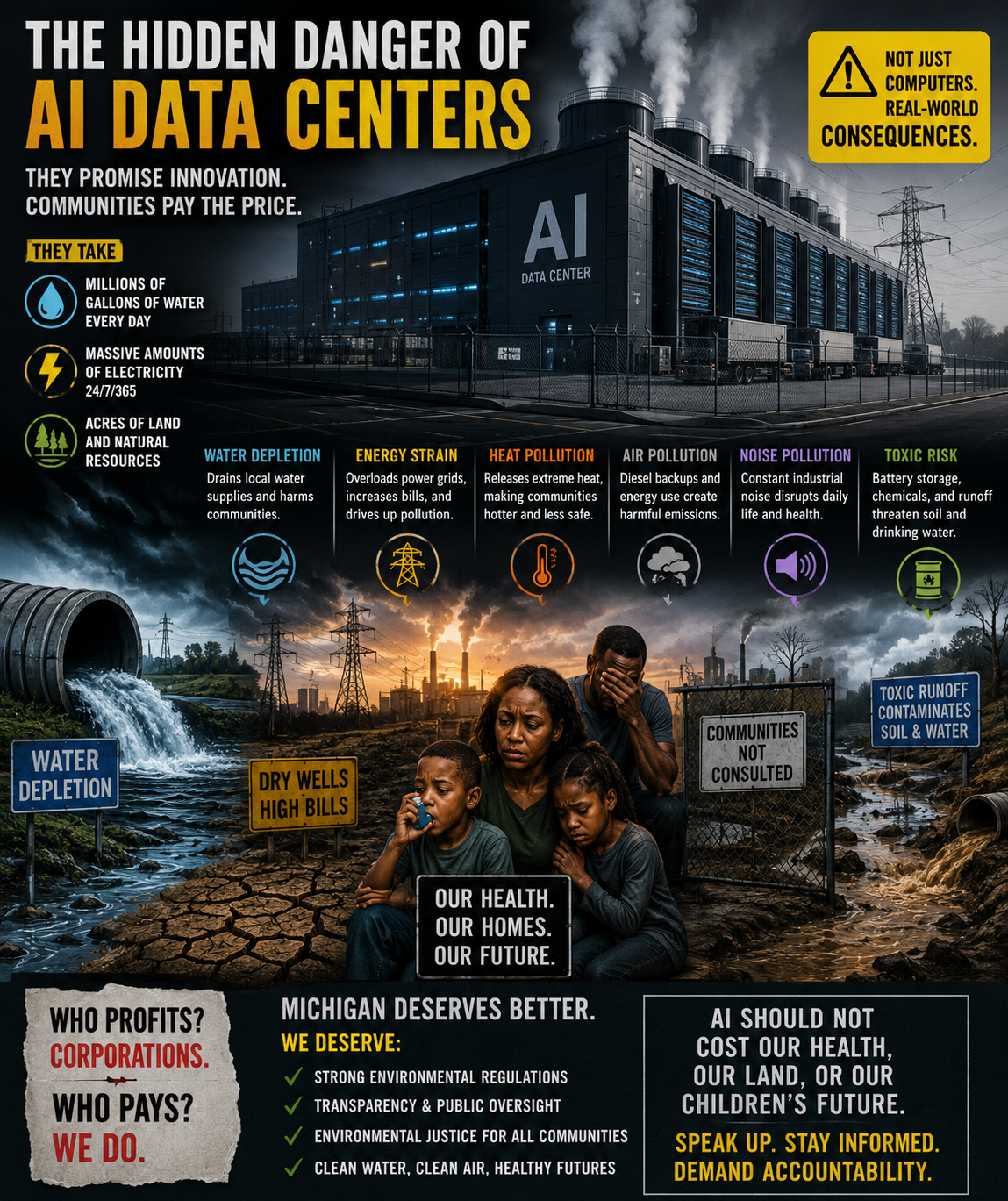
But behind the promises of innovation, economic growth, and modernization lies a dangerous reality that many residents have not yet fully examined.
Artificial intelligence requires infrastructure.
Infrastructure requires land.
Land requires political approval.
And political approval often follows money.As the conversation around Michigan’s next governor intensifies, voters must begin asking harder questions about AI expansion, corporate influence, environmental harm, and the growing relationship between political leadership and private investment interests.
One of those questions centers around Jocelyn Benson and the public concerns surrounding investment ties connected to her household and the growing AI and data center economy.
Michigan residents deserve transparency — not silence.
Data Centers Are the Factories of the AI Era
The average person hears the words “data center” and imagines harmless computer storage. That is far from reality.
Modern AI data centers are industrial-scale facilities that consume extraordinary amounts of:
Electricity
Water
Land
Cooling resources
Public infrastructure support
These facilities operate nonstop, twenty-four hours a day, seven days a week. They place enormous stress on local electrical grids and water systems while generating heat, industrial noise, and environmental strain on surrounding communities.
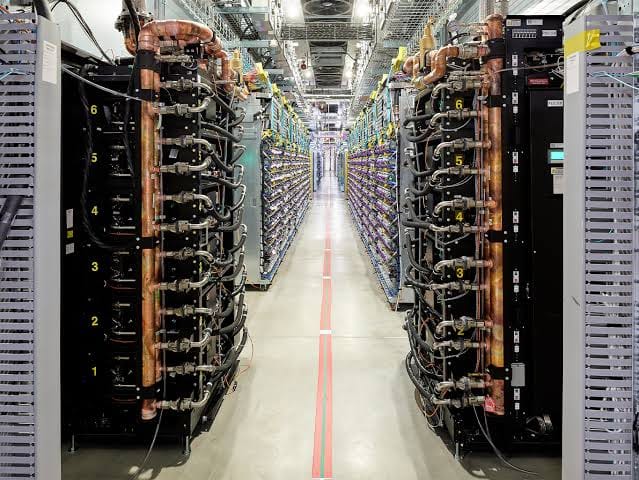
The AI industry is expanding at such an aggressive pace that states across America are competing to offer tax breaks, land deals, and regulatory flexibility to attract these projects. Michigan appears eager to join that race. But the people of Michigan must ask:
At what cost?
Michigan Already Knows What Environmental Neglect Looks Like
Michigan families do not need theoretical examples of environmental injustice. We have lived it.
We witnessed the poisoning of Flint’s water.
We witnessed industrial pollution devastate Detroit neighborhoods.
We witnessed asthma rates rise in heavily industrialized Black communities.
We witnessed government officials minimize harm while residents paid the price with their health and lives. So when political leaders now celebrate massive AI infrastructure expansion without fully addressing environmental protections, many communities hear echoes of the same dangerous pattern:
Corporate interests first. Community safety later.And history shows that “later” often never comes.
Who Will These Data Centers Be Built Near?
This question is not being discussed loudly enough.
Across America, environmentally burdensome projects are disproportionately placed near:
Black communities
Working-class neighborhoods
Rural populations with limited political influence
Areas already burdened by pollution or economic instability
Michigan cannot ignore the racial and economic realities attached to development.
Residents deserve full disclosure regarding:
Proposed locations for AI and data center expansion
Environmental impact studies
Water usage projections
Energy consumption demands
Long-term health implications
Demographic breakdowns of surrounding communities
The public has the right to know whether vulnerable populations are once again being positioned to absorb the consequences of corporate profit.
Political Power and Private Investment Cannot Exist Without Public Scrutiny
The concern surrounding Jocelyn Benson is larger than politics. It is about public trust.
When reports and discussions emerge connecting powerful political households to investment interests tied to AI infrastructure and technology expansion, the public has a right — and responsibility — to ask difficult questions.
If the spouse of a potential governor is financially connected to industries that could directly benefit from future state policy decisions, voters deserve transparency regarding:
Potential conflicts of interest
Policy influence
Corporate relationships
Regulatory oversight
Environmental protections
Financial disclosure
Because the danger is not simply corruption.
The danger is policymaking shaped by investment portfolios instead of public health.
Michiganders cannot afford leadership that views communities as expendable while investors accumulate wealth from projects that may damage the environment, increase utility burdens, and deepen health disparities.
AI Expansion Could Reshape Michigan for Generations
This is not just about technology.
This is about survival, governance, and quality of life.
AI data centers can:
Drain local water systems
Increase carbon emissions and heat production
Drive up utility costs for residents
Alter land values and displacement patterns
Increase corporate control over public resources
Expand surveillance capabilities and data harvesting
Create temporary construction jobs while offering limited permanent employment
Meanwhile, corporations often receive massive public subsidies while ordinary residents struggle with:
Housing insecurity
Healthcare costs
Crumbling infrastructure
School underfunding
Water affordability
Michigan families deserve to know why billion-dollar corporations continue receiving incentives while neighborhoods continue fighting for basic necessities.
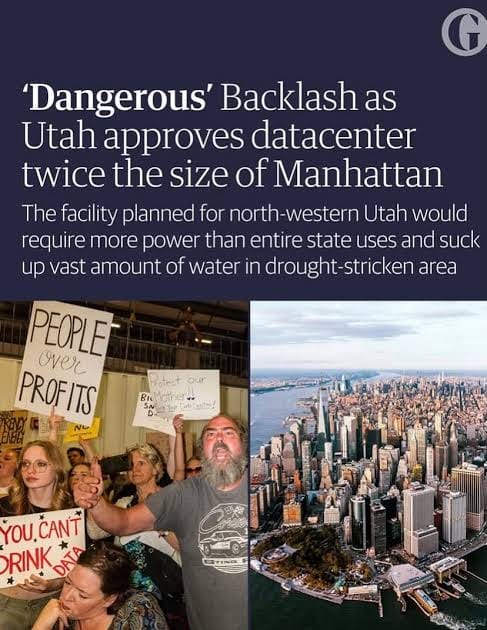
Technology Without Ethics Is Dangerous
Artificial intelligence is advancing faster than regulation. That alone should concern every resident of Michigan. Who will regulate these industries?
Who ensures environmental accountability?
Who protects communities when contamination happens?
Who monitors long-term cancer clusters or respiratory illnesses connected to industrial expansion?
Who decides whose neighborhood becomes the next sacrifice zone?If political leadership is financially adjacent to the industries seeking expansion, public skepticism is not unreasonable — it is necessary.
The Question Every Michigan Candidate Must Answer:
Where Do You Stand on AI, Data Centers, and Environmental Justice ?
As Michigan prepares for critical races for governor, State Senate, State House, mayoral offices, county leadership, and local government seats, voters must expand the political conversation beyond campaign slogans and party loyalty.
Every candidate running for office in this state should be asked one direct question: Where do you stand on AI expansion, data centers, environmental regulations, and the protection of Michigan communities?Because the decisions being made today about artificial intelligence infrastructure will impact generations of families long after election season ends.
This issue is bigger than politics.
It is about survival.
It is about public health.
It is about environmental justice.
It is about whether elected officials are willing to protect the people instead of protecting corporate interests.
The AI Gold Rush Is Already Happening
Across America, states are rushing to attract artificial intelligence infrastructure and massive data centers. Politicians present these projects as symbols of innovation and economic growth. Corporations promise jobs, modernization, and investment.
But what many residents do not realize is that data centers are industrial operations with significant environmental consequences.
These facilities consume enormous amounts of:
Water
Electricity
Land
Cooling resources
Public infrastructure support
They operate nonstop, placing strain on power grids and local resources while contributing to heat pollution, environmental degradation, and long-term infrastructure burdens.
And once these facilities are built, communities often carry the consequences for decades.
Michigan Communities Cannot Afford Another Environmental Crisis
Michigan already knows what happens when government officials ignore environmental warning signs.
We have witnessed:
Contaminated water systems
Industrial pollution
Lead exposure
Asthma epidemics
Toxic environmental conditions in Black and low-income communities
Government failures that harmed generations of families
Silence is not leadership.
The Soil, Water, Air, and Future Are at Stake
The conversation around AI cannot focus only on economic development while ignoring environmental destruction.
Michigan residents deserve honest discussions about:
Water depletion and contamination risks
Soil degradation and industrial runoff
Increased carbon emissions and energy strain
Air quality impacts on surrounding neighborhoods
Public health consequences for children and seniors
Long-term cancer and respiratory risks
Land acquisition and displacement patterns
What happens when these facilities contaminate the land surrounding neighborhoods?
What happens when communities already struggling with health disparities absorb even more environmental burden?
What happens when corporate projects receive tax incentives while residents struggle to afford clean water, healthcare, and utilities?
These are not hypothetical questions.
These are questions rooted in history.
Environmental Justice Must Become a Central Election Issue.
Public Officials Must Be Held Accountable
The public must also confront an uncomfortable reality:
Some elected officials may personally benefit — directly or indirectly — from industries connected to AI and data center expansion.
That is why transparency matters.
Voters have the right to ask:
Are elected officials financially connected to industries benefiting from state policy?
Are campaign donors influencing environmental decisions?
Are political relationships shaping land use approvals?
Are communities being sacrificed for investment opportunities?
The danger is not just corruption.
The danger is normalizing a system where political leaders look away while communities absorb irreversible damage.
It is not enough for elected officials to celebrate “innovation” while ignoring the consequences their own families may eventually face.
Because contaminated water does not recognize political parties.
Polluted air does not care about campaign donations.
Environmental destruction eventually reaches everyone.
Michigan Voters Must Demand Answers
Every candidate running for:
Governor
State Senate
State Representative
County office
Mayor
City Council
Local boards and commissions
should publicly answer these questions:
Where do you stand on AI data center expansion?
What environmental regulations will you support?
How will you protect water systems and natural resources?
How will you prevent environmental racism?
What oversight will exist for corporate AI projects?
Will communities have the power to reject harmful developments?
How will you hold corporations accountable if contamination occurs?
If candidates cannot answer these questions clearly, then voters should question whose interests they truly represent.
The Future of Michigan Is Being Decided Right Now
Artificial intelligence may shape the future of the global economy, but Michigan residents must decide whether that future will come at the expense of the people.
Economic development without ethics becomes exploitation.
Innovation without accountability becomes dangerous.
Technology without environmental protections becomes a public health crisis waiting to happen.
This election season, Michigan voters must refuse to stay silent.
Because the real issue is not simply whether AI is coming.
The real issue is whether Michigan leaders will protect the people before it is too late.
Close
