

FOR MARTIN SCORSESE
In April 1972, the Academy Awards joyously presented a Lifetime Achievement Award to Charlie Chaplin that dovetailed with a national re-release of classic Chaplin films: The Kid, The Gold Rush, The Circus, City Lights, Modern Times, The Great Dictator, and Limelight – plus some others. Loving praise for Chaplin as the ultimate auteur (actor, writer, director, producer, and musical composer) was in the air, everywhere from the Oscars to LIFE Magazine’s cover.
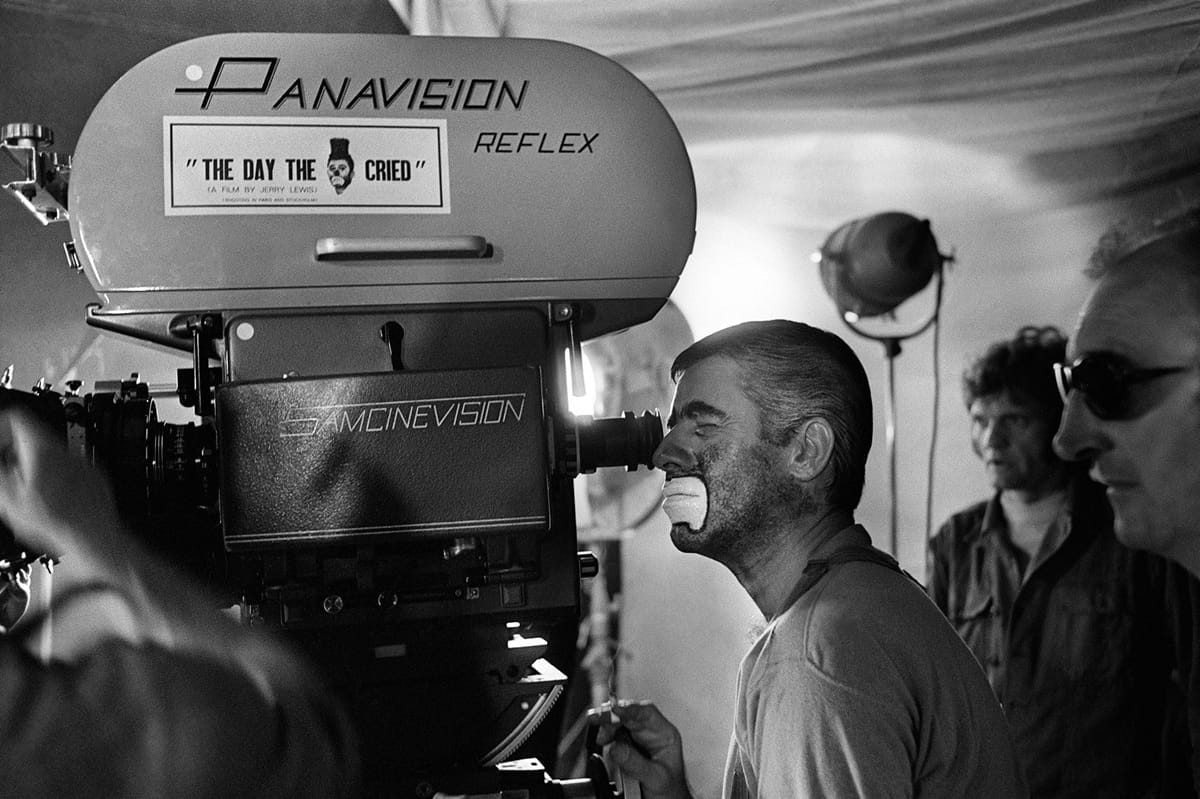
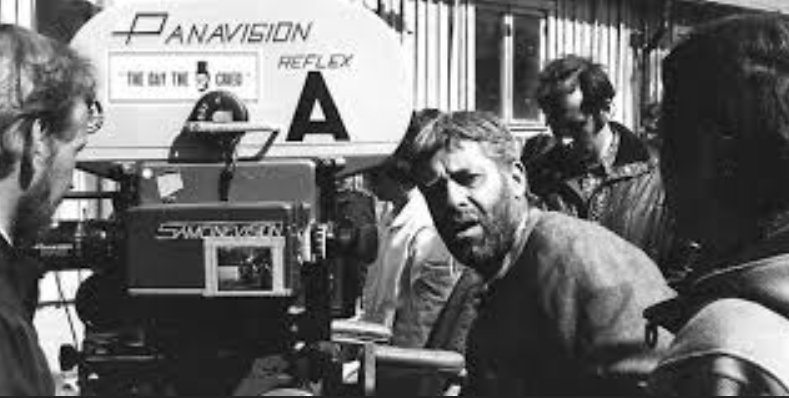
Also in April 1972, comic Jerry Lewis began filming The Day the Clown Cried, a Holocaust drama, and hostile questions still arise: Had Lewis cracked up? Or perhaps: How stupid was he? How could a comic handle that subject?!? Or: How could any humor be found in such a situation? Was it all hubris? Did Jerry Lewis actually think that he was capable of being some kind of Chaplin, for God’s sake?
What is the mystery of Lewis’s THE DAY THE CLOWN CRIED? Read on for more…
Hollywood War Comedies: How Charlie Chaplin Succeeded With Shoulder Arms And The Great Dictator
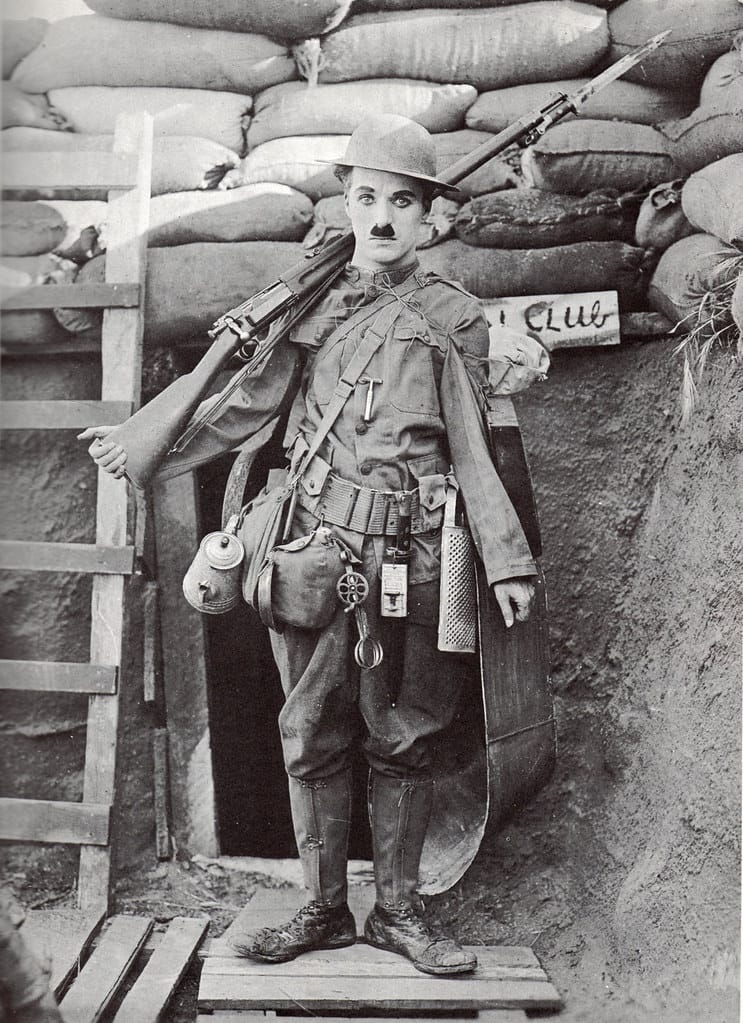
Speaking of Chaplin: Let’s note that in 1918, after four years of carnage, trench warfare, poison gas, atrocity stories, and battlefield butchery (the British suffered 60,000 casualties on the first day at the Battle of the Somme in 1916), Charlie Chaplin took a big artistic risk with his then-ascending career and made a successful World War One comedy called Shoulder Arms.
Somehow, despite the First World War’s wretched array of brutality, insane strategies, ineffable suffering, and savage violence with bayonets, artillery shells, mustard gas, and grievous human ferocity, Chaplin still found humor in his silent comedy about the Little Tramp stuck in a trench on the Western Front. The human comedy prevailed, even as the “calamity for civilization” (Hemingway’s summary of the Great War in The Sun Also Rises) disfigured and half-destroyed a whole generation.
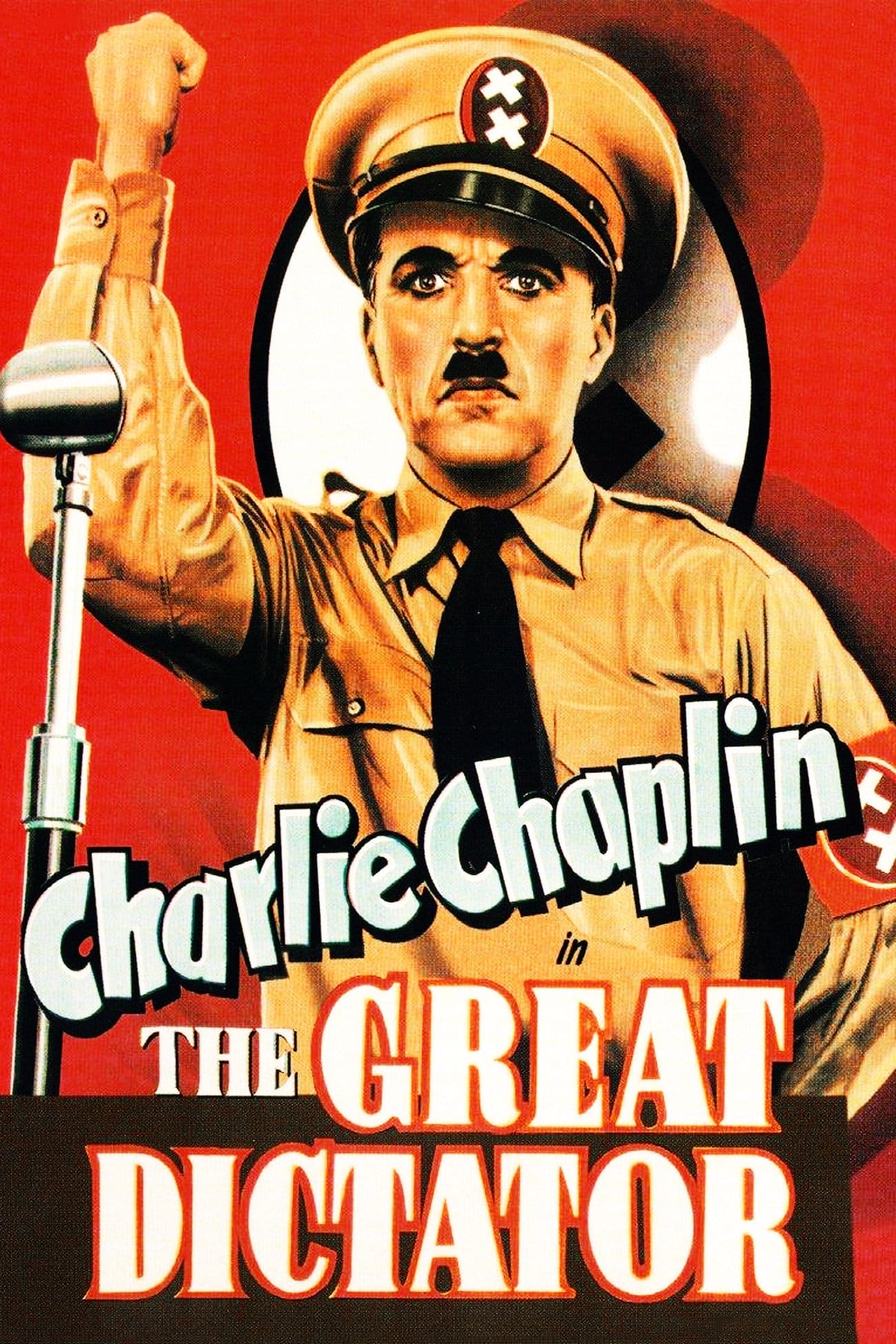
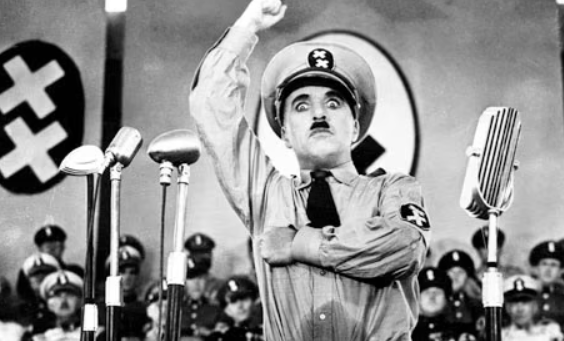
Twenty-two years after Shoulder Arms (a 37-minute short film), Chaplin’s two-hour tragicomic drama The Great Dictator (which he wrote, directed, produced and starred in) became one of 1940’s biggest movies. In that film, Chaplin spoofed Hitler in the same year that Germany conquered Western Europe, attacked Great Britain, and dragooned more political prisoners (Communists, Social Democrats, social outcasts dubbed “Asocials,” plus Jews and Romani) into Dachau and Buchenwald. Those concentration camps were established pre-war, respectively, in 1933 (Dachau) and 1937 (Buchenwald). The camps began as prison-like punishment sites and evolved years later into wartime mass-death landmarks.
In 1940, even as WWII metastasized, Chaplin was lionized for artistic courage because in The Great Dictator he riotously lampooned Hitler’s wildfire, bug-eyed speeches with the same vigor he applied to battle scenes making comic mayhem out of haywire tanks, misfired shells, and slapstick soldiers. Yet there’s a tragic undertone in The Great Dictator, an unmistakable warning. In one scene, the dictator played by Chaplin is told by a gloating henchman that “the greatest poison gas ever” is available and “it will kill everybody!” Chaplin was prescient.
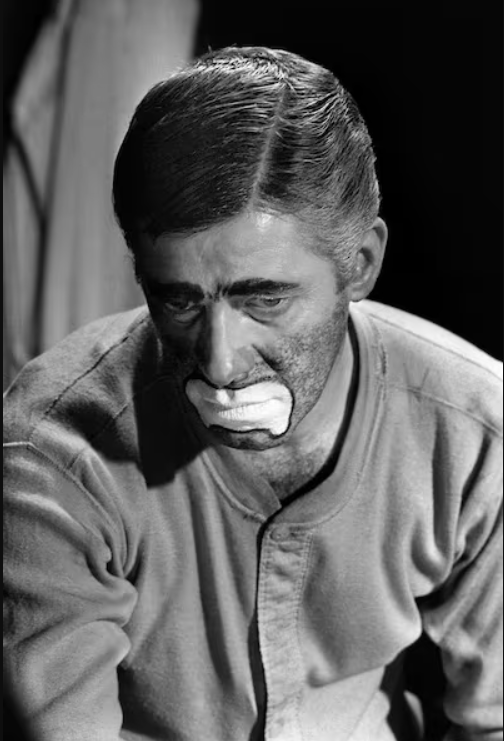
Jerry Lewis’s The Day The Clown Cried: A Holocaust Comedy Disaster
Contrarily, Jerry Lewis’s The Day the Clown Cried remains the scorned mystery it always was. The film would never be released. It was never completed. Rough-cut excerpts and outtakes made their way to YouTube in the 21st century, but have invariably been taken down. Several individuals claim to have seen enough footage of it to pass judgment – and with one noteworthy exception, it’s a harsh verdict.
Copyright issues and budgetary fiascoes and production crises ruptured principal production efforts in 1972. In a rare and admirable case of tough self-assessment, it was actor-director-writer-producer Jerry Lewis himself who pulled the plug, shelved the project, and to the end of his long life defined it as “bad work.” In 2013, when interviewed at Cannes, questions about The Day the Clown Cried caused Jerry Lewis to declare: “I lost the magic” – and he restated that the film would never be seen. He disavowed the movie. “Bad, bad, bad” Lewis repeated, saying it all “embarrassed” him.
Yet there’s more. After Jerry Lewis died in 2017, a hefty archive of his papers, production materials, and cinematic works were donated to the Library of Congress – including reels of film and assorted remnants related to The Day the Clown Cried. However, strict limits were placed upon access to that 1972 work-in-progress. The Library of Congress began allowing limited viewings in June 2024.
Even now, a quarter-century or more after Robin Williams starred in 1999’s Jakob the Liar (set in a WWII Jewish ghetto in Poland rife with Nazi tormentors) and after Italy’s Roberto Benigni won two Academy Awards (Best Foreign Film and Best Actor) for 1998’s Life Is Beautiful (about an Italian-Jewish father using his hyperactive flair as a storyteller to persuade his little boy that their descent into concentration-camp hell is part of an elaborate wartime game), any mention of The Day the Clown Cried ignites acerbic echoes of “How could Jerry Lewis try that?”
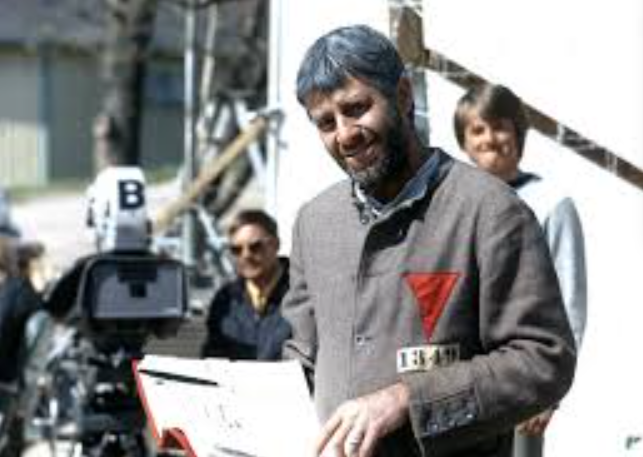
Historical Context For The Day The Clown Cried: Inside Concentration Camps
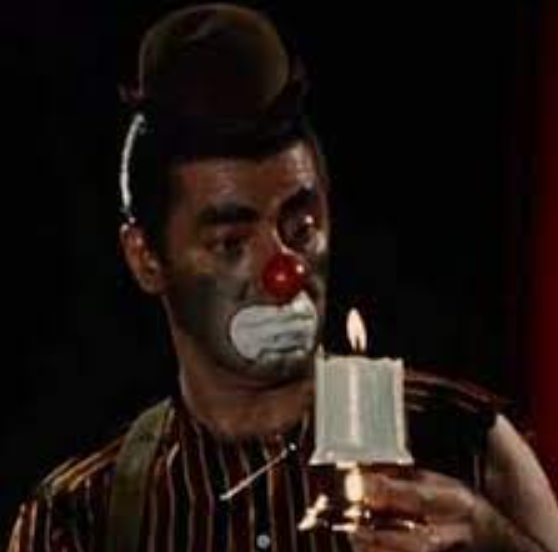
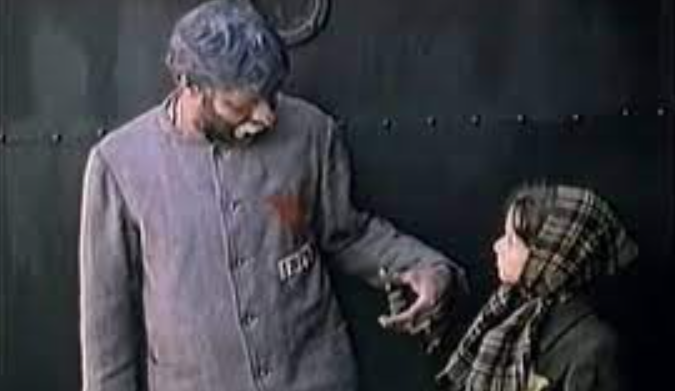
In the case of The Day the Clown Cried, “that” means a story about an obtuse circus clown in wartime Germany who’s arrested for drunkenly mocking Hitler in public; he’s then doomed to the Nazi camps. There his skills are exploited by Nazi guards ordering the clown to distract children as they walk unknowingly to a gas chamber. If he does so, the clown’s life will be spared.
Once he does so, however, the clown (diverting the kids’ attention and distracting them with his antics right to the end) decides also to enter the gas chamber – and die there with the children.
Now that, any way you look at it, is a nightmarish – almost surreal – cinematic narrative. It can presumably be lambasted as distasteful, unrealistic, grotesque, absurd, bizarre, sick, or delusional.
It has to be downright kitsch – right? Just a gross projection of Jerry Lewis’s infamous ego – right?
Wrong. The grim truth is that in the confines of the Nazi concentration camps like Dachau, Dora-Nordhausen, Mauthausen, Buchenwald, and Ravensbruck, as well as the extermination camps like Auschwitz-Birkenau, specialty skills of one kind or another did grant some prisoners a lease on life, as long as their skills were needed by the Nazis to facilitate scientifically planned, incremental protocols leading to the goal of industrialized, mechanized, mass human deaths.
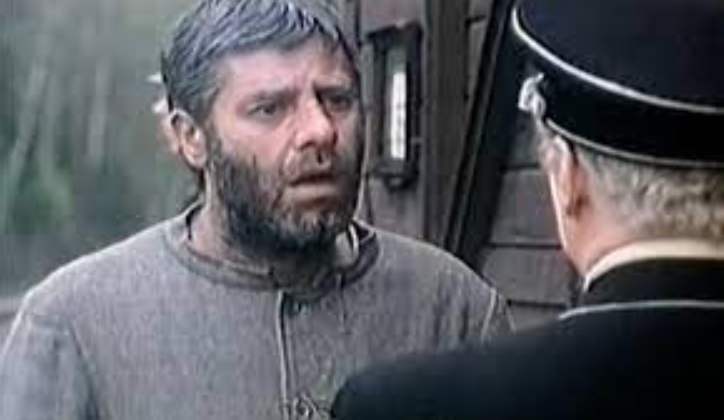
Two such skills were (1) the use of classically trained musicians performing soothing music as the imminent victims debarked from trains that had transported them to the camps, the lilting sound of violins and violas playing Schubert creating an atmospheric calm that further deceived the disoriented, dislocated men, women, and children who were told they’d arrived at a work camp; and (2) barbers, of course, were used by the Nazis to shear the skulls of incoming prisoners selected for slave labor duties, unlike victims immediately sent to “showers” that were, in fact, gas chambers.
Holocaust survivor and Nobel Prize-winning author Elie Wiesel called the camps “a parallel universe.” And novelist William Styron, prior to the 1979 publication of Sophie’s Choice, wrote in his 1978 essay “Hell Reconsidered” that the camps were more than mere death factories with mass murdering as their sole priority. The camps were also sites where captive populations performed slave labor in extremis.
Styron emphasized that the camps were a new chapter in the age-old history of human slavery, creating a “society of the damned” who if not killed outright labored until death (usually) in calculated states of starvation, disease, and brutal subjugation causing many to expire within months. Almost always, their slave labor contributed in varied ways to Germany’s wartime industrial needs. It’s rarely understood that whereas the extermination camps in Nazi-occupied Poland (the hellholes of Auschwitz, Majdanek, Chelmno, Sobibor, Belzec, and Treblinka) were largely geared toward the annihilation of European Jews and others considered sub-human, the hundreds of concentration camps and labor camps all across Germany had slave-labor objectives exacerbated by torture, starvation, and rampant disease. Annihilation via being starved and worked to death was as calculated as the use of Zyklon B.
And yet, the same camps designed as descending circles of hell were also places where some inmates played their instruments and performed for the guards and fellow prisoners; organized skits and various theatrical diversions; drew sketches and practiced arts and crafts. Forbidden activities like writing in diaries or invoking religious rites had to happen in secret. But they occurred, against all odds. Prolific diarist Esther “Etty” Hillesum dubbed herself “the thinking heart of the barracks,” at Westerbork (the Nazi transit camp in Holland) before being killed at Auschwitz in Poland on November 7, 1943.
Jerry Lewis’s Rise, Fall, And Path To The Day The Clown Cried
Elsewhere in 1943, as if on another planet, a 17-year-old Jewish-American comedian born with the name Joseph Levitch was performing his solo act in small venues under the stage name Jerry Lewis. The only child of professional vaudevillians, Lewis struggled as a classroom student and dropped out prior to high school graduation. His 1943 solo act combined facial, vocal, and musical shenanigans and was billed as “Satirical Impressions in Pantomimicry.” By 1944, Lewis was also a newly married young man with a pregnant wife; and neither of them knew that two years later, in 1946, Jerry Lewis would partner with another aspiring performer named Dean Martin and share a meteoric rise to fame.
Martin and Lewis triumphed in every entertainment milieu between 1946 and 1956: clubs, theaters, radio and television, Hollywood movies (sixteen in all) and popular music too. In their ten years as a team, Martin and Lewis broke showbiz records as the most lucrative comedy team in history. During the years that followed their 1956 split, both men enjoyed tremendous solo success – yet as the 1960s segued to the 1970s, Lewis was more and more out of step with prevailing trends in comedy.
His career nosedived, after Paramount (in 1965) and Columbia Pictures (in 1969) failed to renew his contracts. Less than one decade after being the highest-paid entertainer in the world in 1963, Lewis was without a studio or a television series or any major project (except for his annual Muscular Dystrophy telethon) as of 1971. His career crisis was compounded by an addiction to Percodan (aka Oxycodone), prescribed for years after he injured his back in a drastic pratfall.
In that convoluted state of distress, Lewis agreed in 1972 to go overseas and star in and direct a joint Swedish-French film production. The Day the Clown Cried took over his life. The script by Joan O’Brien and Charles Denton had circulated for several years, until the project acquired financing after Lewis was attached as actor and director. Knotty financial and creative conflicts wrought havoc.
Movie producer Nathan Wachsberger faltered at providing the funds needed, while original writers O’Brien and Denton sued to halt production because they had not been paid anything beyond their original “option” money ($5000) – once filming began, the writers were owed $50,000, and the legal conflicts over the rights to their script (rewritten by Lewis) were never resolved. Gradually, despite all obstacles, Jerry Lewis kept the production going (it was filmed in Paris and Sweden) by contributing two million dollars of his own money. Nonetheless, the whole endeavor capsized.
You’d never know it, though, based on Lewis’s confident remarks in early 1973, when he was interviewed on The Dick Cavett Show and took questions from the audience about his past and present. The episode was filmed in January and aired on February 23, 1973.
One woman in the audience inquired about the release date for his next film, and she mentioned The Day the Clown Cried by title – news stories had abounded. Lewis replied by saying he hoped to finish editing the film “in the next six or seven weeks,” and said his movie had been invited to premiere at the 1973 Cannes Film Festival scheduled for May. Things happened differently.
Instead, The Day the Clown Cried was kept from the public in perpetuity after Jerry Lewis opted not to complete the film in post-production. The Library of Congress now has reels of an unfinished film.
And that is all.
The Legacy Of The Day The Clown Cried: Bruce Handy And Jean-Michel Frodon’s Assessment
In a scathing 1992 article in Spy magazine, actor Harry Shearer (of The Simpsons and This Is Spinal Tap fame) discussed seeing a video bootleg of the rough cut of The Day The Clown Cried. Over subsequent decades Shearer’s comments about Lewis’s abandoned effort have been quoted again and again: “This movie is so drastically wrong, its pathos and its comedy are so wildly misplaced . . . [it’s like] a painting on black velvet of Auschwitz.” That acidic soundbite has been reprinted and echoed so often that it has become something like received truth.
Fortunately, Bruce Handy, the same journalist to whom Harry Shearer spoke in 1992, revisited the topic of The Day the Clown Cried on August 21, 2017 for Vanity Fair. In a piece memorializing Lewis, who had died the day before, Handy wrote: “ . . . in honor of Lewis’s passing, I would like to present this previously unpublished interview with Jean-Michel Frodon, who saw a print of The Day the Clown Cried in the early 2000s.”
Frodon had become renowned for his film criticism at the French newspaper Le Monde by the mid-1990s, and served as head editor for Cahiers du Cinema for six years, making him somewhat of an ultimate authority on this particular subject.
When asked by Handy for his assessment of The Day the Clown Cried, Frodon said: “It is not finished, obviously. Nevertheless, you can see what the film would have been. Yes. I’m convinced it’s a very good job. It’s a very interesting and important film, very daring about both the issue, which of course is the Holocaust, but even beyond that as a story of a man who has dedicated his life to making people laugh and is questioning what it is to make people laugh. I think it is a very bitter film, and a disturbing film, and this is why it was so brutally dismissed by those people who saw it, or elements of it, including the writers of the script.”
In a stunning comparison-and-contrast exchange, Handy reminded Frodon that “you’ve compared The Day the Clown Cried to Schindler’s List, where most of the main characters survive –and you make the point that The Day the Clown Cried is more honest about the actual events on that point, since everyone we care about in Lewis’s film dies.”
Frodon bluntly replied: “One of the shocking things to me about Schindler’s List is that it was made to be as much of a crowd-pleaser as possible, with several tricks, one of them being addressing the evocation of the slaughtering of 6 million persons through the survival of a few of them. This is for me a very clever maneuver.”
When asked about Lewis’s performance in The Day the Clown Cried, Frodon said: “He’s not indulging himself, but he is self-caricaturing. He is depicting himself as a clown who is a very unsympathetic character, as a man, and who is losing his professional abilities and making mistakes on stage. He is very selfish and totally stupid, which drives him directly to the camps.” Lewis’s clown character is aptly named Helmut Doork, and wears the red triangle given to prisoners deemed Politicals.
Historian Jack G. Morrison wrote in his book Ravensbruck: Everyday Life in a Women’s Concentration Camp ~ 1939-1945: “In a general sense, a political prisoner was simply someone who was thought to be an opponent of the National Socialist regime, and who, like the Jehovah’s Witnesses, did not fit into one of the other categories . . . the [Nazis] wanted to cleanse their society of all the creeps, slackers, whores, bums, troublemakers, and general misfits . . . for all those peculiarities that did not correspond to the Nazi definition of a healthy people . . . decrees established such criteria for detention as ‘a dissolute lifestyle,’ ‘slovenliness,’ and even ‘weakness of character’.”
Summing up his thoughts about Lewis, Frodon added: “There are very long scenes where his expression almost totally dissolves, which is very different from what he used to do in his previous films. It’s a very rare style of performance for him, compared to what he used to do. Especially in his facial work.”
Handy ended his interview with Frodon by noting that “there might be hints of the performance [Jerry Lewis] would later give in The King of Comedy [1983], where his character is very cold, even cruel,” and the film critic answered adamantly: “Yes, absolutely. It does.”
Lasting Insights From The Day The Clown Cried
That’s enough to make one hope that cinematic maestro Martin Scorsese someday puts his vital film preservation efforts to work on behalf of The Day the Clown Cried. There’s a global audience of cinephiles who are endlessly curious about what so few have ever been allowed to see.
After all, it was Scorsese who cast Lewis in a straight dramatic role in The King of Comedy, a vivid dramatic performance that is arguably the best work he ever did for another director. Everything had gone wrong with The Day the Clown Cried. But one decade later, co-starring with Robert De Niro and Sandra Bernhard in The King of Comedy allowed Jerry Lewis at long last to showcase his gifts as a dramatic actor.
The savage irony is that great comics are rarely taken seriously as actors. But going as far back as 1963’s The Nutty Professor, when Jerry Lewis wrote, directed, produced, and starred in his unique reconfiguration of Robert Louis Stevenson’s Dr. Jekyll and Mr. Hyde, it was clear that Lewis was far more than a boorish slapstick dunce.
Perhaps the most insightful notion Lewis ever shared was that a thousand actors could play Hamlet, but only one actor could be the Little Tramp. Here’s hoping that, like Chaplin, Jerry Lewis someday gets his due.
--
M. J. Moore’s new book HERSELF: A Novel of Summer 1962, will be out on June 30 from Heliotrope Books.
His most recent book Star-Crossed Lovers ~ James Jones, Lowney Handy, and the Birth of “From Here to Eternity” was published in 2023 by Heliotrope Books/NYC. Moore is also the author of Mario Puzo: An American Writer’s Quest and the novel For Paris ~ With Love & Squalor. His writing has appeared in The New York Daily News, The Village Voice, Literary Hub, The International New York Times, and The Paris Review ~ Daily. He lives in Greenwich Village.
@mjmooreauthor (IG)
--
Featured image: Jerry Lewis in Paris on the set of THE DAY THE CLOWN CRIED, 1972. (C) Agence France Presse / Getty Images.
