
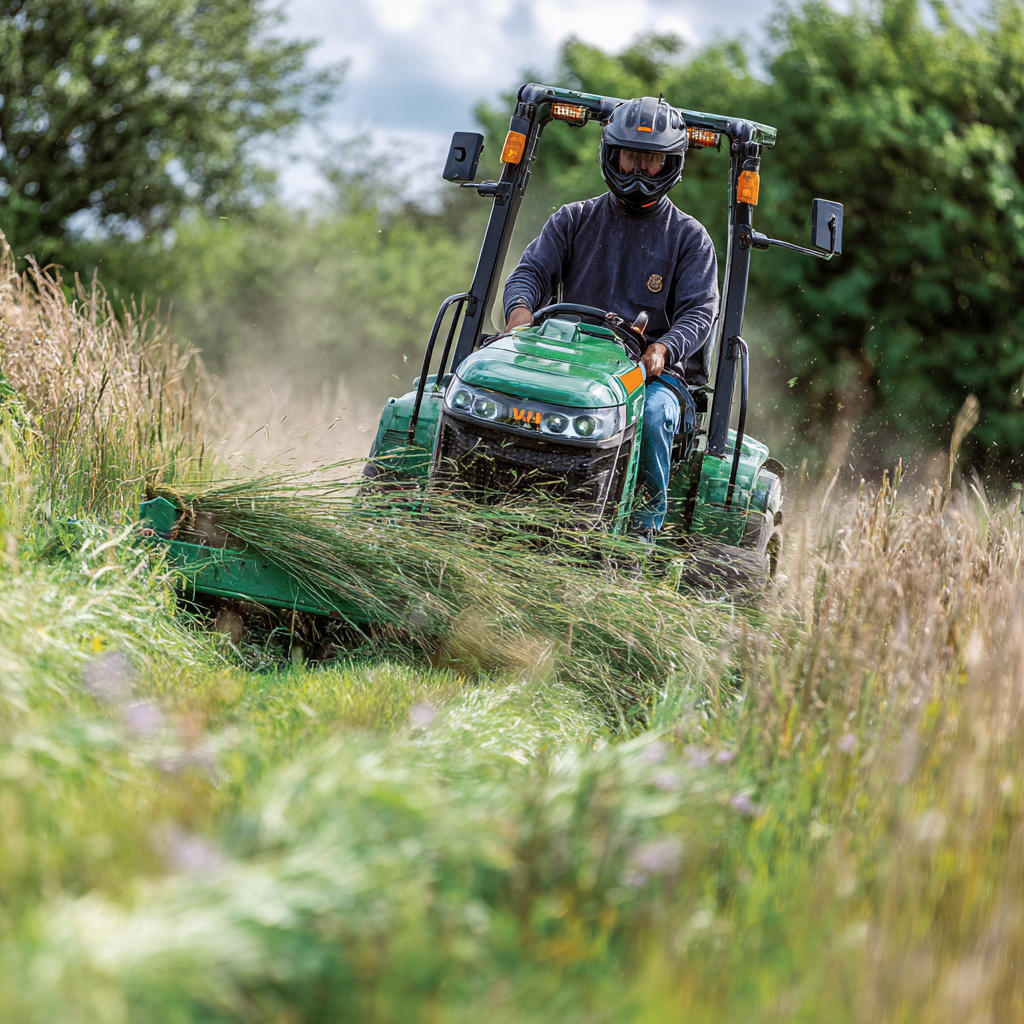
Vegetation management is essential for logistics facilities, agricultural operations, and industrial sites across Canada. Overgrown grass and brush pose fire hazards and impede vehicle access. The 48-inch ATV flail mower offers a tow-behind solution for maintaining large areas such as warehouse yards, pipeline corridors, and agricultural fields. For facility managers, a flail mower provides a cleaner cut than rotary mowers and handles uneven terrain effectively.
Technical Overview and Applications
The flail mower attaches to an all-terrain vehicle via a tow hitch and uses a rotating drum fitted with multiple blades. Key specifications:
- Cutting width: 48 inches
- Mower type: Flail (multiple blades on rotating drum)
- Mounting: Tow-behind for all-terrain vehicles
Applications include warehouse perimeter maintenance, utility corridor clearing, orchard mowing, and agricultural field margin management.
Efficiency, Safety and Productivity
A 48-inch flail mower allows one operator to cover several acres per hour. The flail design cuts vegetation into smaller pieces than rotary blades, resulting in faster decomposition. Safety considerations include keeping bystanders clear of the discharge area, wearing hearing and eye protection, and avoiding steep slopes. Regular mowing reduces the need for costly brush clearing or herbicide applications.
Technical Capabilities
The flail drum rotates at 1800 to 2400 revolutions per minute, creating a fine cutting action. The tow-behind design keeps the operator away from the cutting path. Performance factors include proper hitch height, blade condition, ground speed, and tire pressure. The 48-inch width balances coverage with manoeuvrability around obstacles.
Factors Influencing Performance
- Vegetation type: Handles grass and weeds well; heavy brush requires slower speeds
- Terrain roughness: Uneven ground causes scalping if cutting height is too low
- Blade condition: Dull blades produce uneven cuts
- ATV power: Lower horsepower machines may struggle in dense vegetation
- Obstacles: Rocks and debris can damage blades
Safety Best Practices
Pre-operation inspection must include checking blades, hitch connection, and driveline shield. Operational practices:
- Walk the area first to identify rocks, wire, and debris
- Keep bystanders at least 100 feet away
- Never allow passengers on the ATV while mowing
- Wear hearing protection, safety glasses, and sturdy footwear
- Stop immediately if unusual vibration occurs
- Disconnect driveline before maintenance
Equipment Types and Attachments
Tow-behind mowers are available in rotary and flail configurations. Rotary mowers are simpler but produce coarser cuts. Flail mowers offer finer cutting and reduced projectile risk. Attachments include rear discharge deflectors, front caster wheels for contour following, and transport wheels for road travel.
Advantages and Limitations
Advantages: 48-inch cutting width balances coverage and manoeuvrability. Flail design produces fine clippings that decompose quickly. Tow-behind keeps operator away from cutting hazards. Effective on uneven terrain. Lower projectile risk than rotary mowers.
Limitations: Requires ATV with sufficient towing capacity. Flail blades need periodic sharpening or replacement. Higher initial cost than rotary mowers. Not suitable for heavy brush beyond one inch diameter. Less effective in very tall, wet grass.
Real-World Example
A logistics company in Alberta operates a 50-acre equipment storage yard. Annual fire inspections required vegetation height below 12 inches. The facility purchased a 48-inch ATV flail mower. One worker completed the full perimeter in eight hours per week, compared to 40 hours previously using a walk-behind trimmer. The flail mower produced fine clippings that did not require raking. No projectile incidents occurred despite small rocks in the yard. After two seasons, only blade sharpening and bearing lubrication were needed.
Conclusion and Future Trends
The 48-inch ATV flail mower provides efficient vegetation management for logistics yards, agricultural operations, and industrial facilities. Its cutting width, fine clipping production, and ATV compatibility support cost-effective maintenance. Future trends include hydraulic-driven flail mowers, blade monitoring sensors for predictive maintenance, and hybrid electric units for reduced noise. Selecting a flail mower with robust blade construction and proper safety shielding ensures reliable performance.
