
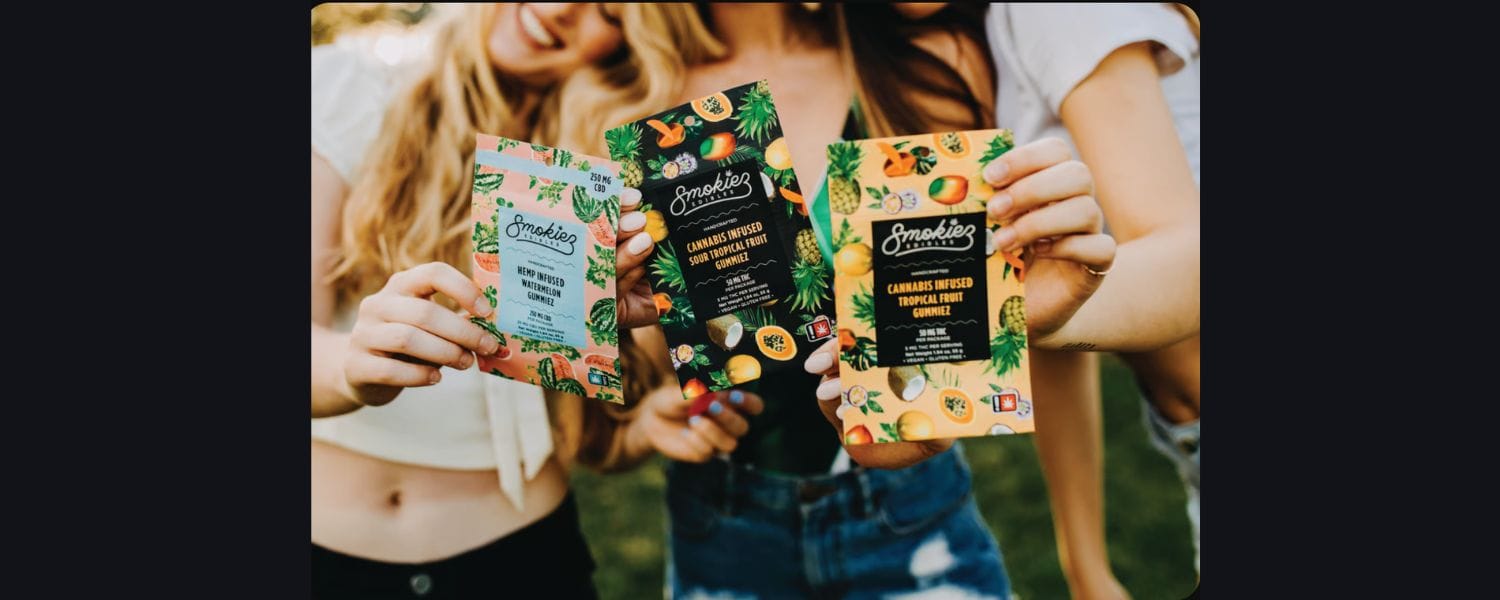

Before billion-dollar cannabis valuations, celebrity-backed brands, and glossy dispensary chains, the edibles industry was something else entirely.
In the early days of legal cannabis, infused products were often homemade experiments—brownies wrapped in plastic, candies with uncertain potency, and labels that rarely told the full story. Consistency was rare, and quality varied widely from batch to batch.
It was in that chaotic early landscape that Smokiez Edibles began building something different.
Founded in 2010 by Chuck Wright and his son Ryan, the company started with a simple idea: create infused sweets that actually tasted good—and delivered consistent, predictable effects. What began as a small operation making fruit chews for medical cannabis patients would eventually grow into one of the most recognizable edible brands in the United States.
More than a decade later, Smokiez products can be found in dispensaries across more than twenty regulated markets, with ambitions to expand even further as legalization spreads globally.
But the brand’s rise didn’t come from massive investment rounds or celebrity partnerships. It came from persistence—and a willingness to build slowly in one of the most unpredictable industries in America.
Built in the Early Days of Legal Cannabis
When Smokiez launched, the cannabis industry looked very different than it does today.

Regulation was inconsistent, markets were fragmented, and many companies were still figuring out how to produce reliable infused products at scale. The Wright family focused on solving one core challenge: making edibles people could trust.
Rather than emphasizing potency alone, Smokiez prioritized three things that would eventually define the modern edibles category:
- Flavor
- Texture
- Precise dosing
The brand’s now-famous fruit chew gummies became the centerpiece of that approach. Designed to resemble familiar candy rather than traditional cannabis edibles, they offered a smooth texture and bright flavors like sour watermelon, blue raspberry, peach, and green apple.
For many consumers, Smokiez helped redefine what an infused edible could be: something enjoyable enough to eat even if it weren’t infused.
Scaling Without the Venture Capital Hype
While many cannabis startups chased rapid expansion through large fundraising rounds, Smokiez took a much slower path.
The company remained independently owned and focused on steady growth, expanding state by state through manufacturing partnerships and licensing agreements. This approach allowed Smokiez to enter new markets while maintaining consistent production standards.
Today, the brand operates across a wide network of regulated cannabis states, including:
- Oregon
- Colorado
- California
- Arizona
- Michigan
- Nevada
- Missouri
- Oklahoma
- New York
Its gummies have become a staple in dispensaries across the country, earning a reputation for their candy-like flavor and reliable dosing.
Beyond gummies, the company has expanded its product lineup to include hard candies, infused beverages, and hemp-derived Delta-9 products, reflecting the broader evolution of the edibles market.
One of its more recent innovations, Smokiez Lemonade, was designed to appeal to consumers looking for a beverage format that can be enjoyed on its own or mixed into cocktails.
New York’s Complex Cannabis Landscape
As Smokiez continues expanding across the United States, New York has emerged as one of the most closely watched markets in the industry.
The state’s legalization process has been slower and more complicated than many operators expected, with licensing delays and regulatory changes shaping how businesses enter the market. But despite the challenges, New York City has quickly become one of the most influential cannabis hubs in the country.
As licensed dispensaries gradually expand across Manhattan, Brooklyn, Queens, and the Bronx, edibles have become one of the fastest-growing product categories.
For many consumers in a dense urban environment, products like gummies offer a practical alternative to smoking—especially in apartment buildings where smoke can be difficult to manage.
Brands like Smokiez have begun appearing on dispensary shelves through licensed partnerships, bringing nationally recognized edible products into the city’s rapidly evolving retail ecosystem.
The Shadow of the Grey Market
Of course, New York’s cannabis story cannot be told without acknowledging the grey market that flourished during the long gap between legalization and licensed retail.
For several years, unlicensed shops and pop-up vendors filled the vacuum left by delayed dispensary openings. Smoke shops, bodegas, and sidewalk tables sold everything from flower to gummies—often without testing, labeling, or regulatory oversight.
For consumers, the experience could feel reminiscent of the early days of legal cannabis in other states: exciting, chaotic, and occasionally unpredictable.
As the state gradually cracks down on illegal operators and expands licensed dispensaries, regulated brands are stepping into a market that has already developed strong consumer demand.
For established edible companies like Smokiez, New York represents both a major opportunity and a complex environment where legal infrastructure is still catching up with consumer interest.
A Growing Global Vision
More than fifteen years after its founding, Smokiez continues to expand beyond its early roots.
The company now operates manufacturing and distribution partnerships across dozens of markets and employs hundreds of workers through its production network. As legalization spreads internationally, Smokiez has also begun exploring global supply chains and partnerships aimed at bringing its edible products to new regions.
The long-term vision is ambitious: expanding into every legal market in the United States and eventually reaching consumers around the world.
But the philosophy that built the brand hasn’t changed much since the beginning.
Focus on flavor.
Stay consistent.
And keep building—one gummy at a time.
For more follow Smokiez
