


This Year's New York Film Festival Offered A Bounty Of Memorable Films And Documentaries To Seek Out
The 63rd annual New York Film Festival concluded in October, with documentaries and narrative films from more than two dozen countries, including the latest from Clair Denis (The Fence), Jafar Panahi (It Was Just An Accident), Mary Bronstein (If I Had Legs I’d Kick You), Ben Rivers (Mare’s Nest) and Kelly Reichardt (The Mastermind). Cinema is, as ever, a wonderful means of escapism. But as this year’s festival slate demonstrates, it’s art that’s necessary and urgent, pushing back against repressive, censorial political forces trying to suppress the truth-telling that creative forms of expression provide.
Read on for more about our selections of NYFF 63's films that should make your viewing list this holiday season, on streaming and coming to theatres.

No Other Choice
Director
Park Chan-wook
Starring
Lee Byung-hun, Son Ye-jin
Where Can I See It?
Limited release December 25th with a wider release in January.
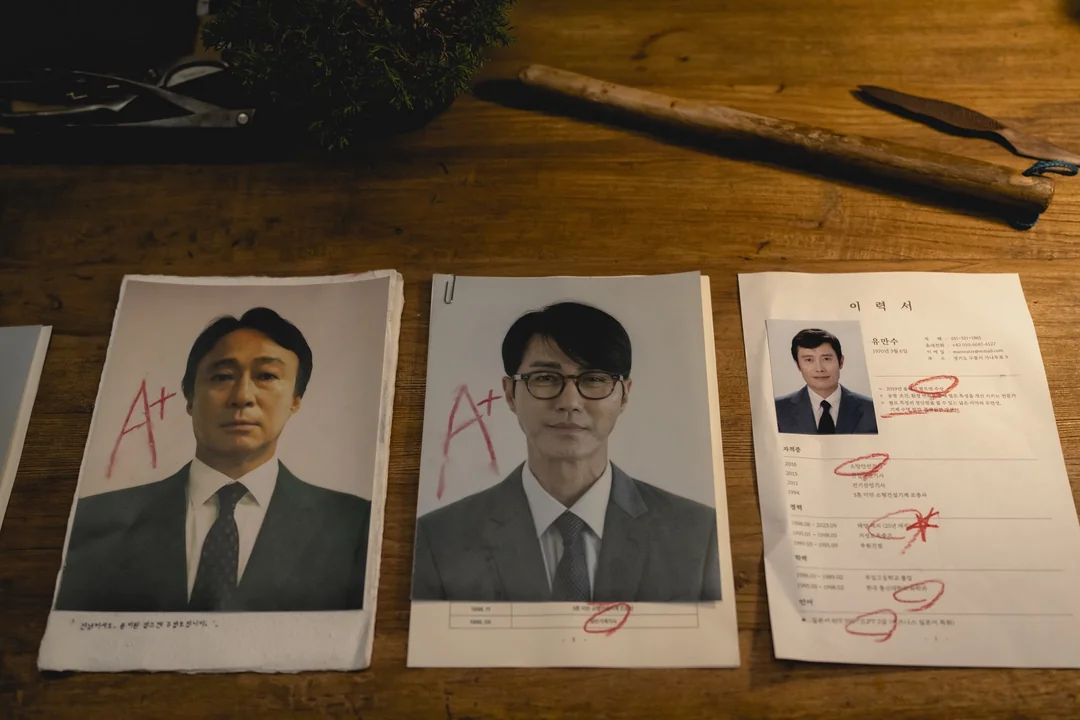
South Korean director Park Chan-wook’s new film, No Other Choice, was my introduction to this year’s fest. Park routinely looks at class, capitalism and criminals (Old Boy, Lady Vengeance) though his last movie, the languorous, first-rate mystery Decision To Leave, was a departure from his often more blood-soaked approach. Based on the novel The Ax by Donald Westlake, the screenplay (co-written by Park, Lee Kyoung-mi, Don McKellar and Jahye Lee), is darkly comic, descending into the absurd in moments, somewhere between Fargo and The Banshees Of Inisherin.
The story incisively portrays the upended life of veteran paper manufacturing executive Yoo Man-soo (Lee Byung-hun, whom U.S. audiences will likely recognize from Squid Game) after he’s laid off by the American company that’s taken over the Korean one, coldly replacing him and the rest of the employees with automation. The sudden, lengthy unemployment for this gentle husband and father, recently named Pulp Man Of The Year by his employer, is bad news for his wife Lee Miri (Son Ye-jin) and two children. They’ve just moved into their home (actually Man-soo’s childhood home that he’s finally been able to buy back), a pair of stately Golden Retrievers, tennis and cello lessons de rigueur. Joining the swelling ranks of other unemployed, over-40 former execs, Man-Soo, devastated at the prospect of the house and beloved animals being taken away, decides to take matters into his own hands after being out of work for months. He embarks on a scheme to eliminate a trio of candidates competing for the one available job he could land in the industry – there is no other industry as far as he’s concerned- the plotting and violence escalating with each one. Man-soo is willing to kill so that he may restore the family to their old lifestyle, if he gets the offer.
No Other Choice, though a satire (a disturbing one that some may find too savage), is tailor-made for these times with its government furloughs, tariffs, unaffordable groceries and the struggling middle class. It’s a terrific performance by Lee, who skillfully held the audience’s sympathy even as his increasingly villainous actions put him on the wrong side of the law. If Lee doesn’t get an Oscar nomination, it will be a serious snub.
In Korean, with English subtitles. Runtime 2 hrs 19 mins.
Father Mother Sister Brother
Director
Jim Jarmusch
Starring
Tom Waits, Mayim Bialik, Adam Driver, Charlotte Rampling, Cate Blanchett, Vicky Krieps, Indya Moore, Luke Sabbat
Where Can I See It?
In theatres December 18th.
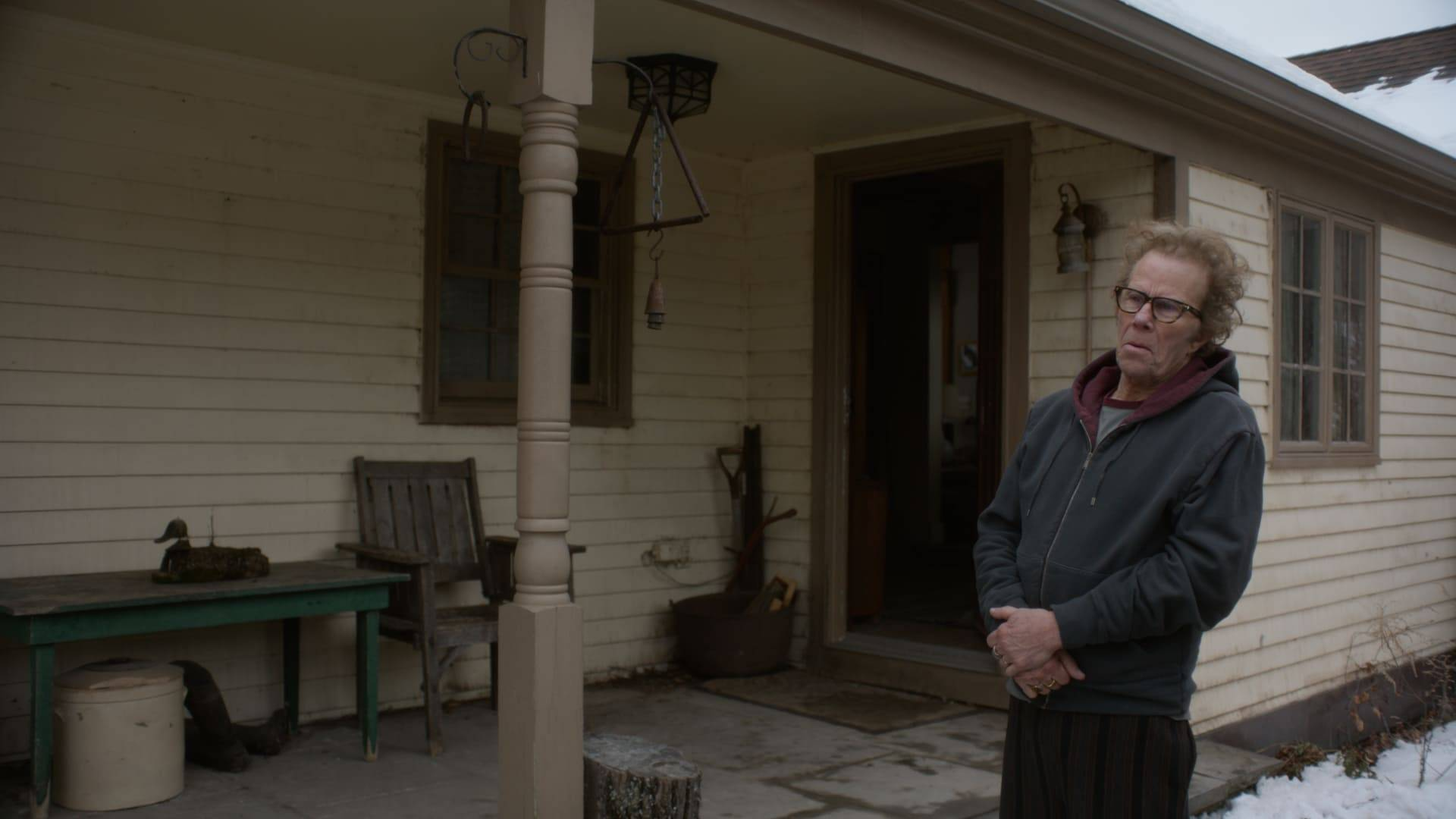
Father Mother Sister Brother, the latest from indie filmmaker Jim Jarmusch (Down by Law; Only Lovers Left Alive), is a 180 on the theme of family. The triptych, portraits of the title relationships, won The Golden Lion for Best Film at this year’s Venice Film Festival. Jarmusch, who wrote and directed the movie, has assembled a crack ensemble, from veteran collaborators like Tom Waits to first-timers such as Charlotte Rampling and Vicky Krieps (I loved learning he chose Mayim Bialik to play Waits’ daughter Emily and Adam Driver’s sister in Father because he was a fan of her time hosting Jeopardy!). As the less-than-on-the-level paterfamilias, Waits is a hilarious delight, covering the new, sleek furniture in his suburban East Coast home with a well-worn throw and shambling about in a casual burgundy sweater until his kids leave (when he dons a sharp suit for a night out on the town). Estranged from Emily and Jeff (Driver), who are varying degrees of amused, suspicious and concerned, he nonetheless smoothly grifts his son into giving him groceries and cash (Emily wised up some years earlier).
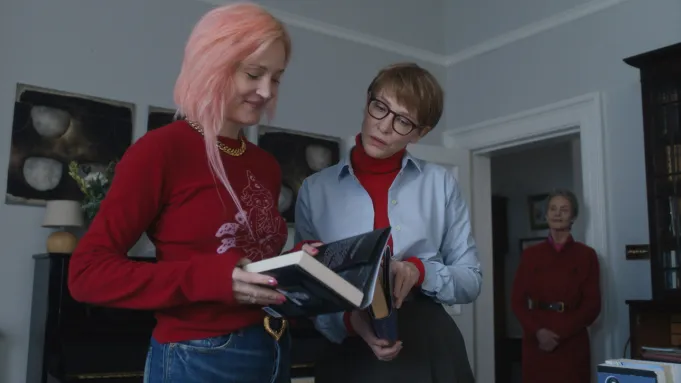
Mother, set in Dublin, is a more pointed view of the disappointments and failings of the familial bonds. Rampling is a successful novelist who appears utterly unsuited to the role of mom, and consults with her therapist on how to interact with her two adult daughters for this annual visit. She opts for the suggestion of serving high tea (gorgeous set design and cinematography by Yorick Le Saux of the three at the brightly decorated table; Frederick Elmes shot Father). Eldest daughter Timothea (Cate Blanchett) is a quiet, drably-dressed, barely-there presence while her other daughter Lilith (Krieps), sporting pink hair, is a mirror opposite, brash and quick with a lie about anything (her work, how she arrived at the apartment, not wanting her mother to know her girlfriend drove her). Lilith concocts a story about her Uber account and gets her mother to give her money, though she’s not buying the story. Unlike the first segment, there aren’t any illusions here as Mother coolly appraises her daughter for what she is. The trio of actors is wonderful to watch, the dysfunction and awkwardness between mother and daughters acutely felt, as are hints of affection between the sisters.
The final section had a more ephemeral feel and was the least interesting of the three. Twins Skye (Indya Moore) and Billy (Luke Sabbat) spend a day together in Paris reminiscing about their childhood and grappling with the sudden loss of their eccentric parents in a plane crash. They’ve grown up not knowing certain basics about themselves, like where they were born. They’re curiously blasé about how little information their parents gave them. The movie needed a palate cleanser of sorts after the chilliness of Mother, but the last third didn’t have the same charm or compelling take on the parent-child relationship, perhaps because we get a limited sense of them from Skye and Billy. My thoughts on the ending aside, Jarmusch has written a definite crowd pleaser and Father Mother Sister Brother will offer viewers an alternative to the heavy, Award-season dramas.
Runtime 1 hr 50 mins.
Cover Up
Director
Laura Poitras
Starring
Seymour Hersh
Where Can I See It?
Available on Netflix December 26th.
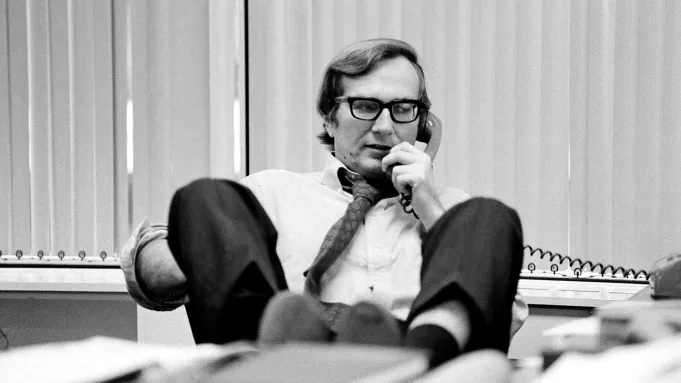
Switching gears, I dove into the life of muckraking, Pulitzer-winning journalist Seymour Hersh in the documentary Cover-Up from Oscar winner Laura Poitras (CITIZENFOUR) and Emmy Award winner Mark Obenhaus (Steep). If you’re not familiar with Hersh, he’s Woodward and Bernstein rolled into one, but with a more dyspeptic and dystopian view of politics, humanity and the future. Hersh was, in fact, one of the reporters who broke the Watergate story for the New York Times as the famous duo were making it front page news for the Washington Post. I’d recommend reading some of his Times reporting from that era, during which he also exposed the lies and corruption behind the My Lai massacre. Over a career spanning more than a half century, Hersh has continued to write about the rot of the military, government officials (detailing for The New Yorker the abuse and torture committed by the US forces at Abu Ghraib) and this decade, he’s often turning his attention to the Middle East and the fascistic direction the US is moving in.
Hersh is a tough, impatient and fascinating subject, and not one eager to participate in the film. Poitras first approached Hersh 20 years ago with her idea to make a documentary, and clearly he was in no hurry to help that along. Early in the film he’s very protective and fiery about his confidential source in the Middle East and the documentarians not interfering with that relationship or the trust he’s built with the woman. He later tells Poitras and Obenhaus during an interview in his office piled high with files and note pads that “in case anyone cares, this is less and less fun.” Hersh’s unfiltered directness is refreshing in a documentary, and Hersh, Poitras and Obenhaus have made a blistering condemnation of how the U.S, government and military have time and time again committed atrocities.
Now 88, Hersh appeared for a Q&A after the NYFF screening with Poitras, Obenhaus and other members of the team, including the archivist who went through over 2000 objects for the documentary. The reporter was blunt in his view of the White House and his fears for democracy, loudly beating the drum that the U.S. is tipping toward a Constitutional crisis. Having no use for television news, Hersh stressed the critical importance of old-school, on-the-ground investigative journalism (though he had plenty of sharp remarks about the Times, which he left because he saw the editorial board as being ethically compromised) and the less mainstream forums like Substack, where he often writes about Israel and Gaza.
Runtime 1 hr 57 mins.
Nouvelle Vague
Director
Richard Linklater
Starring
Guillaume Marbeck, Zoey Deutch, Aubry Dullin
Where Can I See It?
Now available on Netflix and in select theatres.
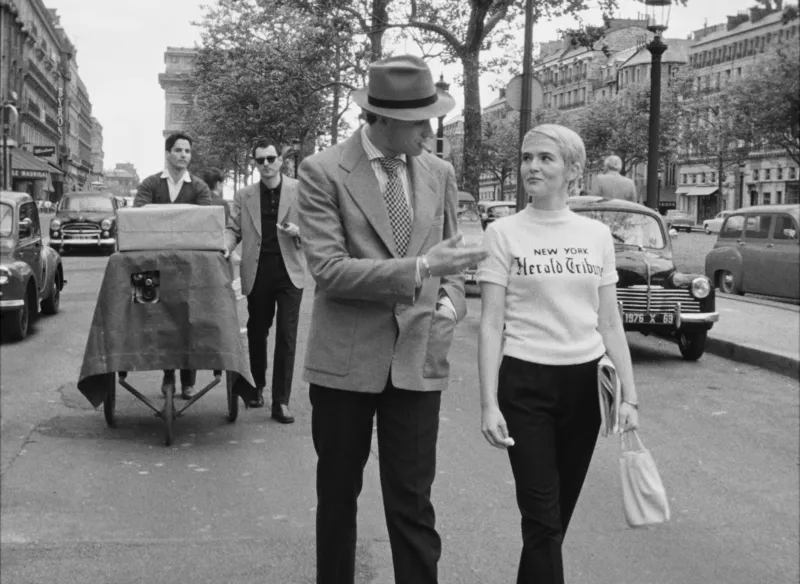
I closed out the fest on the last night with the Nouvelle Vague, Richard Linklater’s black-and-hite, bubbly champagne cocktail of a movie about the making of Jean-Luc Godard’s Breathless (the script, written by Holly Gent and Vincent Palmo, was adapted and translated into French by Michelle Halberstadt and Laetitia Masson).
Linklater, who had a second biopic in the fest – Blue Moon, about lyricist Lorenz Hart - directs this as an imagining of Godard’s seminal debut as a filmmaker, working with actors Jean Seberg and Jean-Paul Belmondo, as cinema was about to be transformed by the French New Wave in 1960. Before launching his career as a director, Godard was a film critic for Cahiers du cinema, and friends with the likes of Jean-Pierre Melville (Ton Novembre) and Francois Truffaut (Adrien Rouyard). He was struggling to get financing and was the last of his circle, at almost 30, to make his first film.
Nouvelle Vague presents Godard (Guillaume Marbeck, a professional photographer making his feature film debut), never not wearing his trademark dark sunglasses, as pretentious, uncompromising, and maddening. He has no script at the start, finds his lead actor, Belmondo (Aubry Dullin), in a boxing gym, goes days without filming anything, and uses a handheld camera so loud that the sound couldn’t be synced. The lack of syncing is just one of the criticisms Seberg.(Zoey Deutch) has for Godard, who she finds to be baffling and confounding. Seberg was very in demand after starring in Saint Joan and Bonjour Tristesse. Seberg was unkindly seen by some critics at the time as an unremarkable American actress from the Midwest, but a note-perfect Deutch, bringing an intelligence and wit to the part, shows she was an underestimated force. As legend goes, Godard wanted a more bleak ending, but Seberg argued for something more ambiguous, and that was the final shot of Breathless. In the end, of course, Godard dazzled with Breathless because he knew that to have a great movie, “all you need is a girl and a gun”. No doubt Linklater saw himself in Godard when he was trying to make Slackers at 29 with peanuts for a budget and this is a funny, spirited tip of the hat to the legend.
In French, with English subtitles. Runtime 1 hr 45 mins.
Movies offer entertainment, of course, but also much-needed refuge. Go to a theatre if you can, or watch at home and get inspired, provoked, and transported.
--
Written By:
Shani R. Friedman
@thetiniestcanadian (IG)
@shanestress (Twitter)
--
Find Out More On Social
--
Featured image: Zoey Deutch and Guillaume Marbeck in Richard Linklater's NOUVELLE VAGUE (C) Jean-Louis Fernandez, courtesy of Netflix
