
By: Redd Ryan Я WORKS STUDIOS
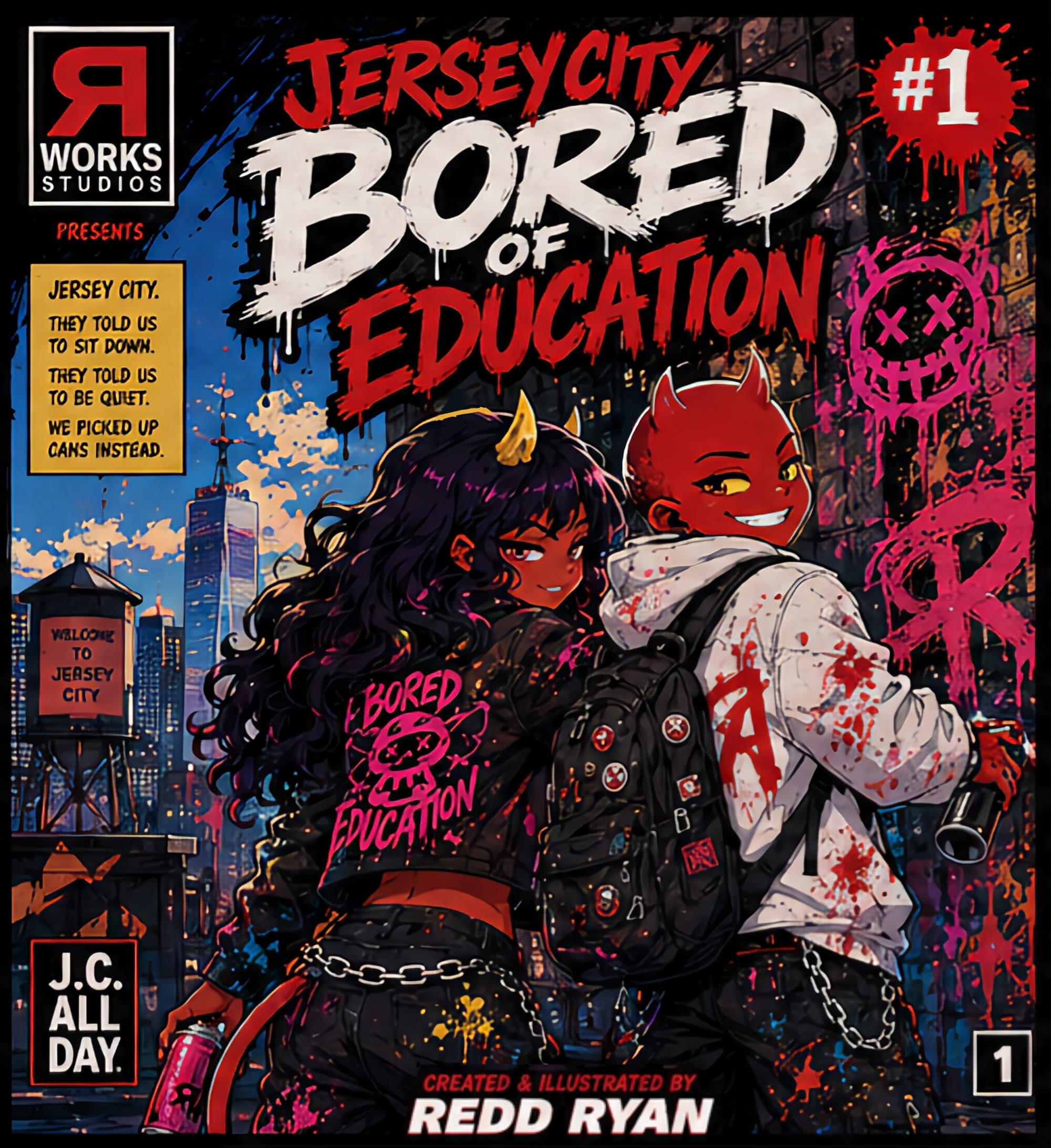
When the system demands quiet compliance, authentic creation becomes an act of defiance. Jersey City Bored of Education, created and illustrated by Redd Ryan under Я WORKS STUDIOS, arrives as both a visually electric comic debut and a counterculture manifesto for anyone who refuses to remain docile.
Rooted in the streets and skyline of Jersey City, the comic transforms institutional frustration into a vivid collision of street art, social rebellion and anarchic humor. Its world may be illustrated, but its central conflict is familiar: Who controls the narrative, and what happens when people stop asking permission to rewrite it?
Anarchic Good in a Conditioned World
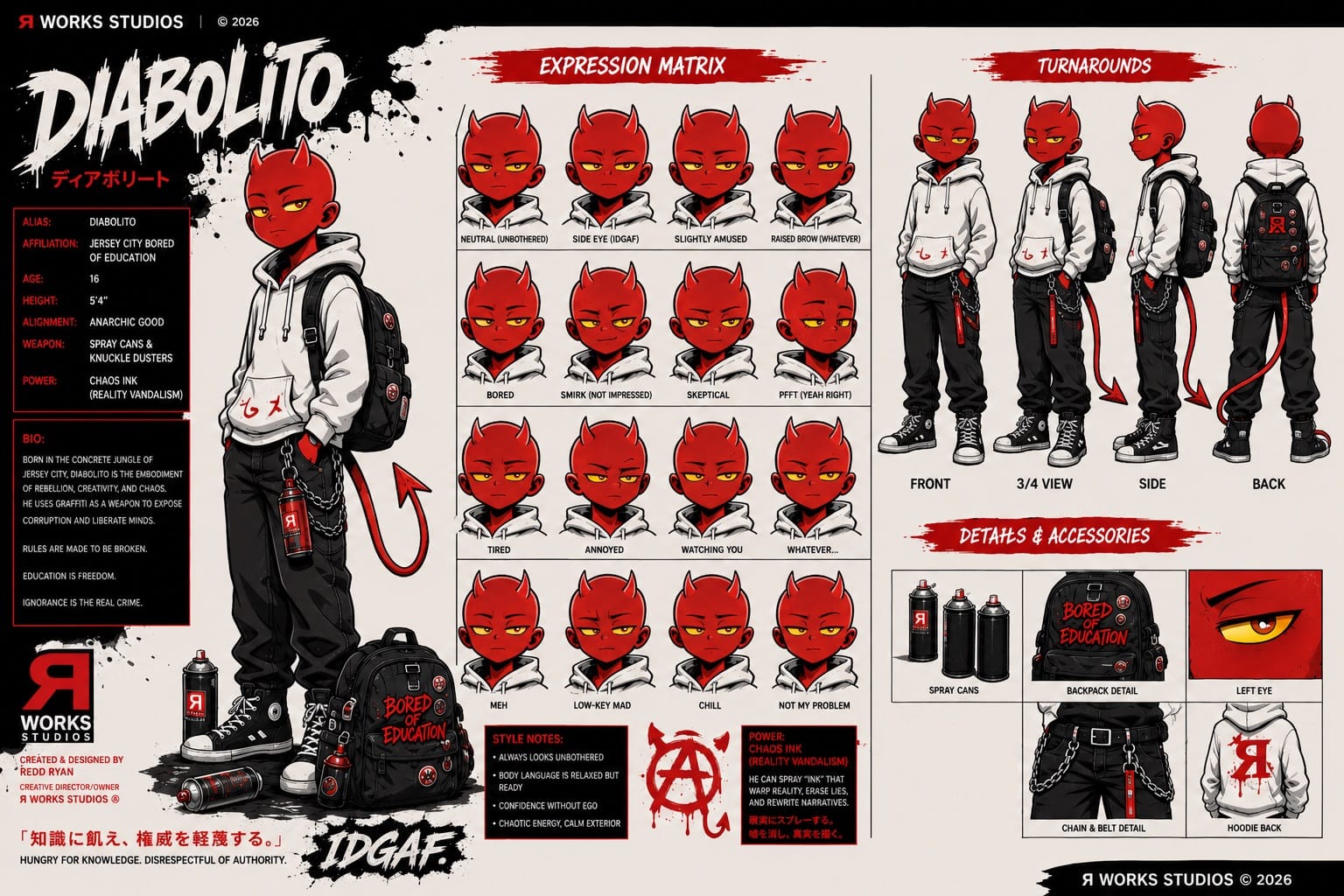
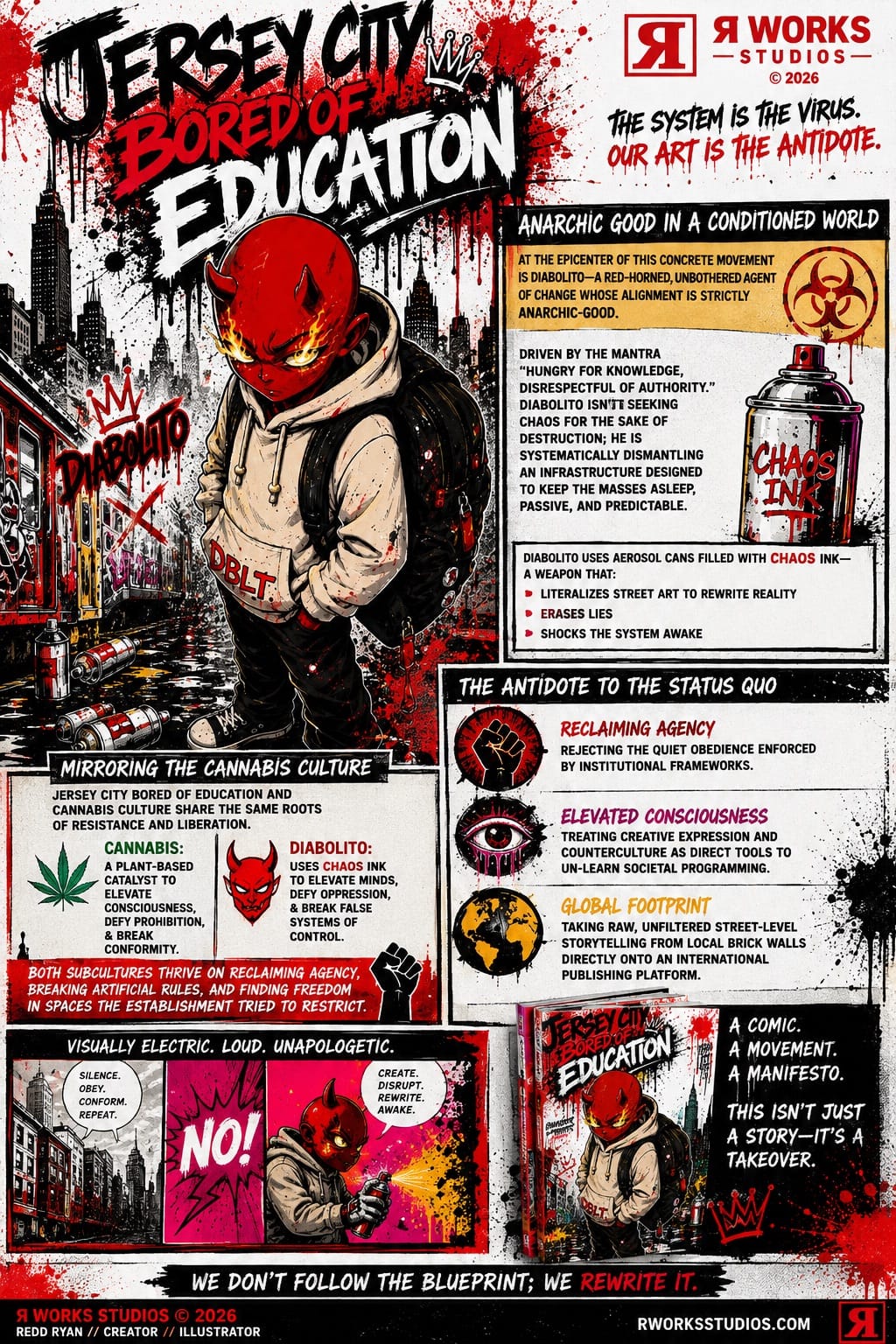
At the center of this concrete revolution is Diabolito, a red-horned, unbothered agent of change whose alignment is strictly anarchic-good. Driven by the mantra “Hungry for knowledge, disrespectful of authority,” Diabolito isn’t interested in destruction for its own sake. His mission is more deliberate: dismantling an infrastructure designed to keep people asleep, passive and predictable.
He is not rebelling against knowledge. He is rebelling against the institutions that determine which knowledge is acceptable, who is permitted to speak and how curiosity should be controlled.
That distinction gives Jersey City Bored of Education its sharpest edge. The comic challenges the idea that education must equal obedience, or that authority deserves respect simply because it holds power. Diabolito embodies a different kind of intelligence—one built through observation, experimentation, lived experience and the willingness to question what has been presented as truth.
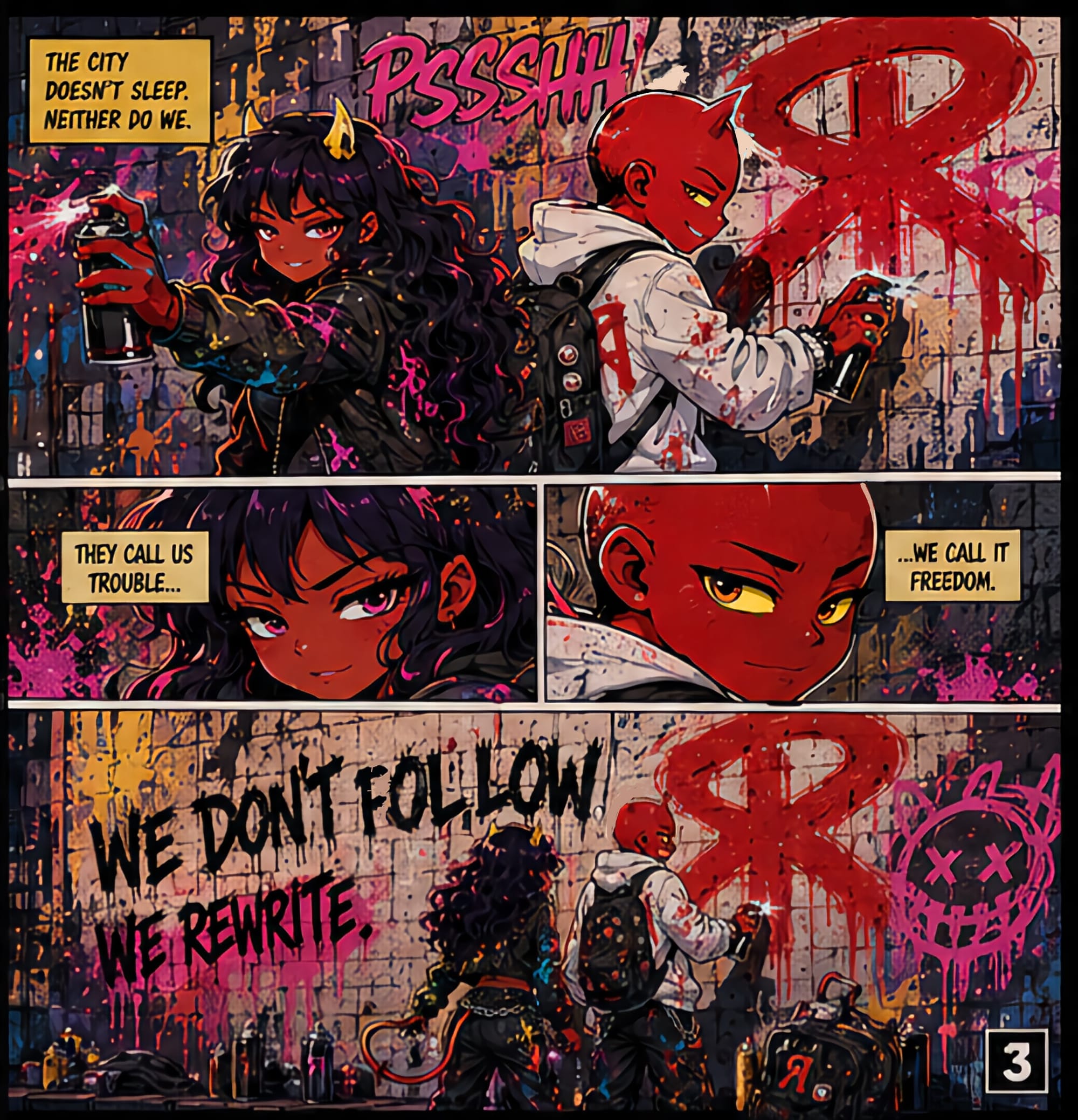
His primary weapon is Chaos Ink, carried in aerosol cans and deployed as a means of rewriting reality. It can erase lies, transform oppressive environments and shock a conditioned population awake. Street art becomes more than decoration or vandalism; it becomes a language capable of interrupting the official story.
Where Street Art and Cannabis Culture Meet
The spirit driving Diabolito directly echoes the foundations of cannabis culture. Both represent a long-standing refusal to accept institutional prohibition, corporate conditioning and forced conformity.
For generations, cannabis consumers, cultivators and advocates have challenged laws and social narratives designed to criminalize a plant while punishing the communities most closely associated with it. The movement has always been about more than consumption. At its most powerful, cannabis culture is about personal agency, expanded consciousness and the right to question systems that present control as public protection.
Where cannabis can act as a plant-based catalyst for reflection and elevated consciousness, Diabolito uses Chaos Ink to expose manufactured realities. Both offer tools for unlearning. Both reclaim spaces the establishment attempted to restrict. Both insist that another way of seeing—and another way of living—is possible.
The connection feels especially relevant as cannabis moves deeper into the corporate mainstream. Legalization has created opportunities, but it has also invited new forms of control, commercialization and cultural erasure. Jersey City Bored of Education serves as a reminder that counterculture loses its meaning when rebellion becomes merely an aesthetic. Resistance requires action, curiosity and a willingness to remain difficult to condition.
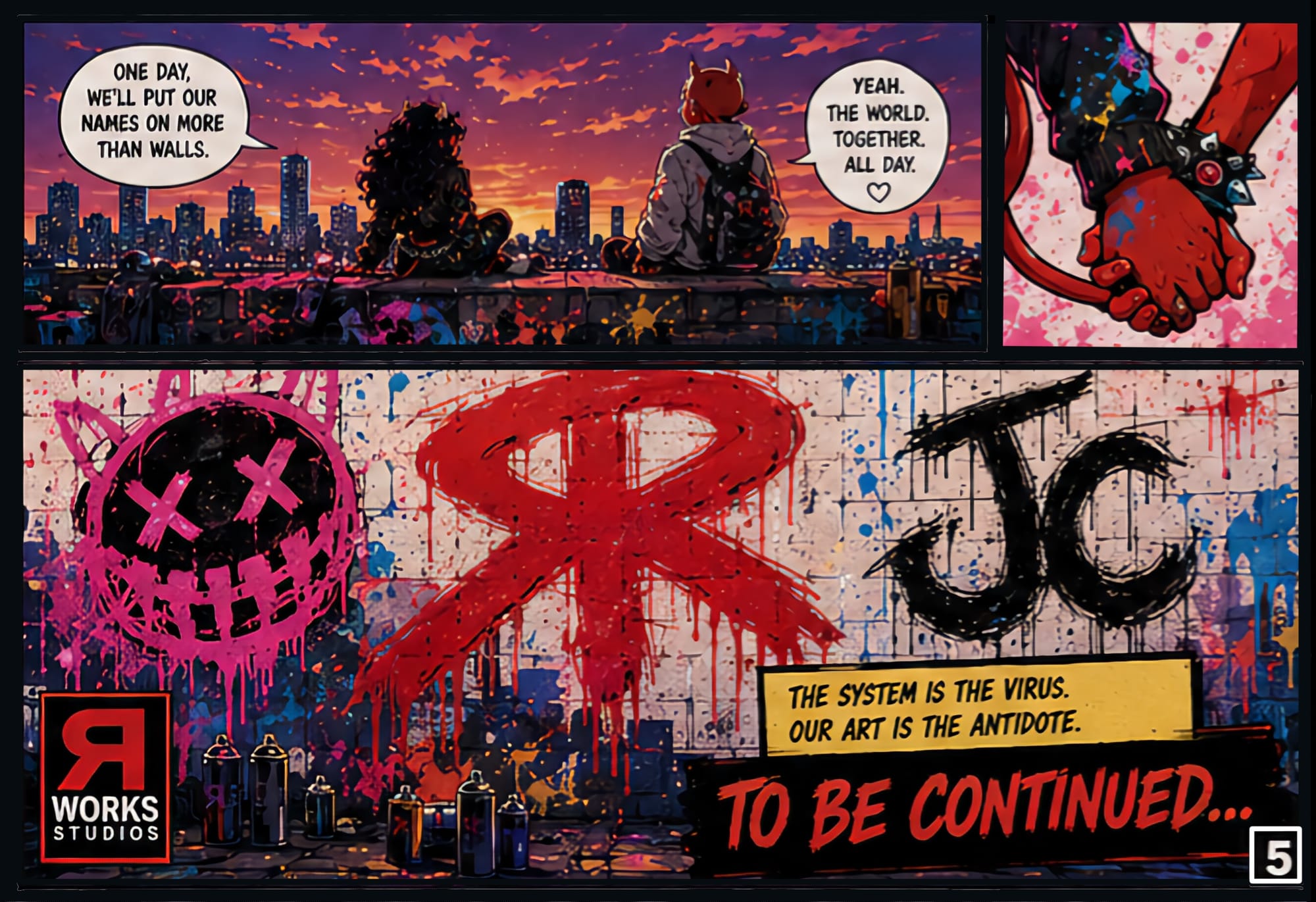
The System Is the Virus. Art Is the Antidote.
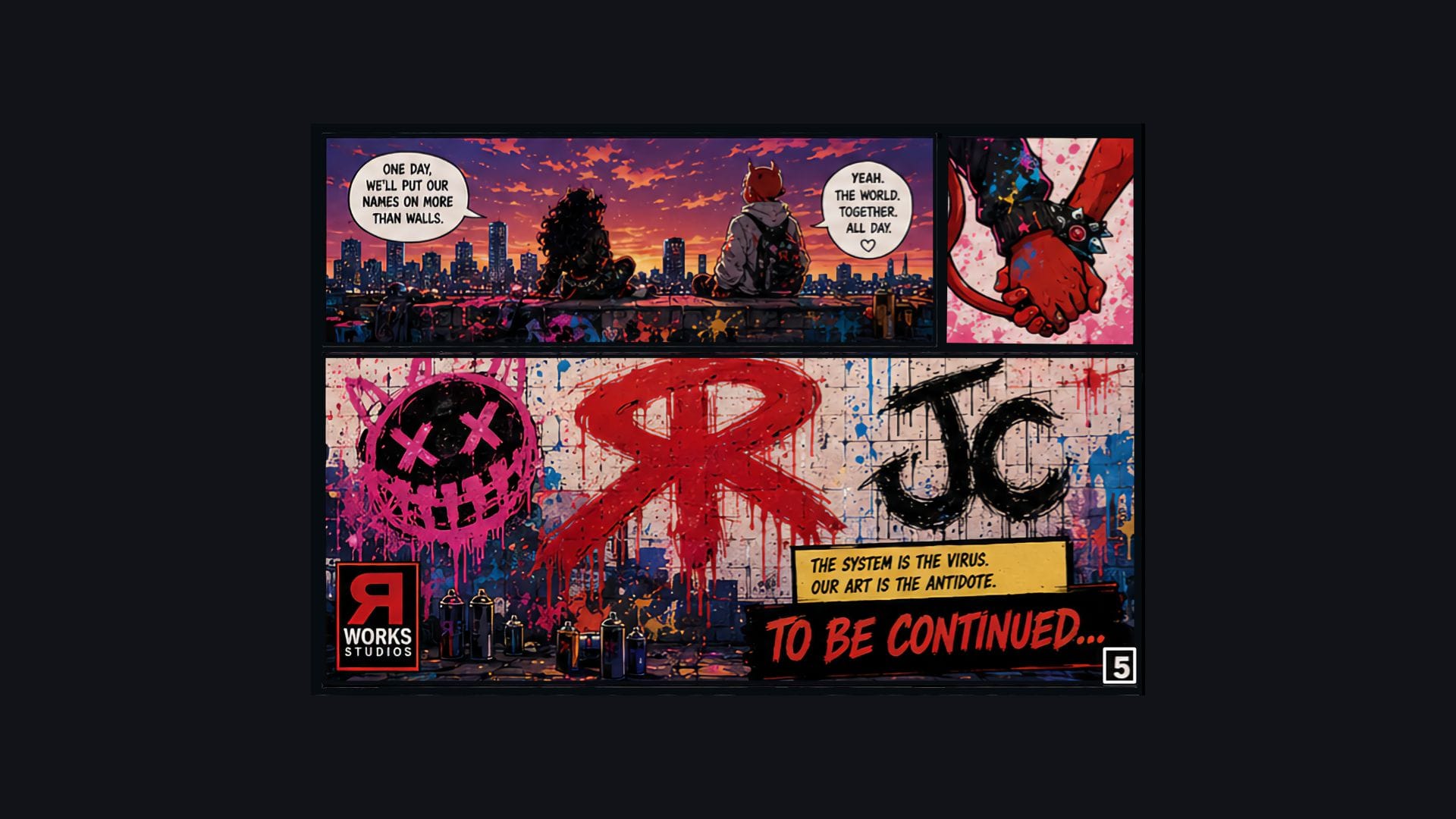
Framed against the iconic Jersey City skyline, the comic’s sequential pages contrast oppressive urban environments with hyper-saturated explosions of crimson, magenta and deep yellow spray paint. Gray infrastructure becomes the surface upon which new possibilities are imagined.
The visual language captures the raw pulse of underground creators taking space on their own terms. Every blast of color becomes an interruption. Every painted wall challenges the assumption that cities—and the stories told within them—belong only to institutions, developers or approved cultural gatekeepers.
At its core, the comic advances three connected ideas: reclaiming agency by rejecting enforced obedience; elevating consciousness through creative expression and counterculture; and carrying raw, street-level storytelling beyond its local origins without sanding down its edges.
That last point matters. Jersey City is not treated as a generic urban backdrop. Its brick walls, skyline and concrete terrain are part of the work’s identity. The local setting gives Diabolito’s rebellion its specificity, while the fight against conditioning gives it universal resonance.
Painting Over the Rules
Jersey City Bored of Education shows what can happen when creators stop waiting for institutional permission and start building their own platforms, characters and realities.
Diabolito is more than a comic-book protagonist. He represents the stubborn creative spark in anyone fighting to stay awake in a world designed to put people to sleep. He is the question authority cannot comfortably answer, the streak of color across the approved blueprint and the voice that refuses to lower itself for the sake of acceptance.
Redd Ryan’s debut does not ask readers to follow another predetermined path. It invites them to examine who constructed the path in the first place—and then decide whether it might be more interesting to paint directly over it.
We don’t follow the blueprint. We rewrite it.
