
Photos: LilBaddieWiththeCamera™️
When the sun sets over the brick storefronts of Jersey City, a different kind of cultural machinery turns on. It isn’t funded by corporate art grants or managed by suit-and-tie agencies. It runs on kinetic energy, street-level grit and an independent network of artists taking control of its own media pipeline.
On July 25, that machinery roared to life inside Lifted Dispensary at 490 Westside Avenue. For the Rock The Block pop-up showcase, the air hung thick with green haze, heavy sub-bass and an unmistakable sense of creative purpose.
Coordinated on the ground by 50Racks and overseen by YNVS CEO Shampoo, the dispensary transformed into something larger than a retail space. It became a hybrid soundstage, gallery floor and live production hub—a place where music, cannabis, street art and independent media could exist within the same ecosystem.
Nothing about the gathering felt overly polished or separated from the people producing it. The artists were not waiting behind a curtain for their moment. The cameras, microphones, illustrations and performances unfolded together, allowing the audience to witness the process as much as the finished work.
The Soundstage and Its Electric Frequencies
The mission was direct: hang the microphones, roll the cameras and let the live takes rip in real time.
Whyte Tony and Fishscale P 201 stepped into the zone and unleashed pure lyricism, while Moody and MC Powerful matched that intensity bar for bar. Each performance brought a different cadence to the room, but the artists shared the same commitment to immediacy. There were no layers of corporate approval standing between the performers and the people watching them.
Sam Gutterz shifted the room’s frequency with an eclectic set, moving through sounds that resisted easy categorization. Ganja Killz brought beats and bars, sustaining the underground energy at the center of the showcase.
Behind the lenses, Amber and @LilBaddieWiththeCamera™️ documented the action frame by frame. Their cameras preserved details that might otherwise have disappeared into the smoke: an artist preparing to deliver a verse, the crowd pressing closer to the performance area, colored light cutting across a face and the spontaneous exchanges that gave the gathering its electricity.
The documentation was not an afterthought. It was part of the infrastructure.
For independent artists, controlling how their work is captured and distributed can be as consequential as the performance itself. Rock The Block created an environment in which the community did not simply provide the talent—it also shaped the images, footage and narratives that would carry the experience beyond the room.
The Я WORKS STUDIOS Standard
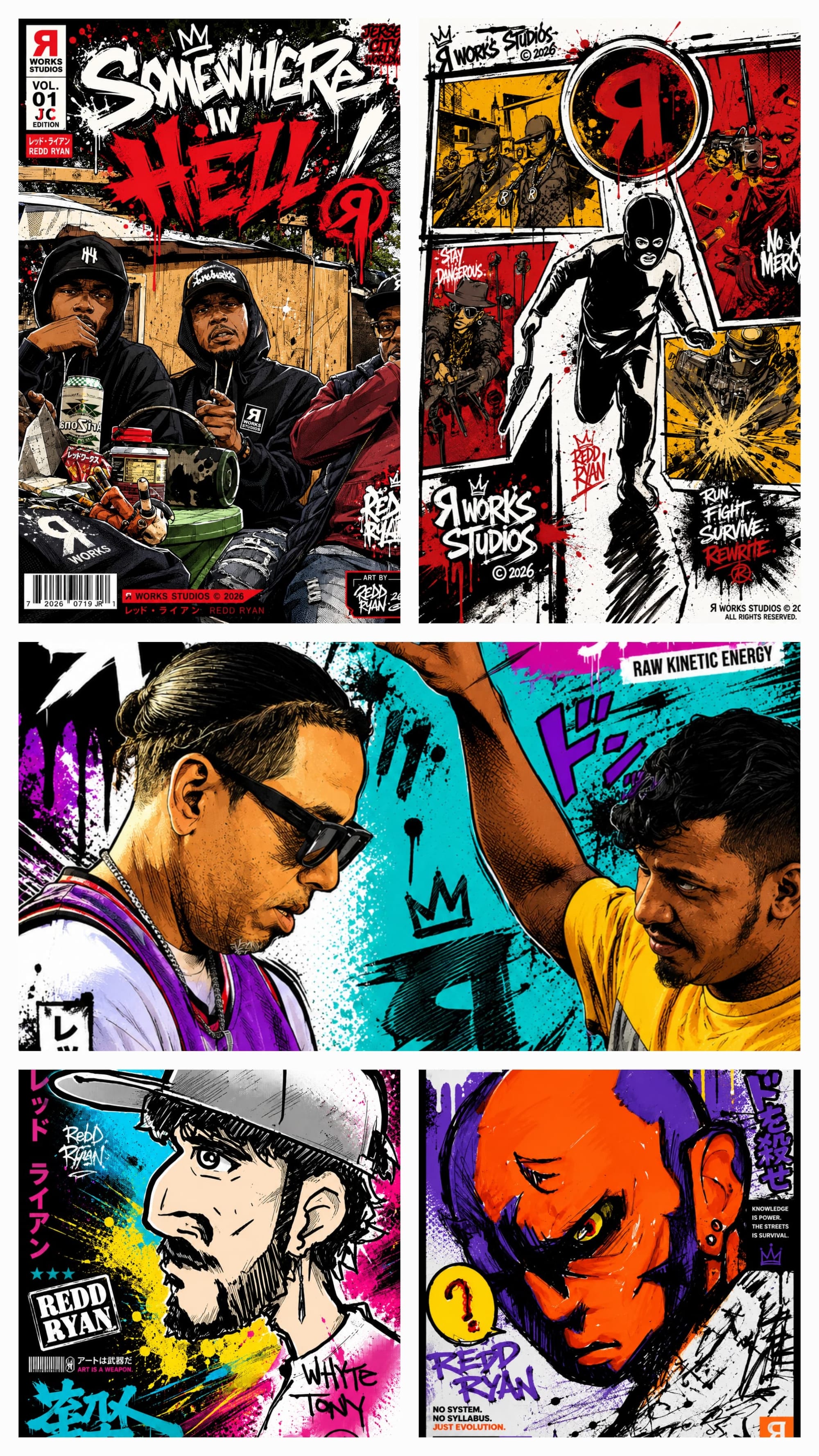
At the center of the event’s visual output was Я WORKS STUDIOS, operating under its core ethos: “NO SYSTEM. NO SYLLABUS. JUST EVOLUTION.”
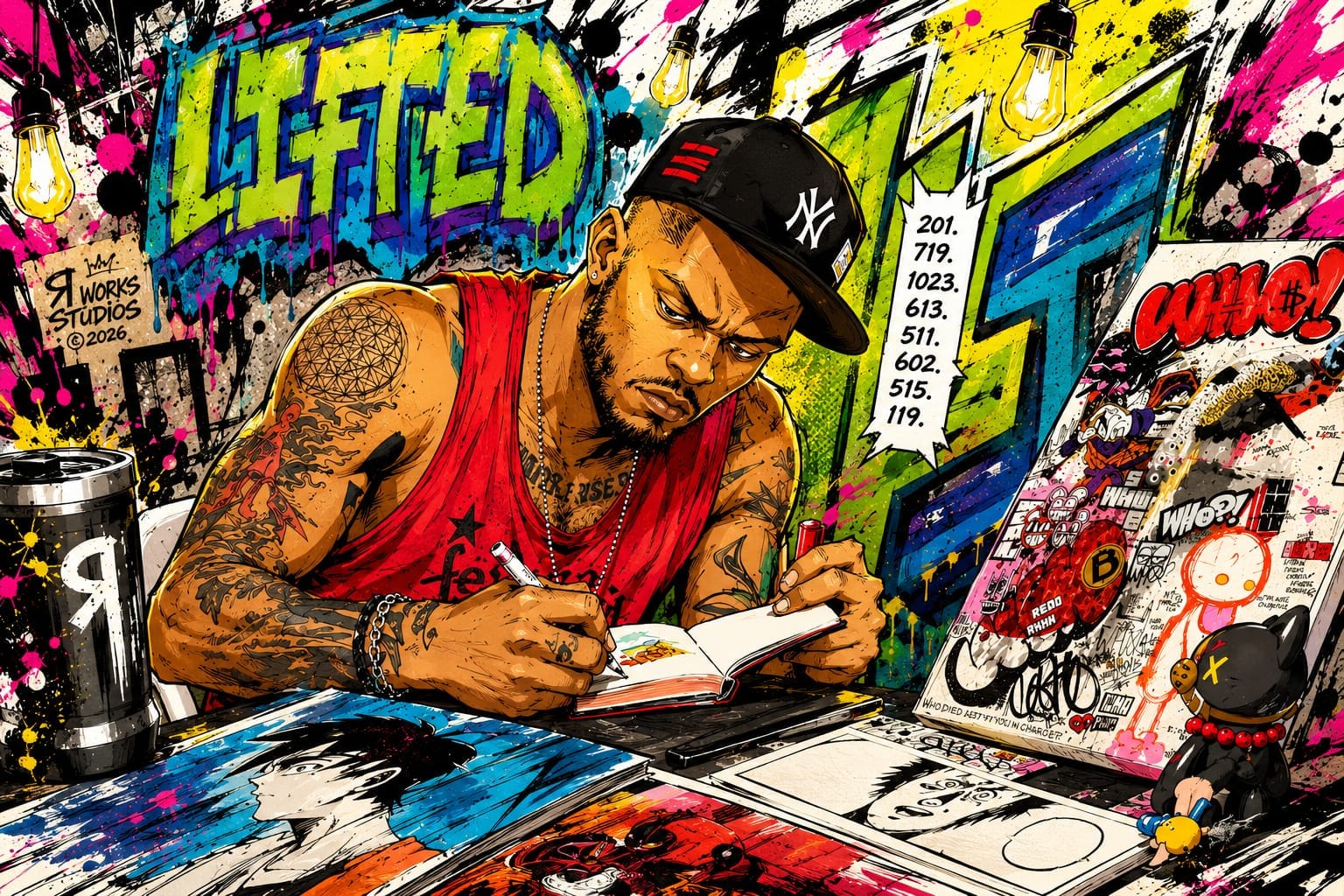
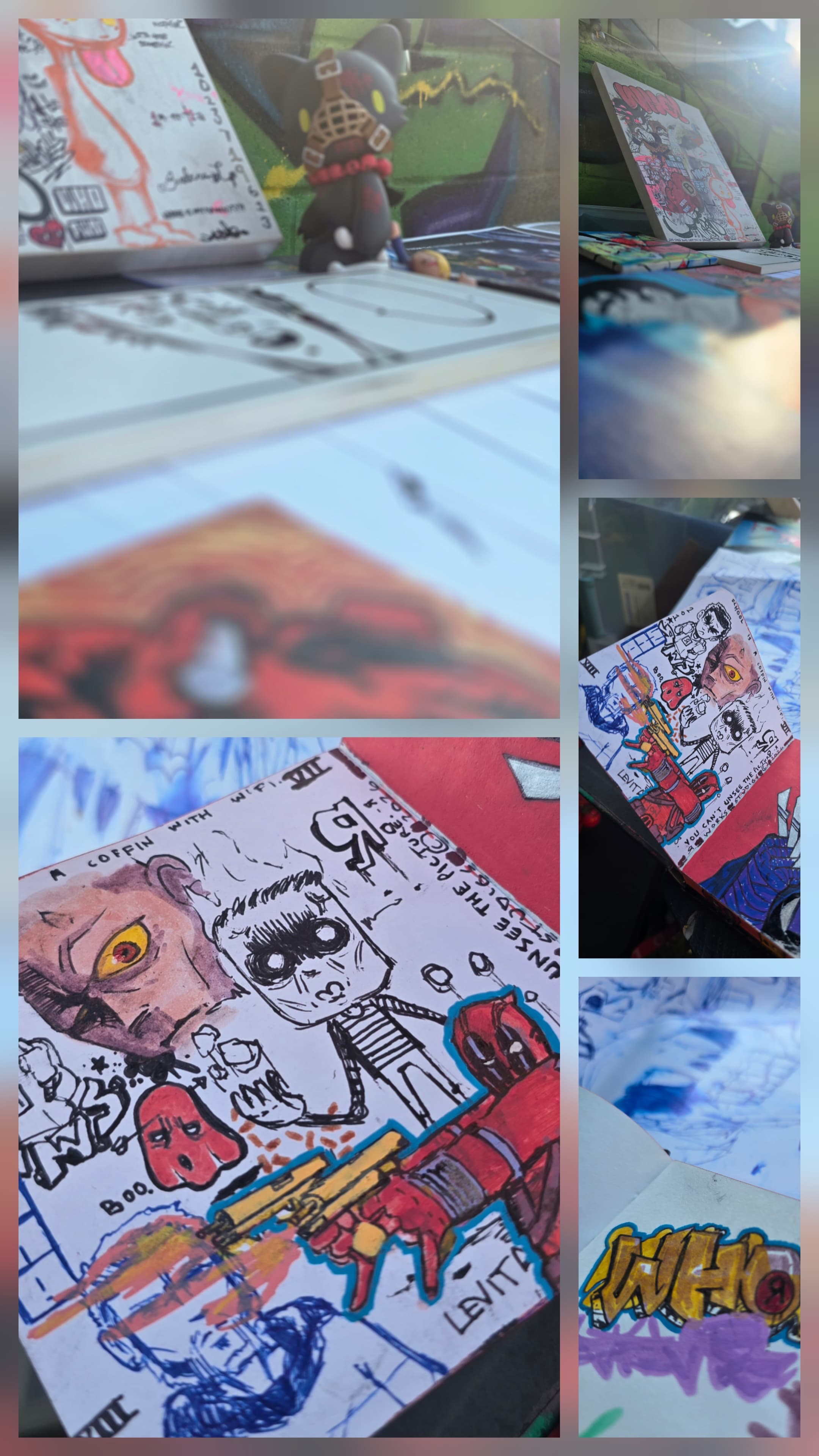
That philosophy appeared across the room through live ink drawings, dense lines and high-contrast splatters of cyan and hot magenta. The studio’s aesthetic bridges the immediacy of graffiti culture with the intention and composition of gallery-grade design.
It could be seen in everything from metallic-gold and neon-green promotional flyers to the custom concept portrait created for Whyte Tony’s five-year lyrical project, She Say. The work did not treat street culture as a visual reference to be extracted and repackaged. It emerged directly from the same creative environment as the music itself.
The result was a shared visual language—one that felt raw without being careless and confrontational without sacrificing precision.
Live illustration also changed the rhythm of the event. While musicians built their work through sound, ink created another record of the experience in real time. Lines, colors and splatters became visual echoes of the voices and bass moving through the dispensary.
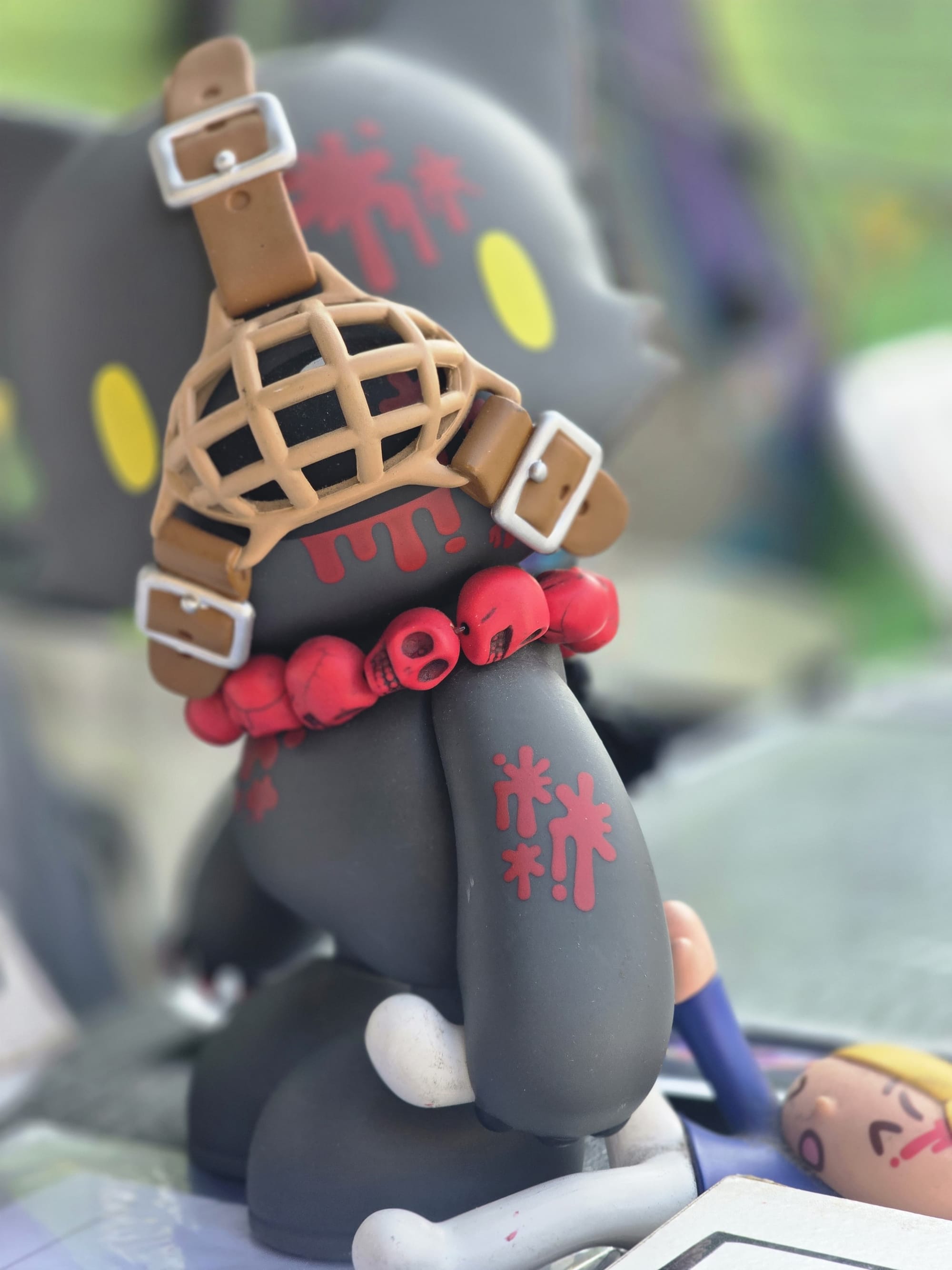
This cross-pollination is central to what makes Jersey City’s independent creative community so dynamic. Music does not exist separately from fashion, visual art, cannabis or film. Each discipline feeds the next, creating a living system in which a performance can inspire a portrait, a portrait can shape a campaign and a gathering can become the setting for a new visual release.
“GET DAT DOE” Captures the Movement
The gathering’s kinetic energy directly fueled the official visual release for “GET DAT DOE” by Delyon Don and Conan, the Energy God. It also generated high-octane footage connected to Delyon’s “OOH WEE” Jersey Club Remix.
Shot on location to preserve the raw pulse of the movement, the “GET DAT DOE” video places high-contrast performance ciphers inside narrow brick stairwells washed in saturated red-and-green light. These scenes are juxtaposed with local graffiti murals carrying the declaration “NEVER GIVE UP!”
The environments are not passive backdrops. The stairwells, walls, murals and lighting establish a visual vocabulary rooted in Jersey City. Instead of smoothing away the neighborhood’s texture, the video turns it into part of the performance.
That approach captures the larger purpose of Rock The Block. The event was not designed to imitate a conventional soundstage or reproduce an industry showcase on a smaller budget. It used the spaces, people and resources already present within the community to create something with its own identity.
An Ecosystem Without Gatekeepers
What unfolded inside Lifted Dispensary was more than a pop-up. It offered a blueprint for an autonomous, self-sustaining creative ecosystem where hip-hop, visual media, fine art and cannabis culture bleed into one another.
Artists performed. Illustrators interpreted the energy. Photographers and videographers captured it. Organizers created the environment, and an independent studio turned the resulting material into a lasting visual language.
This is what cultural ownership can look like at the local level. It does not require waiting for a major institution to recognize what is happening. It requires artists to build the structures that allow their work to be created, documented and circulated on their own terms.
Jersey City’s underground creative engine is already running. It lives inside dispensaries, stairwells, studios and brick-lined blocks. It moves through clouds of smoke, heavy bass and wet ink. Most importantly, it belongs to the people powering it.
The gatekeepers don’t own this city. Frame by frame, print by print and track by track, its legacy is already being written.
