
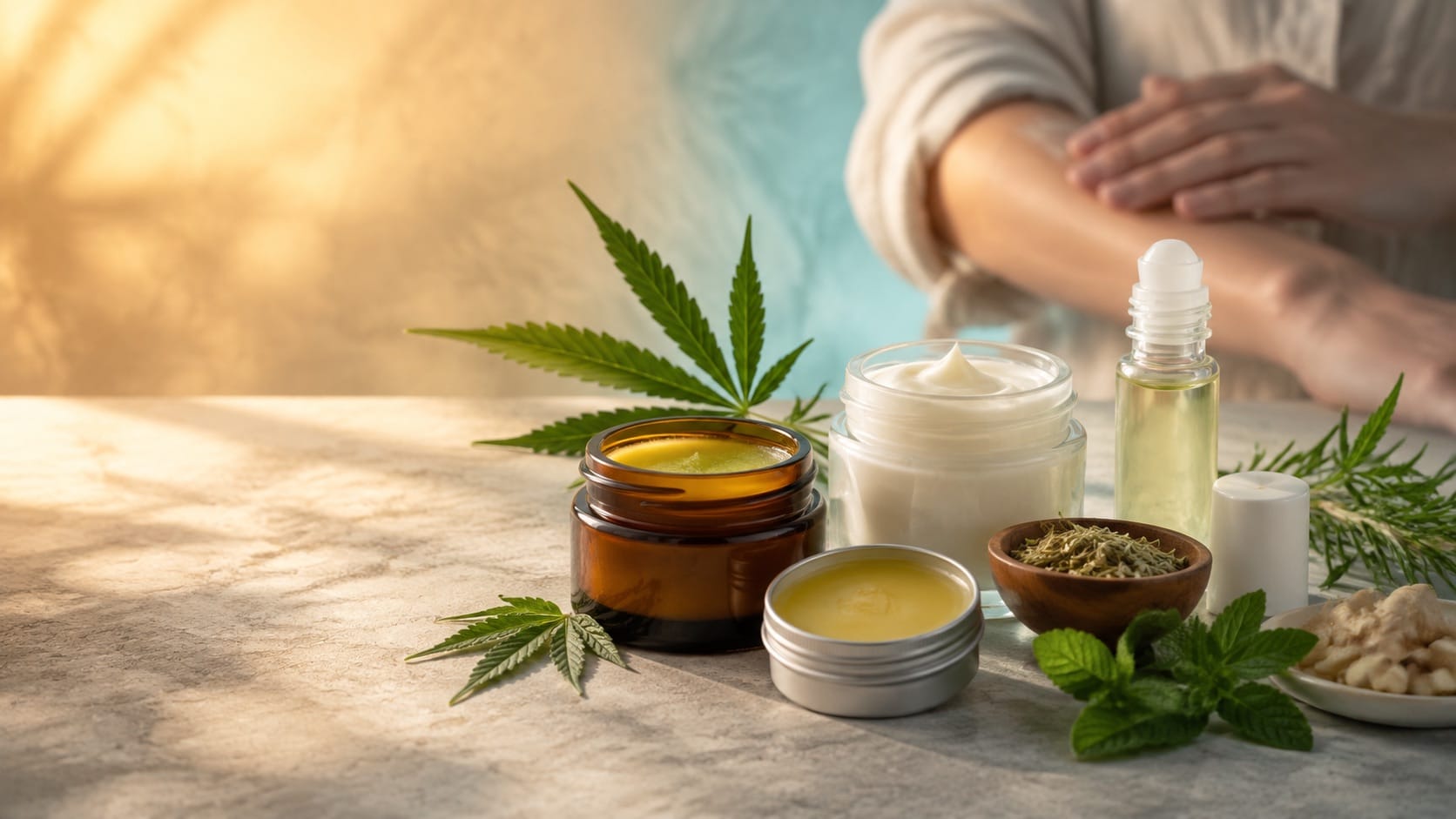
People searching for a CBD salve for nerve pain quickly discover that topical cannabinoid products come in several different forms.
Salves, balms, creams, gels, lotions, and roll-ons can all be marketed for targeted topical use, but they differ considerably in texture, ingredients, concentration, and how they feel on the skin.
That makes the product format only one part of the decision.
For consumers dealing with nerve-related discomfort, it is also worth comparing cannabinoid strength, warming or cooling ingredients, laboratory testing, and how the product will actually be applied.
CBD topicals are not established treatments for neuropathy or damaged nerves, and persistent burning, numbness, tingling, weakness, or unexplained pain should be evaluated by a healthcare professional. But for adults who already use topical cannabinoids as part of their personal wellness routine, understanding these differences can make products easier to compare.
What Is a CBD Salve?
A CBD salve is typically an oil- and wax-based topical containing cannabidiol.
Unlike most creams and lotions, salves generally contain little or no water. This usually gives them a thicker texture and allows them to remain on the skin longer after application.
Common ingredients in a CBD salve may include:
- CBD or other cannabinoids
- Plant oils
- Beeswax or botanical waxes
- Shea or cocoa butter
- Botanical extracts
- Menthol or other sensory ingredients
Because salves are usually concentrated and applied directly to a localized area, they are commonly considered alongside CBD creams, balms, and other targeted topicals.
CBD Salve vs. CBD Cream for Nerve Pain
Although shoppers often search specifically for a CBD salve for nerve pain, the most suitable topical may actually be labeled as a cream, balm, gel, or roll-on.
The terminology describes the product base rather than necessarily describing how it is used.
A salve is generally thicker and oil-based.
A cream normally combines water and oils in an emulsion, producing a lighter texture that can be easier to spread.
A gel tends to feel lighter still, while a roll-on provides a convenient way to apply a topical without using the hands.
Consumers comparing a CBD salve for nerve pain may therefore also want to consider products such as Quiet Monk CBD's warming cream. It is technically a cream rather than a salve, but it serves the same broader category of targeted topical application and provides an example of why shoppers should compare the formulation rather than relying solely on the word used on the label.
That distinction is important because a person searching for a salve may ultimately prefer the feel and spreadability of a cream.
Warming vs. Cooling CBD Topicals
Another major difference between topical products is the sensation they create.
Some formulas are designed to feel neutral.
Others produce a noticeable warming or cooling effect.
Cooling CBD topicals commonly use ingredients such as menthol, creating a cold sensation similar to traditional sports rubs.
Warming formulas create a different sensory experience and can be appealing to consumers who dislike intense cooling.
Neither type is inherently better.
A person's preference may depend on:
- The location where the topical is applied
- Skin sensitivity
- Desired texture
- Whether they enjoy warming or cooling sensations
- How frequently they expect to use the product
This is one reason two products with identical amounts of CBD can feel completely different in practice.
How Much CBD Should a Nerve-Pain Topical Contain?
There is no established CBD topical strength that has been clinically proven to be appropriate for nerve pain.
The market currently includes products ranging from a few hundred milligrams of CBD to formulations containing several thousand milligrams.
When comparing CBD topical strength, consumers should look at more than the number on the front of the container.
Important factors include:
- Total CBD per container
- Container size
- CBD concentration
- Other cannabinoids
- Amount typically applied
- Third-party potency testing
For example, 5,000mg of CBD in a four-ounce container is substantially more concentrated than 5,000mg spread across an eight-ounce container.
This distinction matters when comparing high-potency salves and creams.
CBD Cream, Balm, Ointment and Rub: Does the Name Matter?
Consumers use several different terms when searching for topical CBD products.
Common searches include:
CBD salve for nerve pain
CBD cream for nerve pain
CBD balm for nerve pain
CBD ointment for nerve pain
CBD rub for nerve pain
These products may all be used in a similar targeted manner, but their bases can be quite different.
A balm or salve may stay on the skin longer.
A cream may spread more easily over a larger area.
An ointment is usually heavier and more occlusive.
A rub is often simply a marketing description and can refer to several different formulations.
Rather than choosing exclusively by product name, compare the actual ingredients and texture.
Other Cannabinoids Are Becoming More Common
CBD is no longer the only cannabinoid appearing in topical formulas.
CBG is increasingly being combined with CBD, and cannabinoids such as CBC and CBN are also beginning to appear in multi-cannabinoid products.
Research interest in these cannabinoids continues to grow, but controlled human research involving topical application remains limited.
Consumers should therefore distinguish between an interesting cannabinoid formulation and a clinically proven treatment.
One useful thing to check is the actual amount of each cannabinoid.
A topical containing:
5,000mg CBD + 500mg CBG
has a very different cannabinoid profile from one containing:
5,000mg CBD + 25mg CBG
even though both can technically advertise CBD and CBG on the label.
Transparent cannabinoid quantities make products much easier to compare.
Look Beyond CBD When Reading the Ingredient List
Cannabinoids usually make up only a portion of the finished topical formula.
The remaining ingredients determine much of the product's texture, spreadability, scent, and sensory experience.
Depending on the formula, a topical may contain:
- Plant oils
- Aloe
- Shea butter
- Cocoa butter
- Botanical extracts
- Menthol
- Camphor
- Waxes
- Emulsifiers
- Fragrance
- Preservatives
Consumers with ingredient sensitivities should review the entire ingredient panel rather than focusing only on cannabinoid potency.
A high CBD number does not automatically make the rest of the formulation suitable for every person.
Third-Party Testing Should Verify the Label
A reputable cannabinoid topical should be supported by independent laboratory testing.
A certificate of analysis can help consumers confirm whether the advertised cannabinoid amounts are reasonably consistent with the product being sold.
Useful information to review includes:
- CBD potency
- CBG and other cannabinoid levels
- THC results
- Laboratory name
- Test date
- Batch or lot information
This becomes especially important as products move into higher cannabinoid concentrations.
Claims of 5,000mg, 10,000mg, or more should be supported by testing rather than being accepted solely because the number appears on the front label.
Does CBD Salve Help Nerve Pain?
This is one of the most common questions surrounding these products, but the evidence requires some caution.
Cannabinoids are being studied for their effects on pain signaling and inflammation, but research on topical CBD products for specific forms of nerve pain remains limited.
There is not enough clinical evidence to say that a CBD salve can repair damaged nerves, cure neuropathy, or reliably treat the underlying cause of nerve pain.
Individual consumers may describe positive experiences with topical CBD products, but personal experience is not the same as clinical proof.
That is why responsible product comparisons should focus on formulation, concentration, testing, and intended topical use rather than making guarantees about medical outcomes.
When Nerve Symptoms Need Medical Attention
Nerve-related symptoms can have many different causes.
These may include:
- Diabetes
- Injuries
- Vitamin deficiencies
- Medication effects
- Nerve compression
- Neurological conditions
Persistent numbness, burning, tingling, weakness, or worsening symptoms should not simply be covered up with a topical product.
Determining the underlying cause may require medical evaluation.
Topical products can be considered separately as part of a consumer's personal comfort or wellness routine, but they should not replace diagnosis or treatment when a medical condition may be involved.
How to Choose Between a CBD Salve, Cream or Balm
When comparing topical cannabinoid products, ask a few practical questions.
How concentrated is the CBD?
Look at total CBD relative to container size.
Does the product contain other cannabinoids?
Check the actual amounts of CBG, CBC, CBN, or other cannabinoids rather than relying solely on front-label claims.
Do you want warming, cooling, or a neutral sensation?
Read the ingredient list for menthol and other sensory ingredients.
How will you apply it?
A salve may suit a small targeted area, while a cream may be easier to spread.
Has the product been third-party tested?
The advertised cannabinoid content should be independently verifiable.
Does the company make unrealistic medical claims?
Be cautious of products claiming to cure neuropathy or repair damaged nerves.
The Best CBD Topical May Not Technically Be a Salve
Searching for a CBD salve for nerve pain is a reasonable starting point, but shoppers should not let one product term unnecessarily limit their options.
A balm, cream, gel, ointment, or warming topical may offer a different texture or application experience while serving the same general purpose of localized topical use.
The most useful comparison therefore looks beyond the name on the container.
Consider the cannabinoid concentration, topical base, warming or cooling ingredients, laboratory testing, and how the product fits into your routine.
Those factors provide a much clearer picture of what separates one CBD topical from another.
