

By: Michael Sassano
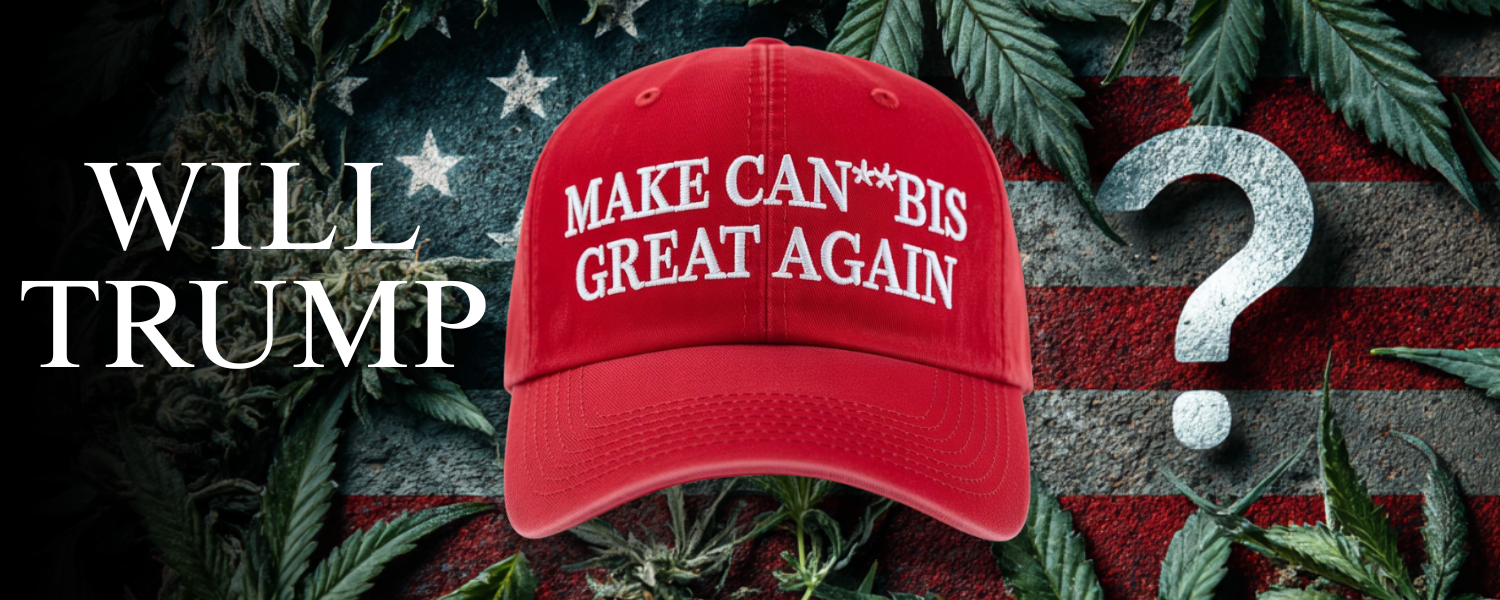
A landmark announcement, "Make Cannabis Great Again," is expected from President Donald Trump in the coming weeks, signalling a seismic shift in global drug policy. Years of political stagnation, where cannabis was used as a political football for every purpose except its intended medical use, are set to end. In a move that cuts through decades of bureaucracy, President Trump is poised to be responsible for not only legalizing cannabis as a medicine in the United States but for triggering a cascade of similar recognitions around the world.
For too long, partisan political projects and powerful lobbyists have obstructed what is a common-sense, conservative, and middle-of-the-road solution: rescheduling cannabis to Schedule III federally. This will finally allow any person in any state to access medical cannabis if they choose. President Trump’s approach to isolate this single, logical issue and make a decisive ruling stand in stark contrast to the endless political manoeuvring that has defined the issue for a generation.
The Dominoes Fall: A Sequence of Global Validation
This author has long predicted that a series of key events would align to create a "Global Cannabis Explosion," and the dominoes are now falling into place. President Trump's action is not occurring in a vacuum but is the powerful culmination of a sequence of legal and scientific affirmations that have paved the way for this historic moment.
It began in December 2020, when the United Nations narrowly approved a measure to recognize cannabis as a medicine, setting a critical international precedent. This was followed by the release of a monumental 252-page report from the U.S. Department of Health and Human Services (HHS) that released in December 2023. For the first time, a major government agency, utilizing the largest database on cannabis usage in the world, analysed all available data and definitively concluded that cannabis is a beneficial medicine. This report validated what was already known in clinical settings for conditions like Epilepsy, MS, and severe cancer-related symptoms, but its broader findings provided an undeniable scientific foundation for federal action. Based on its findings, the HHS asserted that cannabis has a currently accepted medical use in the United States and a manageable risk profile, formally recommending that it be rescheduled from Schedule I to Schedule III of the Controlled Substances Act.
And then gloablly, following up on those events in June 2024, the German’s reclassifying cannabis to remove it as a narcotic, is paving the way for a more flexible European framework to treat cannabis access. This would be the first time a major European country has greatly increased access to cannabis by reducing the medical barriers to allow easier access for all it’s patients.
Unlocking American Leadership and a Global R&D Race
With these foundational pillars in place, the final and most critical piece is rescheduling cannabis to Schedule III, an action that will unlock the full potential of federal legalization. The U.S. government’s official recognition of cannabis as a medicine is a crown jewel that extends far beyond American borders.
This decision will ignite a global research and development race to create new, registered cannabis-based medicines. For years, American researchers have been hamstrung by prohibitive regulations. Rescheduling unlocks R&D in the United States, and other innovative nations will be compelled to accelerate their own programs to avoid being left behind. Consequently, foreign governments will have fewer and fewer credible reasons to deny their own citizens access to legal medical cannabis, creating a worldwide ripple effect.
Even larger ramifications will be for all the countries that have yet to adopt a basic access program for medical cannabis usage. The US has continually led the charge for most worldwide advancements and by acknowledging cannabis as a medicine, the trend to open up access in EU will continue and quicken.
And for the global pharmaceutical cannabis players with the proper medical cannabis manufacturing quality standards of EU-GMP, the US market may become a significant medical market since there are very limited properly medically regulated suppliers in the US markets.
A Singular Vision to Deliver a Common-Sense Victory
What is most remarkable is how this historic victory was achieved. Where Democrats insisted on lumping cannabis reform with new taxes and unrelated equity agendas, President Trump employed his signature tactic: he isolated the core issue, stripped away the political pork, and made a straightforward call based on the evidence.
Whether one is a staunch supporter or a critic, activists who have fought for over two decades for the simple dignity of calling cannabis a medicine will have finally won their fight, thanks to this decisive action. Medical clinics will be vindicated, and millions of patients around the world will finally gain the access they deserve to a real, effective medicine. This entire landscape is being reshaped not by a committee or a sprawling, compromised bill, but by an outsider President who tackled an issue that should have never been controversial in the first place.
