
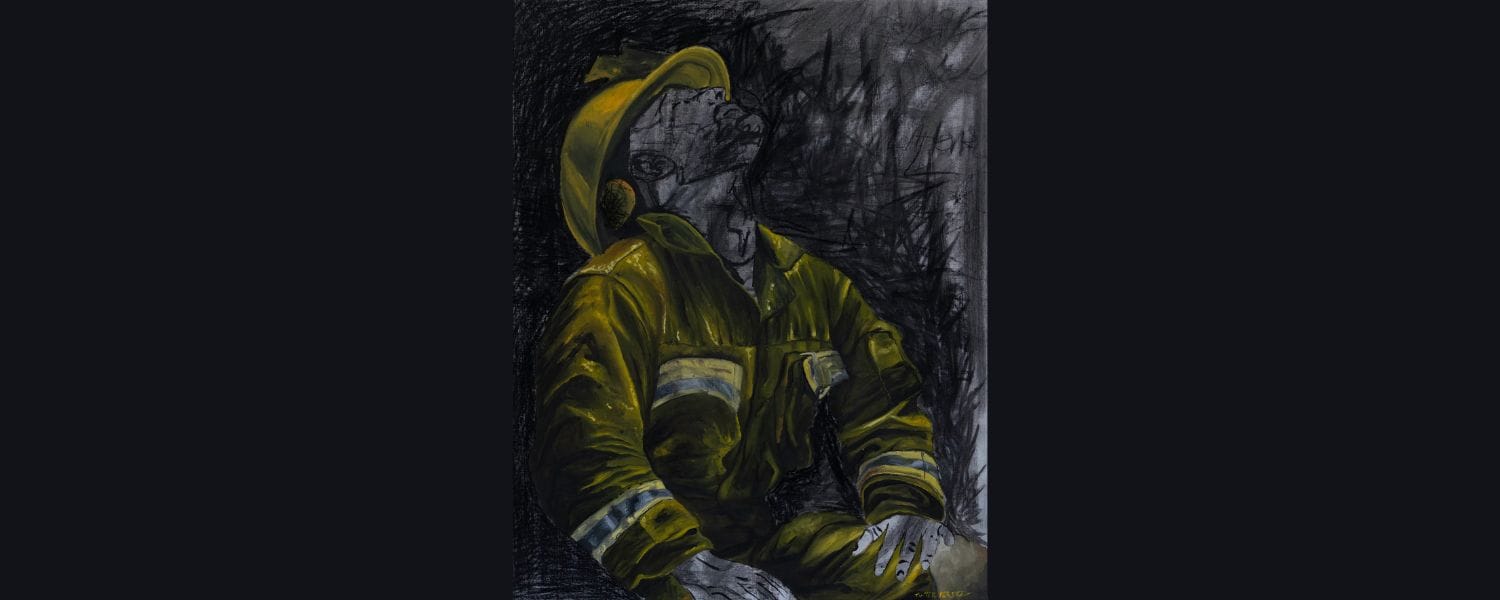

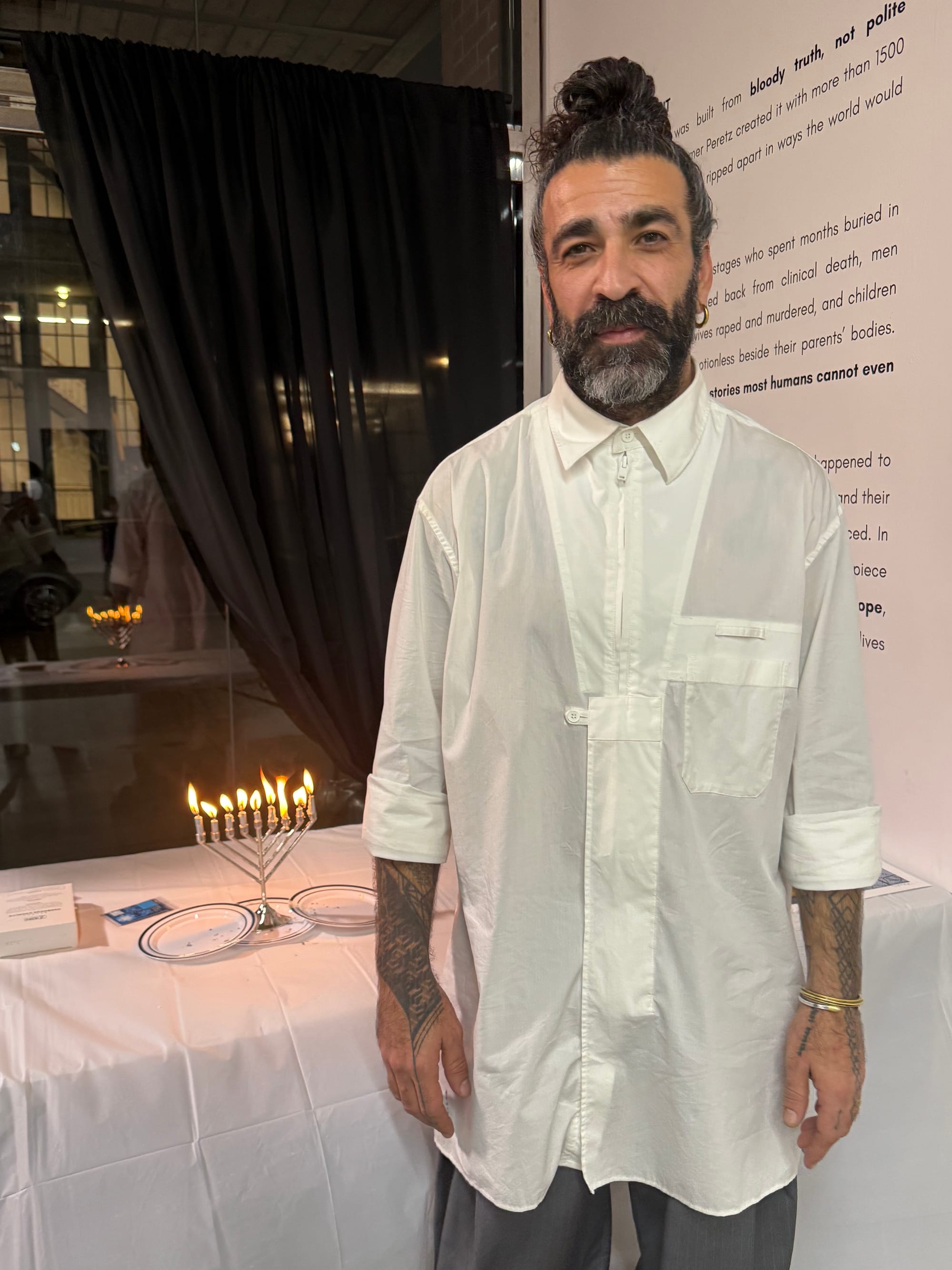
Tomer Peretz is an Israeli-American artist whose work has long explored memory, conflict, and the psychological residue of violence. His practice—spanning painting, large-scale installations, and collaborative works—has been exhibited internationally, shaped by a life lived at the intersection of art and war. A former combat soldier who served during the Second Intifada, Peretz has spent years translating lived trauma into visual language, not as metaphor but as record.
For Peretz, art was never theoretical. It was functional. Necessary.
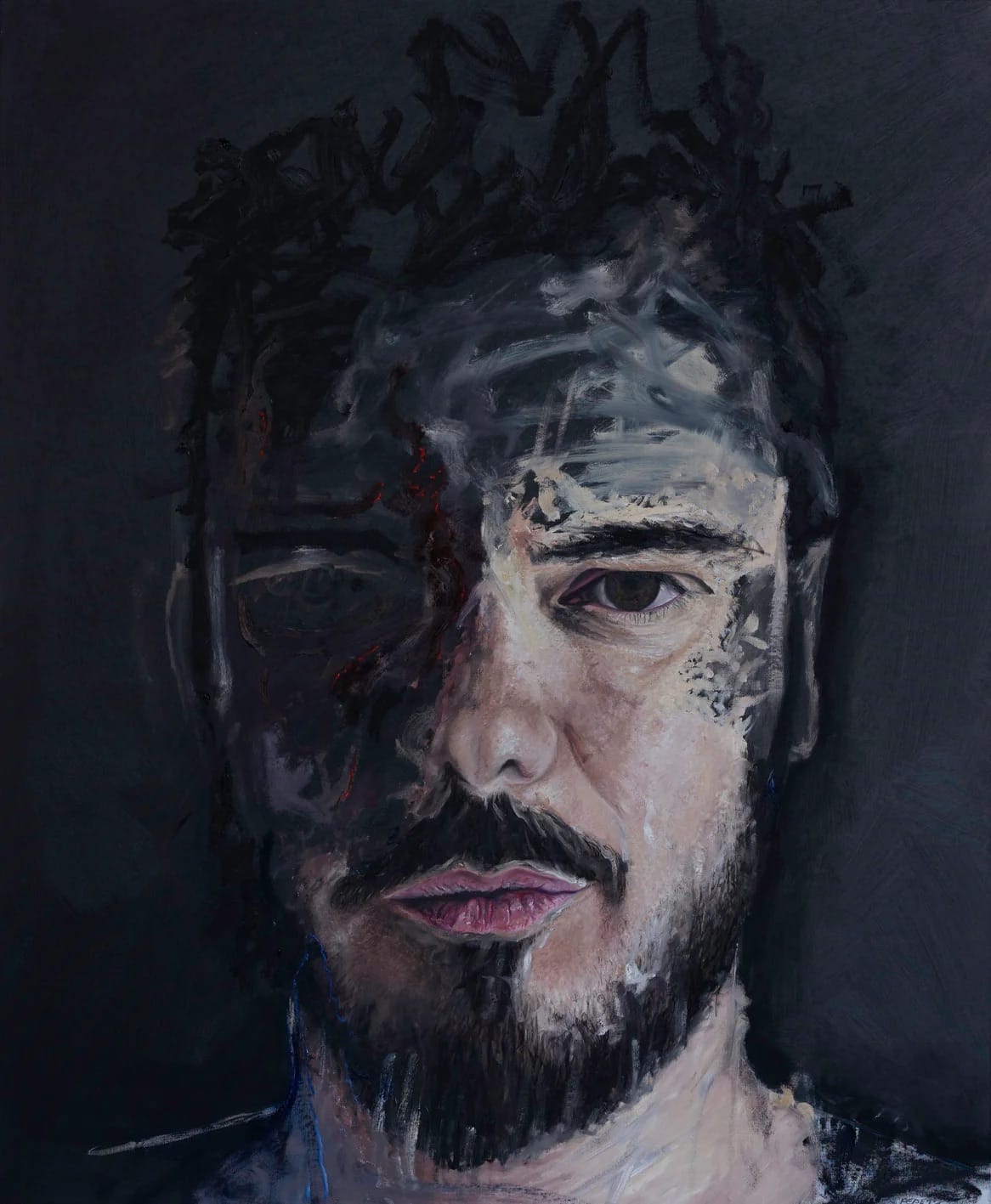
That foundation became decisive in the days following October 7. While much of Israel was still trying to comprehend the scale of what had happened, Peretz was not in his studio. He was working with ZAKA, helping recover bodies from Kibbutz Be’eri and nearby communities—an experience he describes as fundamentally different from anything he had seen before. Even compared to his military service, the magnitude of civilian death was overwhelming. As he explains, seeing friends killed in combat is not the same as walking through a kibbutz and encountering “tens of bodies all over.” What marked October 7 was not unfamiliar cruelty, but the sheer volume of loss.
What followed was not retreat, but return—back to the one tool that had sustained him throughout his life: making.
Art as Survival Infrastructure
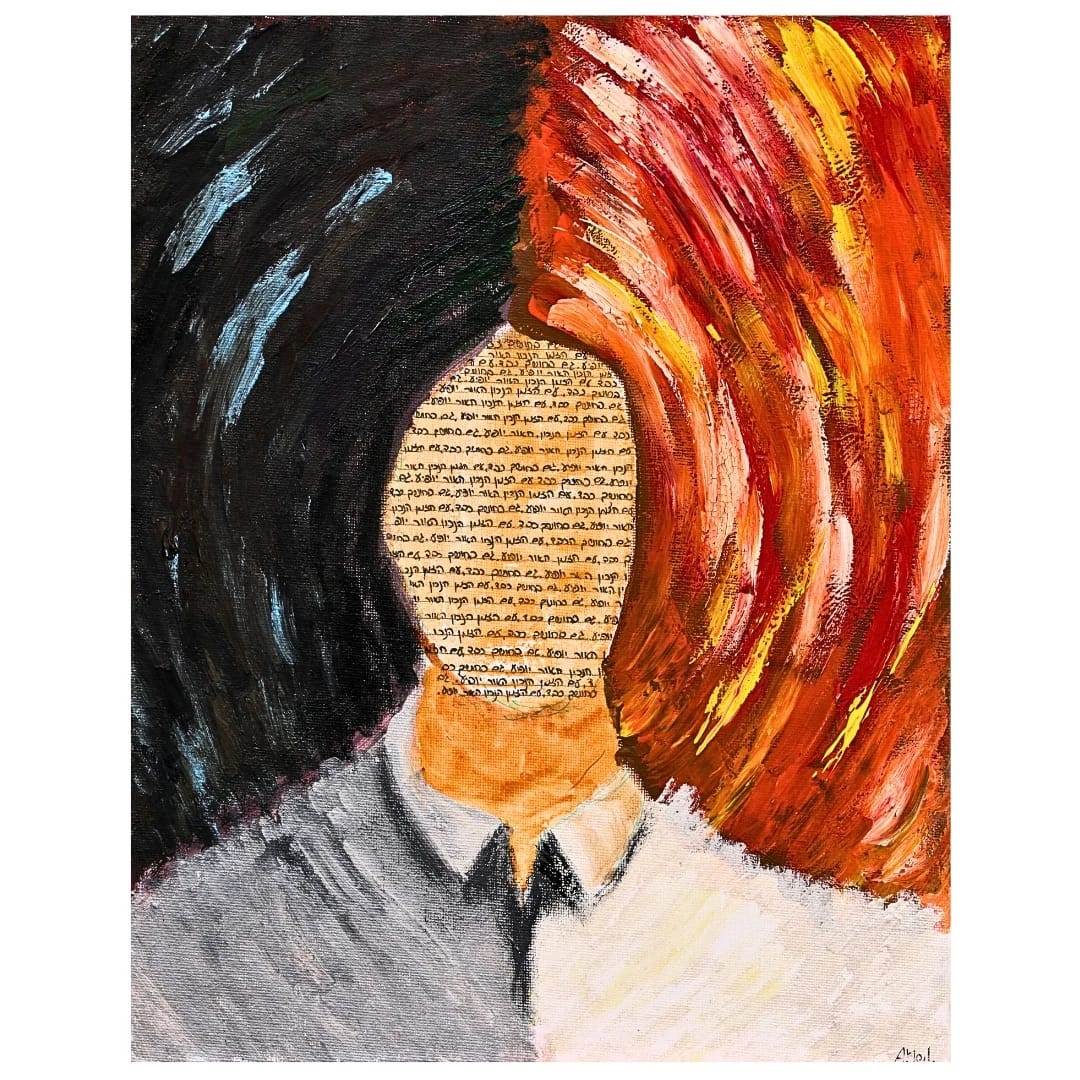
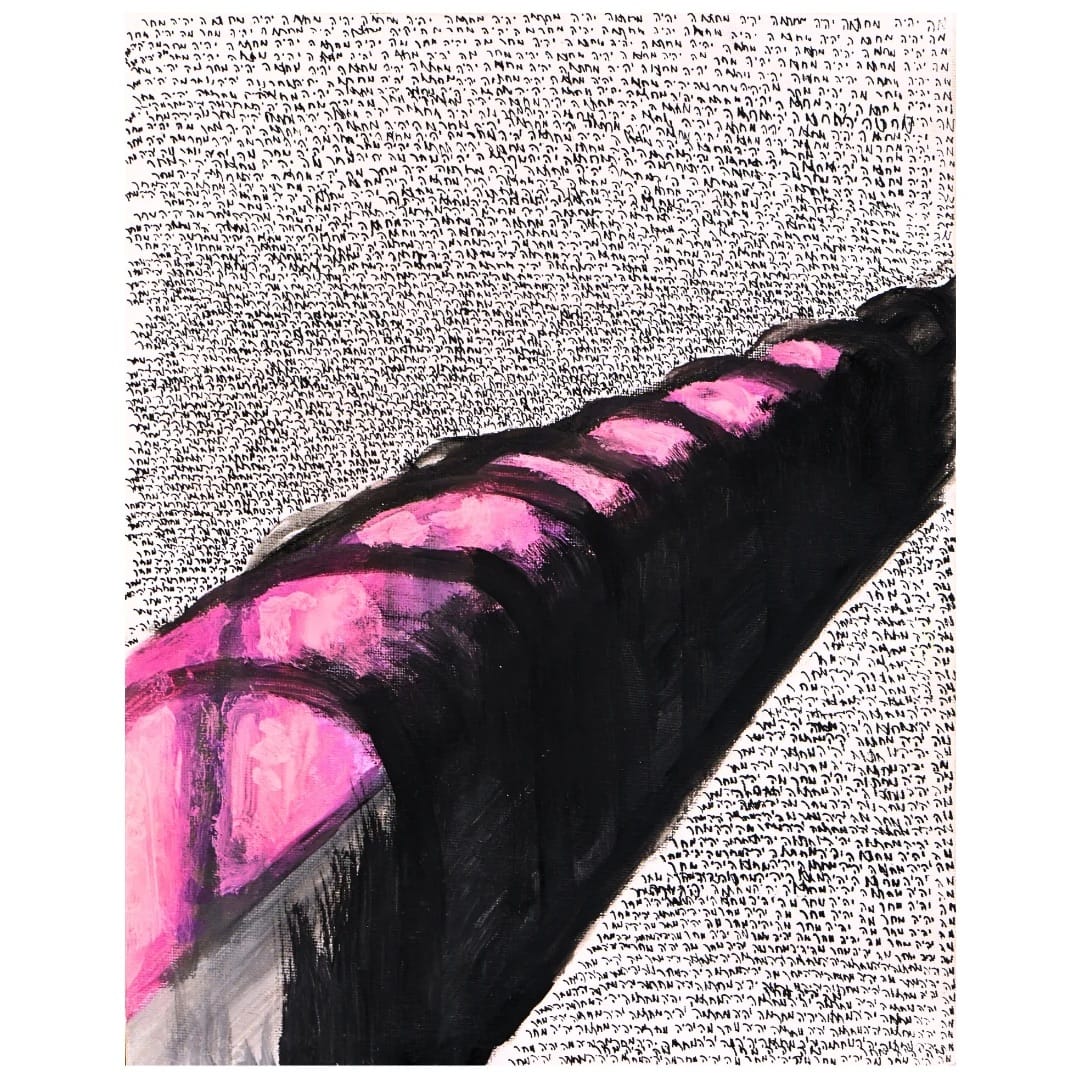
Peretz is direct about the role art has played in his own life. He does not describe it as therapy in the abstract, but as a system that keeps him functioning. “This didn’t just help me,” he says. “It saved me. It’s still saving me.” Years earlier, he lived with flashbacks, anxiety, and recurring nightmares. After October 7, much of that resurfaced. What stabilized him again was the physical discipline of painting—the repetition, the focus, the bodily engagement with material.
That experience became the philosophical backbone of The 8 Project. The initiative does not aim to erase trauma or soften its edges. Instead, it focuses on rebuilding life around it. Peretz is clear that memory does not disappear; anxiety may never fully leave. What can change is how someone moves through the day. “Our goal isn’t to remove trauma,” he explains. “It’s to help people wake up in the morning, reconnect with life, and build a routine they can actually live with.”
Access Without Language
Many participants in The 8 Project are elite soldiers already living with diagnosed PTSD—men who are far removed from the original events, yet deeply shaped by them. According to Peretz, these are often people who do not want to talk, analyze, or relive experiences verbally. Traditional pathways don’t always reach them.
Art does.
“The best way to access people who don’t want to speak is through their passion,” Peretz says. Visual art happens to be his own language, but the insight is broader: when someone is engaged in creating, defenses lower. During early workshops, soldiers who initially resisted painting often found themselves unable to stop, returning to canvases repeatedly, absorbed in the act. What emerged wasn’t confession, but agency—the ability to externalize something internal without explanation.
Healing Through Structure, Not Sentiment
What distinguishes The 8 Project from symbolic or reactionary art responses is its rigor. The program operates alongside licensed mental-health professionals, including psychiatrists, trauma therapists, and physical therapists. Art is not positioned as an alternative to care, but as a parallel structure that keeps participants engaged when language or introspection becomes overwhelming.
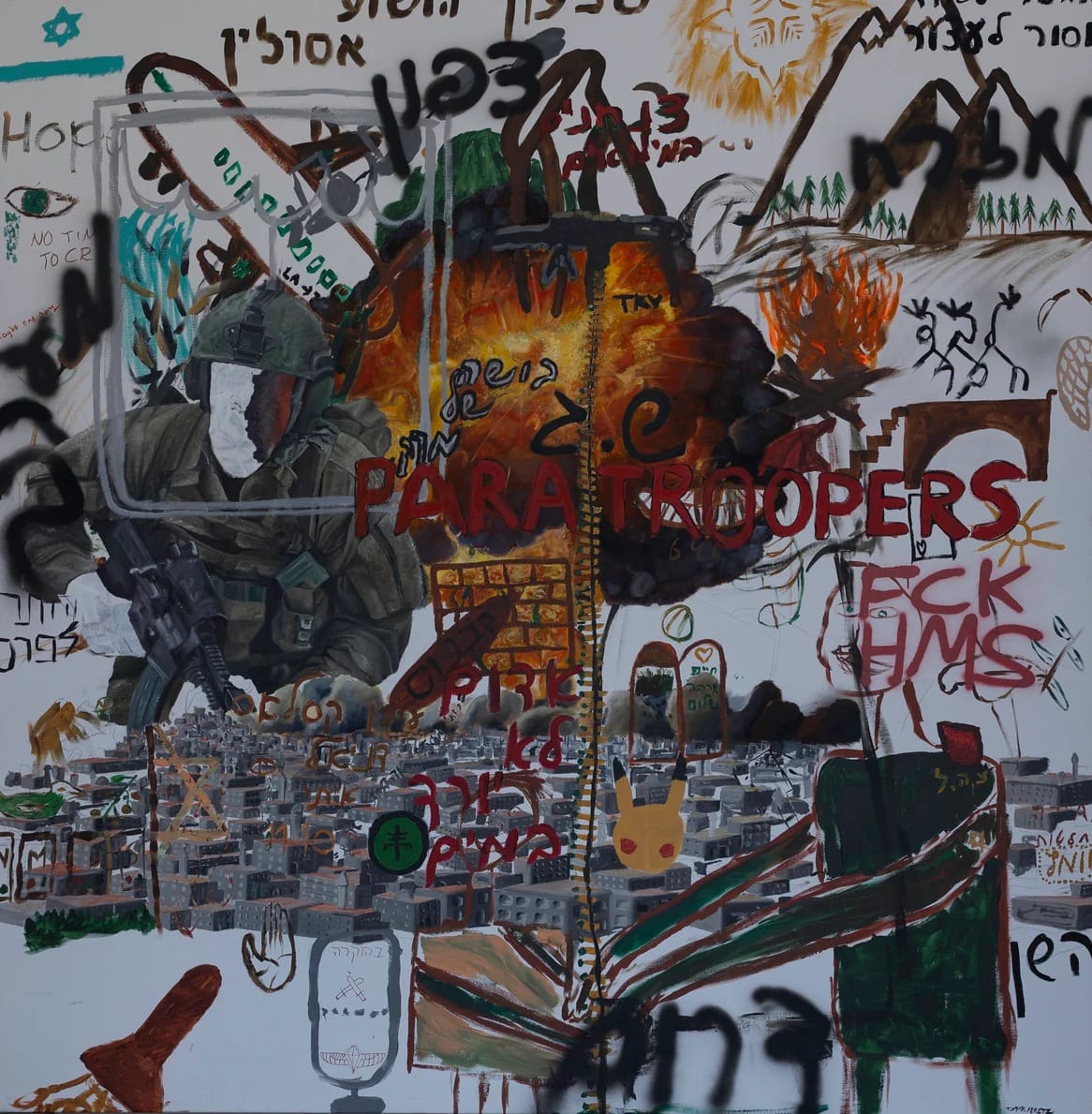
The project includes long-term residencies, cohort-based programs for mass-trauma survivors, international retreats, and public exhibitions. Exhibitions play a critical role. They generate funding, but they also complete a psychological circuit. Peretz has observed that many participants want their work seen—not explained, not contextualized, simply witnessed. The act of exhibiting becomes part of the healing itself.
October 7 as Continuum
Peretz does not frame October 7 as the beginning of the conflict. Raised in southeast Jerusalem, between radicalized environments, violence shaped his childhood long before adulthood or military service. Friends were attacked. Fear was ambient. In that context, October 7 was not shocking in its intent, but in its scale. As he puts it, “For a lot of people, the war started on October 7. For many of us, it didn’t.”
This perspective informs his refusal to participate in global debates over belief or denial. He no longer feels compelled to convince. “I’d rather focus on my brothers and sisters,” he says, referring to Israeli and Jewish communities. The choice is not disengagement, but concentration—directing finite energy toward those who are present, affected, and rebuilding.
Growth Without Dilution
Today, The 8 Project continues to expand carefully. Funding comes through a hybrid model: paid workshops, art sales, ticketed events, and limited institutional support. Every revenue stream feeds back into programming. The challenge, Peretz acknowledges, is scale. Resources determine how many participants can be supported at any given time.
Still, the work continues: rotating exhibitions in New York, ongoing residencies in Los Angeles, quarterly retreats in Mexico, and a steady intake of new participants, some barely in their twenties, others carrying decades of accumulated trauma.
Expanded Healing Modalities
Alongside its core art programming, The 8 Project also incorporates carefully structured psychedelic retreats as part of its broader approach to trauma recovery. These experiences are developed in controlled, intentional environments and are integrated with professional therapeutic support. For Peretz, the inclusion is not about escapism, but access—creating conditions where participants can momentarily step outside rigid psychological patterns and reconnect with sensation, memory, and presence in a different way. Like the painting process, the goal is not to erase trauma, but to shift one’s relationship to it—opening space for regulation, perspective, and, in some cases, a renewed sense of connection to life.
A Practice That Works
Asked where he stands personally now, Peretz describes himself as stable—mentally, physically, emotionally. Flashbacks and nightmares no longer dominate his life. When pressure builds, he returns to the studio. Painting remains the constant.
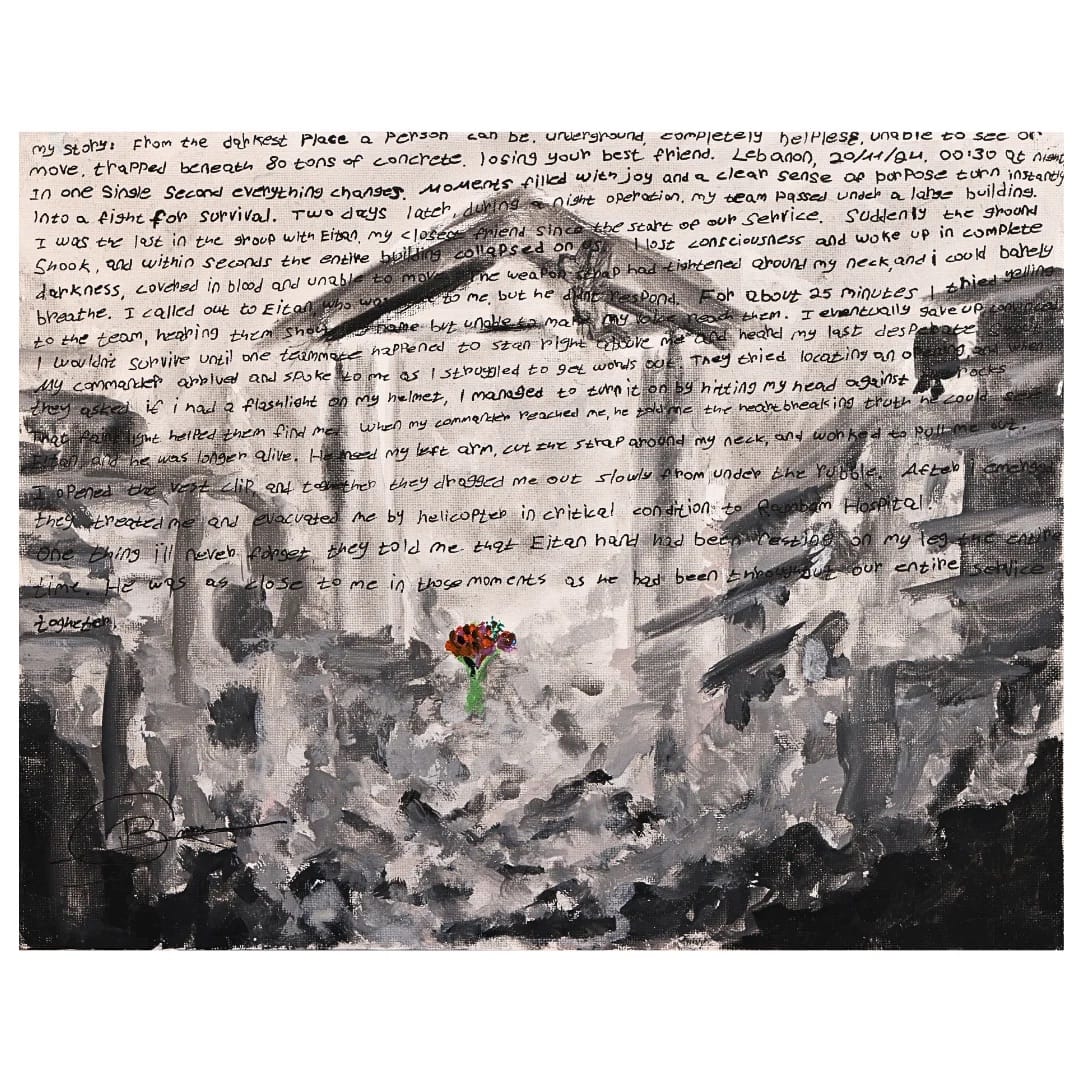
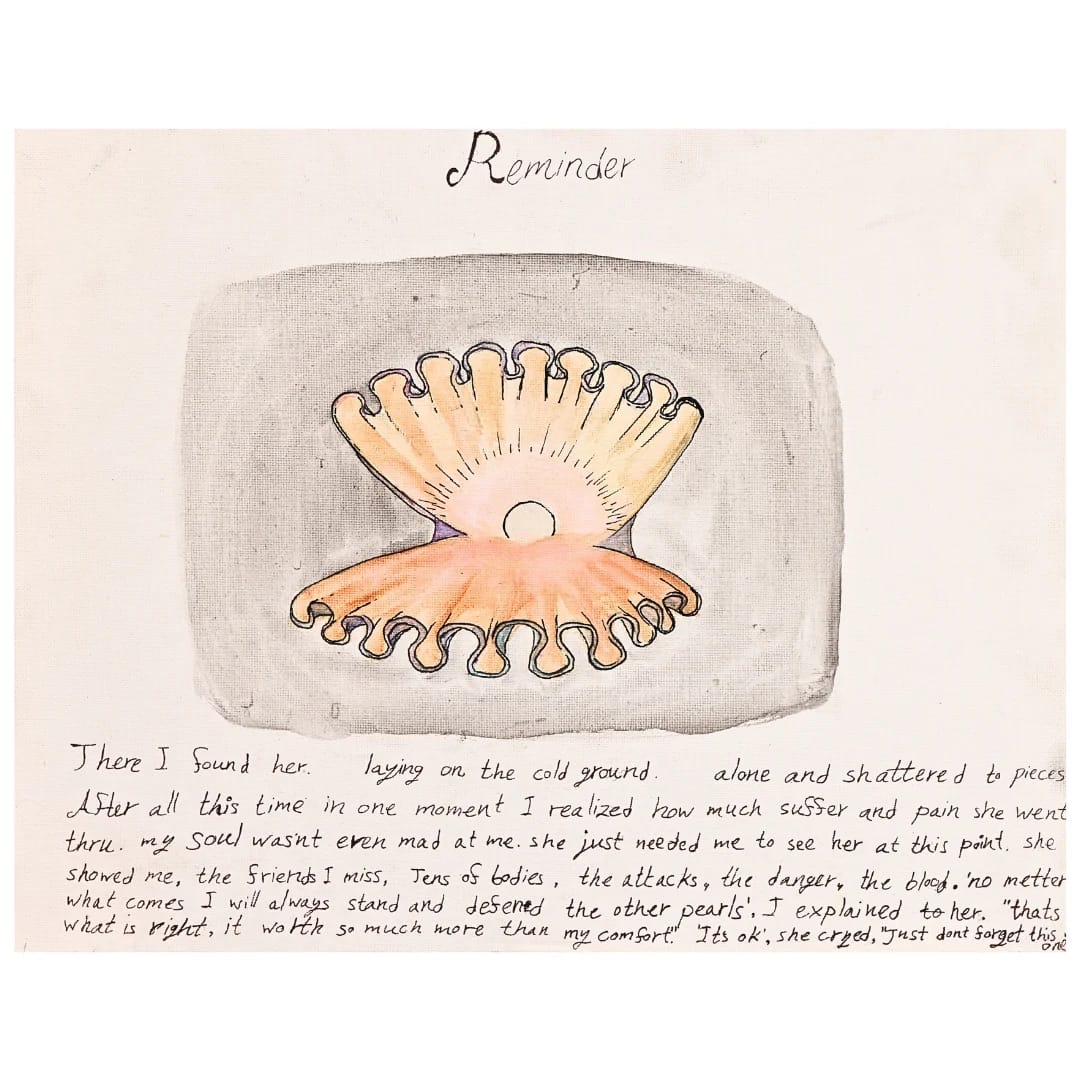
That practice—disciplined, embodied, ongoing—is what The 8 Project ultimately offers others. Not transcendence. Not erasure. But a way to live forward with intention.
Survival, here, is not the end of the story.It is the material.
Read more about Tomer in Honeysuckle's latest print edition found here!
