

For years, Texas has occupied a peculiar place in the American cannabis landscape. It is a state with one of the largest hemp markets in the country, a tightly restricted medical cannabis program, and a legal framework that often feels caught between the past and the future. Cannabis exists everywhere in Texas life, in products, patients, courtrooms, and city ballots yet policy conversations have remained fragmented, reactive, and politically charged.
That’s beginning to change.
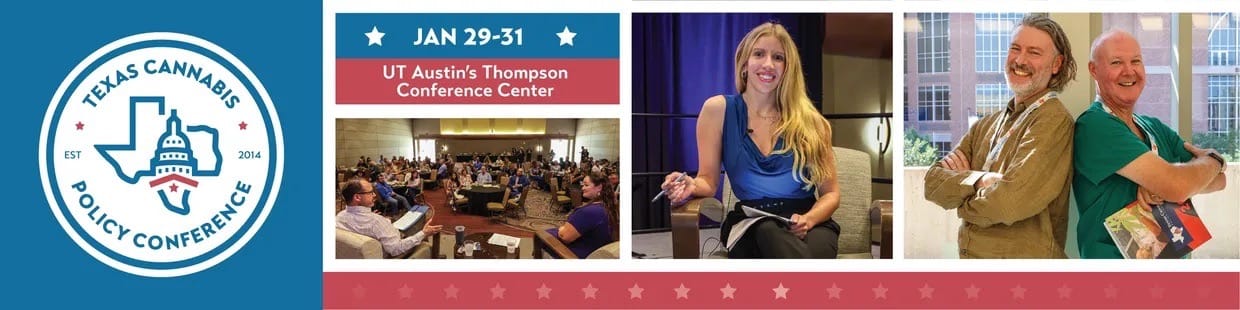
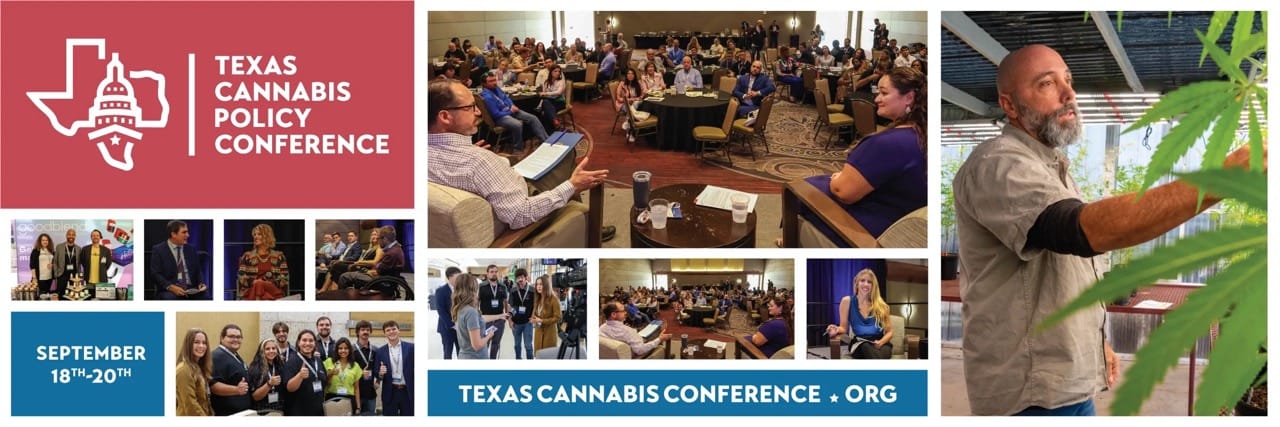
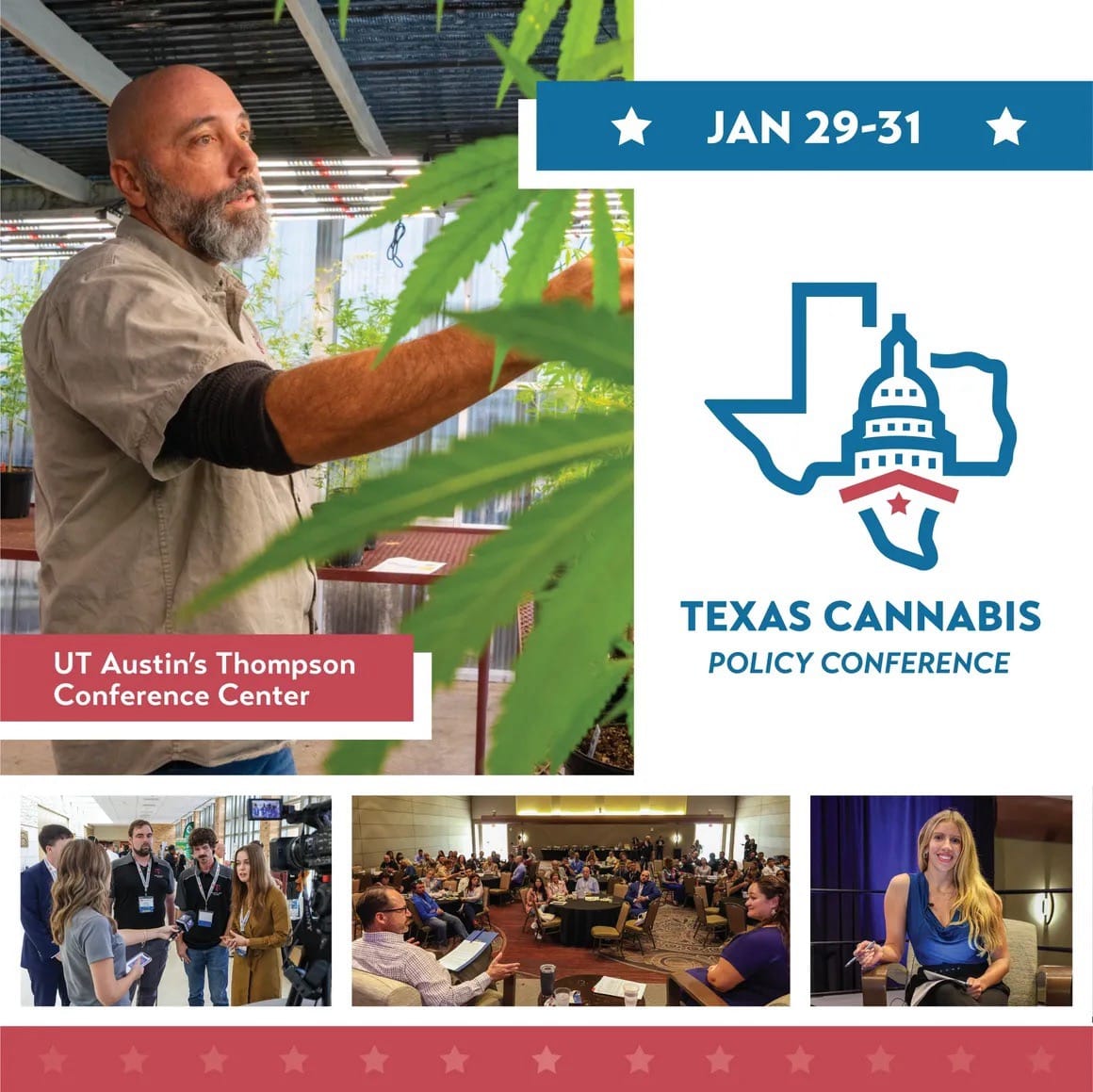
From January 29–31, policymakers, regulators, prosecutors, scientists, and public health experts will convene in Austin for the Texas Cannabis Policy Conference, hosted at the University of Texas at Austin’s Thompson Conference Center. The three-day gathering comes at a moment many see as a turning point: a convergence of legal uncertainty, regulatory reform, and growing public pressure that may finally force Texas to confront what comes next for cannabis and hemp.
Unlike industry expos or advocacy rallies, the Texas Cannabis Policy Conference is designed as a nonpartisan, policy-first forum. It brings together voices that rarely share the same room, legislators, law enforcement, medical professionals, local officials, and national policy experts, to engage in sustained, evidence-based discussion about regulation, enforcement, public health, and market stability.
Why This Moment Matters
Texas cannabis policy is under strain from multiple directions. A pending Texas Supreme Court case could significantly reshape how cannabis and hemp laws are interpreted and enforced statewide. At the same time, the Texas Department of State Health Services (DSHS) is advancing new rulemaking that introduces stronger oversight, recall authority, and enforcement standards for hemp-derived products, alongside proposed fees and restrictions that critics argue could destabilize the legal market.
Layered on top of that is federal uncertainty. Shifting enforcement priorities and regulatory interpretations at the national level have created ripple effects for the hemp industry, which remains federally legal but increasingly scrutinized. For Texas, a state that became a national hub for hemp production after the 2018 Farm Bill, those shifts carry real economic and legal consequences.
The conference agenda reflects that complexity, placing equal weight on medical cannabis and hemp policy, and emphasizing how the two are often intertwined in Texas law and enforcement.
Who’s Helping Make the Conversation Possible
The scope of the conference reflects growing recognition that cannabis policy can no longer be shaped in silos. Support from sponsors has enabled organizers to convene a diverse group of stakeholders in a neutral, professional setting, including industry leader Maverick PR, a strategic communications firm that has worked extensively at the intersection of cannabis, public policy, and emerging regulated markets.
Sponsorship support, organizers note, is about infrastructure rather than influence: ensuring that lawmakers, regulators, legal experts, and public health professionals can engage in informed dialogue at a moment when clarity is urgently needed.
Bringing Unlikely Voices Together
One of the conference’s distinguishing features is the range of perspectives represented. Among the headline speakers:
- Texas State Representative Drew Darby, who served on the House State Affairs Committee and played a key role in reshaping SB 3 from a proposed hemp prohibition into a regulatory framework. Darby is expected to discuss the political realities and compromises that define cannabis legislation in Texas.
- Texas State Senator Nathan Johnson, known for his data-driven approach to policy, will speak on how durable cannabis regulation is built, and why clarity and consistency matter for both public health and enforcement.
- Adam Bazaldua, a Dallas City Council member, will address local enforcement challenges and the growing tension between voter-approved decriminalization measures and state-level resistance.
- Sarah Stogner, a district attorney, will offer a prosecutorial perspective on public safety and the real-world consequences of cannabis enforcement, an angle often absent from public debate.
In addition, the conference includes current and former regulators from other states, medical professionals, scientists, attorneys, laboratory specialists, and public safety experts. For Texas lawmakers, many of whom have limited exposure to functioning cannabis regulatory systems, these voices provide rare context and comparative insight.
From Abstraction to Reality
What sets this conference apart is its focus on implementation, not ideology. Sessions are structured around practical questions: How do recalls actually work? What happens when fees are set too high? How do enforcement agencies prioritize safety without pushing consumers into unregulated markets? What does responsible oversight look like in practice?
Attendees can choose from more than 20 sessions over two days, with programming designed to encourage deep engagement rather than surface-level debate. Attorneys can earn up to nine hours of Continuing Legal Education (CLE) credit, reinforcing the conference’s emphasis on legal rigor and professional standards.
The goal, organizers say, is not consensus but competence, ensuring that the people shaping cannabis policy understand its consequences.
A Cultural Shift in How Texas Talks About Cannabis
Culturally, the Texas Cannabis Policy Conference represents something larger than a policy meeting. It signals a shift in how cannabis is discussed in a state where the topic has long been polarized or sidelined.
For patients navigating a limited medical program, for hemp operators facing sudden regulatory changes, and for communities grappling with uneven enforcement, the absence of coherent policy dialogue has had real costs. Bringing these conversations into an academic setting, and grounding them in data, law, and lived experience, reflects a growing recognition that cannabis policy is no longer a fringe issue.
It’s a public health issue.
A criminal justice issue.
An economic issue.
A governance issue.
And increasingly, it’s a cultural one.
Media and Public Access
Credentialed media are invited to attend the conference with a Media Pass, which provides access to sessions and opportunities to connect with speakers before or after their panels. Main stage programming will be livestreamed, with recordings of breakout sessions available after February 2, 2026.
Approximately 200 attendees are expected to attend the sold-out event, including legislators and staff, regulators, attorneys, industry operators, academics, and advocates, a cross-section of stakeholders rarely assembled in one place. Conference sessions will be professionally recorded ensuring continued access to these important discussions. Access is available via livestream from the main stage (Under the Oaks) and early access to the videos here. Register to join the Livestream.
What Comes Next
Texas has spent years delaying comprehensive cannabis policy decisions. That delay has created ambiguity, uneven enforcement, and growing frustration across sectors. Whether this conference marks the beginning of meaningful change remains to be seen, but it undeniably creates space for something Texas has lacked: informed, cross-sector dialogue.
At a time when cannabis policy is evolving rapidly nationwide, Texas can no longer afford to operate in isolation. The Texas Cannabis Policy Conference doesn’t promise answers, but it does promise something essential: the chance to ask better questions, together.
