
A quiet but seismic shift just hit the cannabis industry—and this time, it’s not speculation.
On April 23, 2026, the U.S. Department of Justice officially moved forward with a targeted rescheduling action that places certain marijuana products into Schedule III under the Controlled Substances Act. But before the industry celebrates full federal reform, it’s worth understanding exactly what this move is—and what it isn’t.
A Partial Shift With Immediate Impact
The announcement confirms that FDA-approved cannabis-based drugs and marijuana products operating under qualifying state medical programs are now recognized under Schedule III.
This is not a blanket reclassification of cannabis across the board. Instead, it’s a strategic and controlled step that acknowledges the legitimacy of state-regulated medical markets while maintaining federal oversight.
The implications are real—and immediate.
For operators within compliant medical frameworks, this opens the door to:
- Expanded research capabilities
- Greater clinical legitimacy
- Improved access to funding and institutional participation
Perhaps most critically, it signals a shift in federal tone: from denial to reluctant recognition.
The 280E Question—Still Complicated
One of the biggest conversations surrounding Schedule III is tax relief, particularly the potential escape from IRS code 280E, which has historically crippled cannabis operators by disallowing standard business deductions.
But here’s where nuance matters.
This rescheduling does not automatically eliminate 280E across the entire cannabis industry. It applies specifically to products and operations that fall within the newly defined, federally recognized framework.
In other words:
Some businesses may benefit. Many will not—yet.
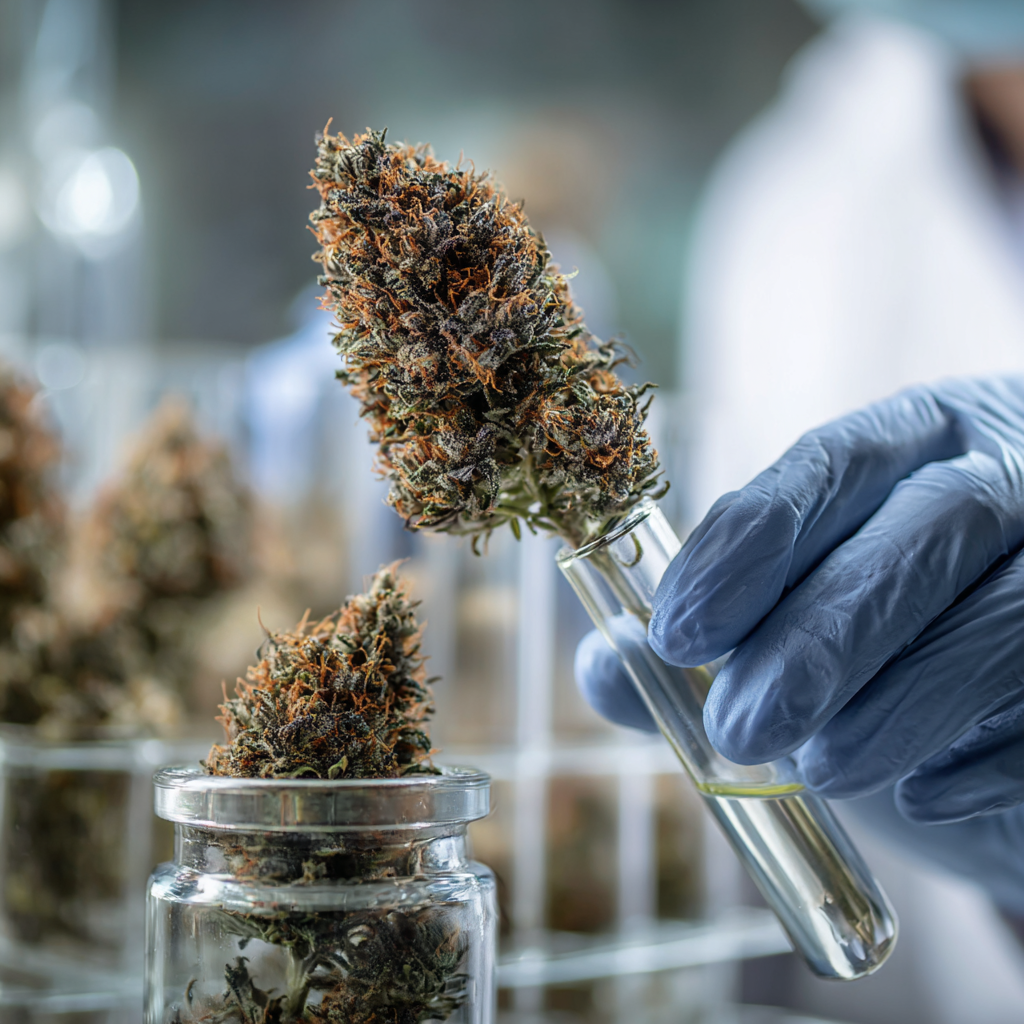
Research Finally Moves Forward
For decades, cannabis research in the U.S. has been restricted by its Schedule I status, which classified it alongside substances with “no accepted medical use.”
This change directly challenges that narrative.
According to the DOJ, the move is designed to “expand access to approved therapies and support state-regulated medical marijuana programs” while enabling more robust scientific study.
That means:
- Universities and labs face fewer bureaucratic barriers
- Clinical trials become more viable
- Data-driven cannabis medicine can finally scale
For a plant long defined by anecdote and stigma, this is a turning point.
What This Is Not
Let’s be clear—this is not federal legalization.
Recreational cannabis remains federally illegal. Interstate commerce is still prohibited. The broader system remains fragmented, with state and federal law continuing to operate in tension.
The DOJ is also restarting the formal administrative process to consider full rescheduling, with a new hearing scheduled for June 29, 2026.
That means the bigger question—moving cannabis fully from Schedule I to Schedule III across the board—is still unresolved.
A Structural Shift, Not a Cultural One
What we’re witnessing is not a cultural embrace of cannabis—it’s a regulatory recalibration.
The federal government is beginning to align itself with reality: a multi-billion dollar industry, a nationwide medical infrastructure, and a global movement toward plant-based medicine.
But it’s doing so cautiously, surgically, and on its own terms.
The Bottom Line
Schedule III is not the finish line. It’s not even the halfway point.
But it is the first time in modern history that federal policy has meaningfully moved in the direction of:
- Recognizing medical cannabis as legitimate
- Supporting research at scale
- Creating a pathway—however narrow—toward normalization
For an industry built in the shadows, that alone is a breakthrough.
Now the question becomes:
Who’s positioned to operate inside this new reality—and who gets left behind?
