


Remexian Pharma, Germany, and the Price Wars: Insights from Expopharm Düsseldorf
At this year’s Expopharm in Düsseldorf, Honeysuckle sat down with Stefan Adomeit and Francesco Baganz of Remexian Pharma. What we heard was a snapshot of Germany’s cannabis industry at a turning point: patients are more empowered than ever, prices are under pressure, and consolidation is reshaping the market.
Germany’s New Cannabis Era
The passing of the Consumer Cannabis Act in 2024 marked a major turning point, shifting cannabis from the realm of narcotics to a regulated medicine. Almost overnight, prescriptions skyrocketed. By mid-2025, Germany had nearly 900,000 medical patients—up from just a quarter of that the year before. Imports broke records too, topping 130 tonnes annually, making Germany the world’s largest importer of medical cannabis.
The market is now valued close to €1 billion and climbing, but the headline isn’t just growth—it’s accessibility.
Patients and the Price Wars
“In terms of flower consumption, we are one of the biggest, if not the biggest at the moment,” Adomeit said. But the real story isn’t size—it’s price.
“Price is a big driver. We have a lot of patients who have to pay for themselves. Premium products you can still buy for 12 euro a gram, and the cheapest from time to time is available for 3.50. The time for big margins, it’s over. We all have to try our best to deliver safe and good quality for good prices.”
Margins are shrinking across the board. The companies thriving are those that can balance quality with affordability. Meanwhile, patients themselves are setting the pace. Forums, peer groups, and online communities are where people compare strains, swap advice, and shape demand.
Here’s a refined version in a Honeysuckle tone — smoother, more narrative, cultural, and less bureaucratic — while keeping Francesco’s quote fully intact:
Forums, peer groups, and online communities are where people swap advice, compare strains, and shape demand. But as patients are finding their voice, policymakers are drafting new rules that could pull access in the opposite direction.
The German Federal Government recently introduced a bill to amend the Medicinal Cannabis Act, with proposals that would mandate an in-person doctor consultation before treatment begins and ban pharmacies from shipping flowers directly to patients. For many, the measures risk creating new barriers in a system already stretched thin.
Baganz voiced concerns about the proposals:
“With regard to the proposed requirement for an initial in-person consultation, I have serious concerns about its alignment with European Union law. According to the most recent ruling by the European Court of Justice, such a requirement would only apply to medical professionals or platforms based within Germany. It would not extend to those operating from other EU member states, raising questions of legal consistency and equal treatment within the single market.
In addition, a ban on the shipment of flowers would constitute a disproportionate barrier to access—particularly for severely ill patients and individuals living in rural or underserved areas. This measure would create unjustified inequalities and significantly hinder patients’ ability to obtain necessary medical treatment in a safe and timely manner.”
His words cut to the core of the debate: in Germany’s evolving medical era, regulation isn’t just about compliance — it’s about whether patients can get the care they need, when and where they need it.
Remexian Pharma’s Roots and Reach
Remexian Pharma was founded in 2018, out of a pharmaceutical distribution framework, with the goal of applying pharma-grade standards to cannabis. Based near Berlin, the company now sources from nearly 20 countries. Canada still accounts for a third of imports, but European producers are increasingly important.
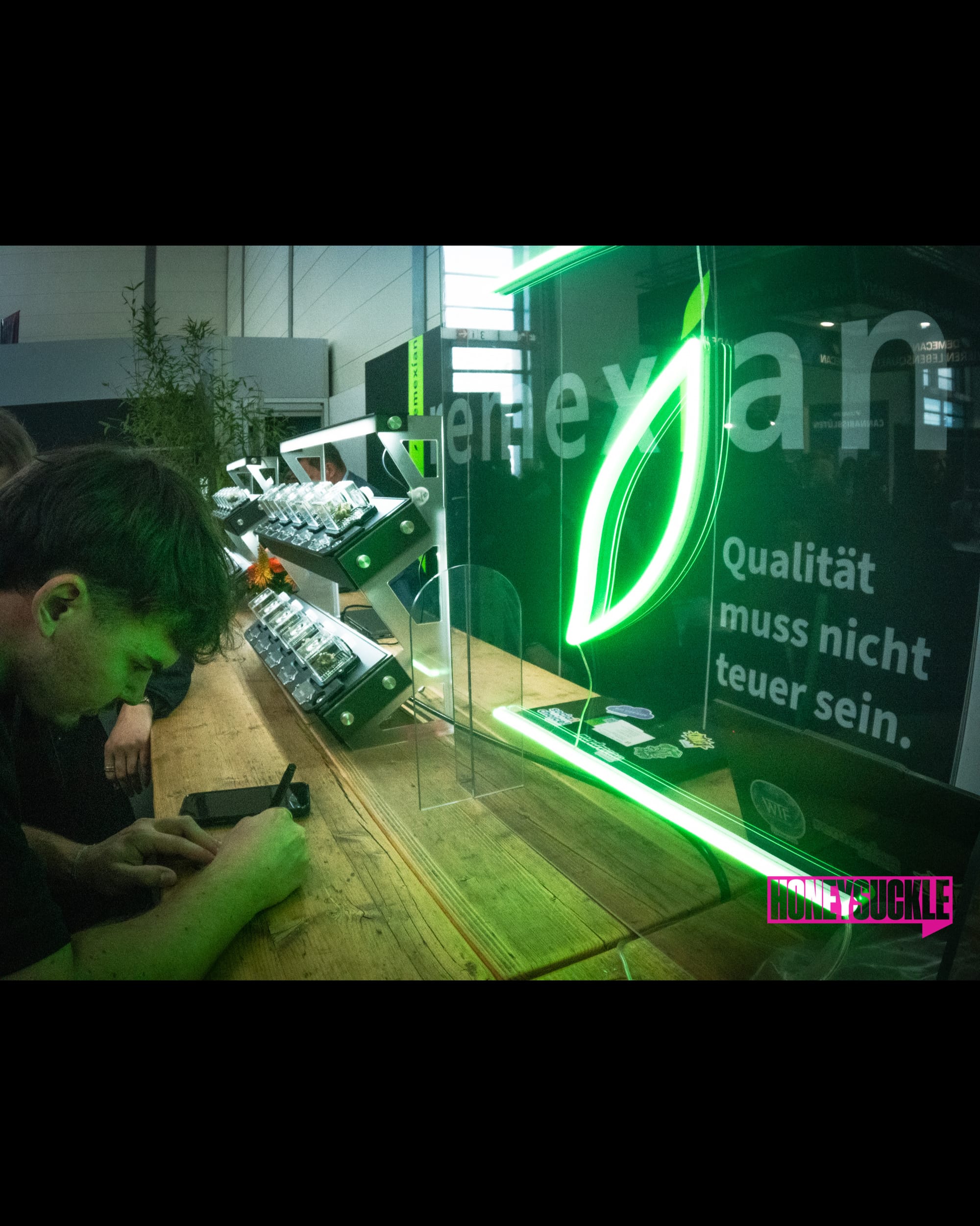
By mid-2025, Remexian Pharma was moving about seven tonnes of flower per quarter—roughly 16 percent of all cannabis entering Germany. The company’s financials reflect its scale, with €70 million in annualized revenue and €15 million in adjusted EBITDA reported earlier this year.
Yet despite its size, Remexian Pharma faces strict limits on public communication. Under German law, companies cannot advertise or even publish detailed strain information, forcing them to compete on reliability, pharmacy partnerships, and pricing rather than marketing.
The High Tide Factor
In August 2025, Canadian cannabis company High Tide Inc. announced it would acquire a 51 percent stake in Remexian Pharma for €27.2 million, valuing the company at just over €53 million. The deal officially closed in September, positioning High Tide to use Remexian Pharma as a launchpad into the European market.
The move was a signal: consolidation is here, and cross-border partnerships will define the next chapter.
Not everyone welcomed the deal. Competitors accused Remexian Pharma of compliance issues—claims the company firmly denies. For many, the timing suggested less about regulation and more about fear of losing ground in an increasingly competitive landscape.

What Comes Next
The High Tide acquisition underscores what’s happening across Germany’s cannabis sector:
- Consolidation is accelerating, with scale and licensing breadth becoming essential.
- Procurement and logistics are key to controlling costs in a price-driven market.
- Margins are compressing, pushing companies to compete on efficiency and trust.
- Regulatory scrutiny is growing, with compliance central to long-term survival.
For Adomeit and Baganz, the formula remains simple: keep prices fair, maintain quality, and listen to patients.
“Patients inform themselves a lot,” Adomeit noted. “They talk to each other. They inform themselves on the internet and in the forums. They try different strains for different diseases and they want to test, and then they share the experience. That’s driving demand.”
At Expopharm, the takeaway was clear: Germany’s cannabis market has entered a new phase. It’s not about hype or inflated margins anymore. It’s about people, price, and persistence—and Remexian Pharma intends to stay at the heart of it.
Quick Facts: Remexian Pharma & Germany’s Medical Cannabis Market
- Founded: 2018 in Ludwigsfelde, near Berlin
- Core Business: Import & wholesale distribution of medical cannabis under EU GDP pharmaceutical standards
- Import Reach: Licensed to source from 19 countries; majority supply still from Canada
- Market Share: ~16% of German cannabis imports in Q2 2025 (7 tonnes distributed)
- Revenue: €70M annualized (six months ended March 2025)
- EBITDA: €15M (Adjusted, annualized)
- High Tide Acquisition: August 2025, Canadian company High Tide acquired 51% of Remexian Pharma for €27.2M
German Market Snapshot
- Patients: ~900,000 (2025), up nearly 4× in just one year
- Imports: 43.3 tonnes in Q2 2025; 134 tonnes rolling annual total
- Market Value: Estimated at ~€1 billion in 2025
- Price Range: €3.50 – €12 per gram (depending on strain and quality)
- Key Driver: Cost-conscious patients paying out of pocket; margin compression across the supply chain
Timeline
- 2017: Germany legalizes medical cannabis with reimbursement rules.
- 2018: Remexian Pharma Pharma GmbH founded.
- 2024: Consumer Cannabis Act passed; reclassifies cannabis, broadens access.
- Q2 2025: German imports hit record high; Remexian Pharma holds ~16% share.
- Aug 2025: High Tide acquires 51% of Remexian Pharma for €27.2M.
- Sept 2025: Deal officially closes.
For more visit https://www.remexian.com/en/
