
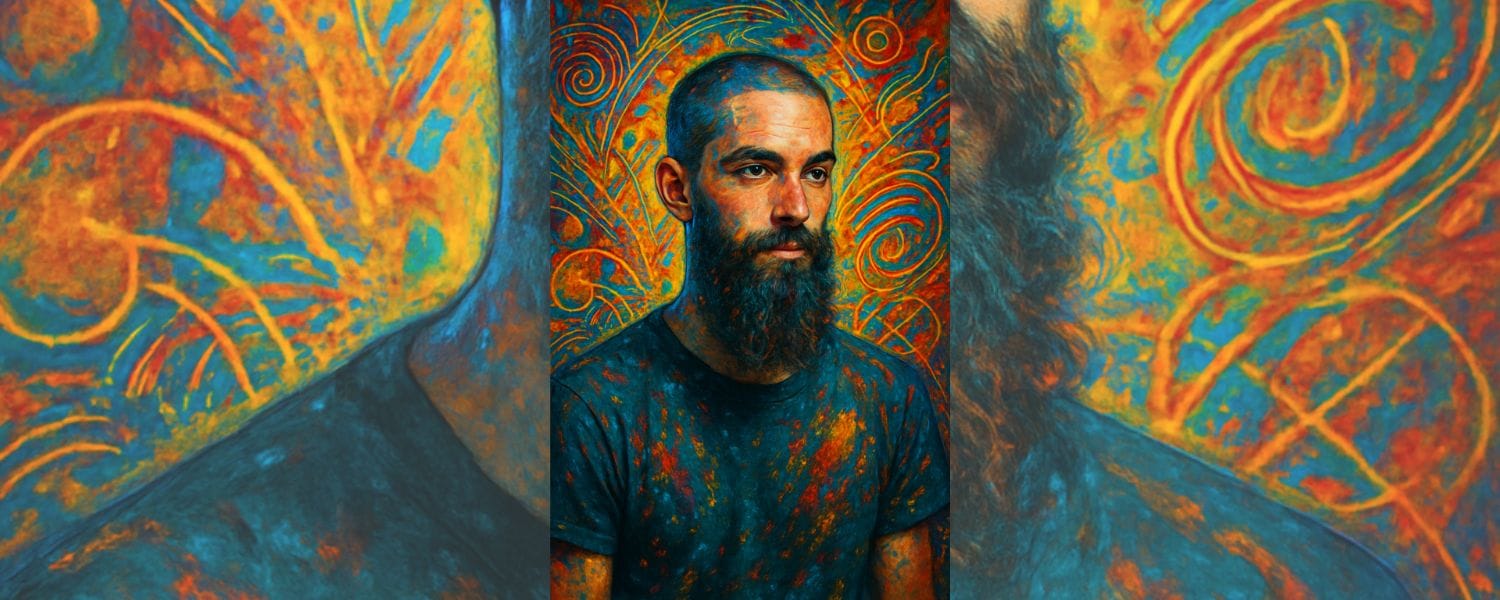

The Whisper Beneath the Roar: A Sublingual Ritual from the Old Man of the Mountain
By Charles W. Stockstill
In an age where cannabis culture is louder than ever—where smoke clouds the senses and branding drowns out meaning—one voice rises not with noise, but with memory.
Charles W. Stockstill, known here as The Old Man of the Mountain, isn’t just another veteran of the industry. He’s a keeper of the flame—quiet, steady, and lit long before the first dispensary ever opened. He’s not selling hype. He’s offering a remembrance.
This isn’t about products. It’s about practice.
It’s about going back—past the blowtorch, past the lighter, past even the pipe—to where the ritual began: beneath the tongue. Where absorption becomes intention. Where silence becomes sacred. Where the plant doesn’t just alter your state—it restores your soul.
From whispered wisdom to ancient traditions, Stockstill’s message is a call to return to the essence of cannabis: not combustion, but communion. Not performance, but presence.
This is his story. And maybe, it’s yours too.
My name is Charles W. Stockstill, but today, you may call me the Old Man of the Mountain. Not because I’m some broken slab of granite on the side of a highway, but because I’ve stood on the ridges of this industry long enough to see the sun rise and set a hundred different ways. From the old guard to the overbranded, I’ve been there—and I’m still here.
Not just surviving, but speaking. Not to the algorithms—but to you.
I’m not here to pitch a product. I’m here to help you remember a ritual. One that predates the blowtorch. One that outlasted prohibition. One that never needed a lighter to begin with.
It starts not in your lungs, but beneath your tongue.
That’s where the story begins.
Cannabis, for most of modern history, has been treated like a combustion ritual. We burn it, we blast it, we choke on it. We laugh about coughing until we puke like it’s some kind of sacrament.
But we’ve forgotten something. Something subtle. Something sacred.
Absorption.
Beneath the tongue. Where things enter the body not with fire, but with intention.
Sublingual use isn’t new. It’s older than any blunt you’ve ever rolled. It’s older than glass. Older than pipes. Our ancestors mixed cannabis with ghee and honey. Figs and oil. They used it as an offering. As a sacrament. As a way to deliver insight—not overwhelm.
Somewhere along the way, the ritual got loud. The market got louder. And we lost our place at the altar.
But some of us remember. Or at least… we’re trying.
That’s what this is.
A remembering.
I taught this as a class once—at the East Coast connoisseur cup. I was anxious. Unsure. I cut it short at 20 minutes, afraid they were bored. But when I stopped, the room erupted in applause. Not because I nailed the performance—but because they heard the whisper.
They felt the thing beneath the thing.
That’s when I knew: I had to share the whole thing. Not on a stage. But here. As a story. So you could take your time with it. Sit with it. Let it change you, the way it changed me.
Let’s keep going.
When you absorb beneath the tongue, you bypass more than just smoke. You bypass the noise. You allow the plant to move through you—not like a hammer, but like a tide.
Science calls it sublingual absorption. Medicine entering the body through the mucosal membrane. But in the oldest traditions, that membrane wasn’t just a portal to the bloodstream—it was a gate to the spirit world.
You let the cannabis sit there. You let it speak. You don’t rush it. You don’t chew it. You don’t chase it with caffeine or sugar or doomscrolling.
You absorb.
And when you do, something happens that no algorithm can replicate.
You remember.
You remember that cannabis isn’t just a medicine—it’s a message.
And the mouth? The tongue? The saliva?
They are sacred instruments. Chosen because they are soft. Because they are slow. Because they are subtle.
Like prayer.
The original Hashishin—those mountain mystics from Persia, the ones who gave us the word “assassin”—they weren’t just taking hash to get high and stab somebody. They were initiates. Students of geometry, astronomy, philosophy. They trained in silence. In focus. In fasting. They dosed with hashish mixed in figs, honey, and oils. Not to forget—but to see.
To see patterns where others saw chaos. To see meaning where others saw madness. To see their path, even in the dark.
We don’t follow them to mimic their violence. We follow them to recover their vision.
Their discipline.
Their devotion.
Their absorption.
You don’t have to wear robes or live in a stone tower to be a Hashishin.
You just have to choose stillness when the world wants noise.
You just have to wake up, place your dose beneath your tongue, and wait.
Wait for the memory.
Wait for the silence.
Wait for the part of you that knows what to do, once the shouting stops.
That’s the real rebellion.
Not louder joints. Not brighter labels. Not more influencers trying to brand your inner life.
The real rebellion is subtle. It’s inward. It’s slow.
It’s the whisper beneath the roar.
And when you choose to absorb this way—this sacred, intentional way—you’re not just getting high.
You’re getting home.
Home to a body that doesn’t flinch.
Home to a heart that doesn’t rush.
Home to a plant that’s been waiting—not to be sold, but to be heard.
And maybe, just maybe, to speak back.
So this is my story. My transmission.
From the Old Man of the Mountain to whoever needed to hear this.
Whether you’re reading this on your porch, or in your grow, or under a blanket at 3 a.m. wondering what the hell happened to all the magic—just know:
It didn’t disappear.
It just went quiet.
And now, you know where to listen.
Beneath the tongue.
Behind the veil.
Between the moments.
Always there. Always yours.
For more follow Charles in Instagram.
