
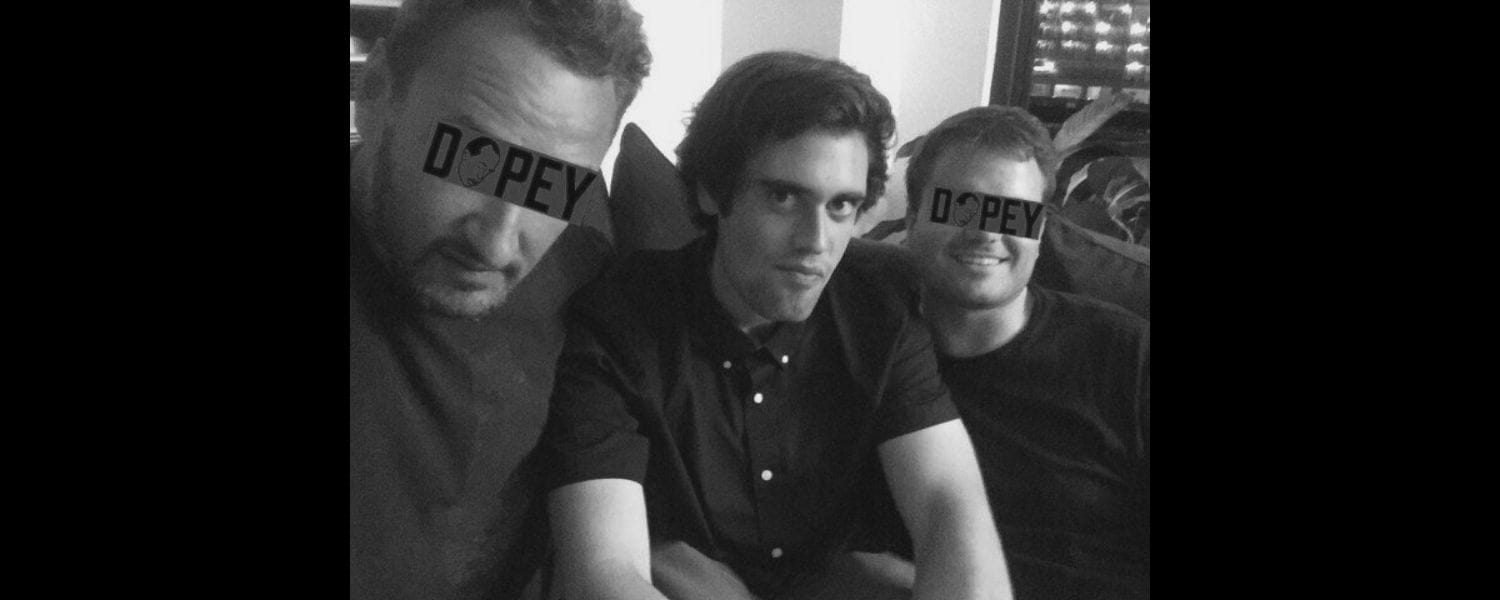

Years after Honeysuckle documented Nick Reiner’s recovery journey on Dopey Podcast, his life is now at the center of a devastating investigation into the deaths of his parents.
Revisiting a recovery story through an unthinkable lens
Nearly a decade ago, Honeysuckle covered the story of Nick Reiner speaking candidly on theDopey Podcast about addiction, recovery, and the limits of rigid sobriety models. At the time, the conversation centered on survival: what worked, what didn’t, and how a young man who had cycled through rehabs, homelessness, and relapse was trying to build a life that felt sustainable.
Today, that story is forced into painful dialogue with tragedy.
In December 2025, Nick Reiner was arrested and charged in connection with the deaths of his parents, filmmaker Rob Reiner and photographer and producer Michele Singer Reiner, who were found deceased in their Los Angeles home. The investigation is ongoing. The loss has sent shockwaves through Hollywood and beyond.
The contrast between these two moments—one rooted in recovery discourse, the other in devastating violence—is jarring. It raises difficult questions about mental health, addiction, family systems, and the narratives we build around survival.
Early Addiction and Life in Treatment
When Nick first spoke publicly about his life, he did so without varnish. He described being in and out of rehab since age 15, cycling through 17 treatment centers across the United States, and spending periods homeless after discharges that offered little real-world support.
He recalled arriving at yet another rehab in 2011 after a blackout trip from Boston to New York, broke and sleeping rough, trying to sell a dead phone on the street. He described the smoking pits outside treatment centers as the most honest places—where contradictions surfaced plainly: grief beside manipulation, sincerity beside self-sabotage.
What stood out was not redemption, but repetition. And exhaustion.
Recovery Without Absolutes
Nick was outspoken about why abstinence-only frameworks repeatedly failed him. He explained how black-and-white thinking—total sobriety or total failure—fed relapse cycles. When he believed any slip erased all progress, the consequences escalated fast and dangerously.
Instead, he described a harm-reduction approach that emphasized meaningful action over moral purity. He acknowledged continued marijuana use and occasional drinking while remaining abstinent from heroin for years. Creativity became part of that structure, most visibly through Being Charlie, the semi-autobiographical film he co-wrote with his father, Rob Reiner.
His message was not prescriptive. It was personal. What worked for him, he emphasized, was not universal—but it was honest.
Family, Creativity, and Pressure
Despite his famous lineage, Nick often framed his identity around rehab culture rather than Hollywood. His strongest connections came not from legacy but from shared experiences of addiction, shame, and survival.
Still, legacy is never neutral. Growing up inside a family so publicly associated with creativity, politics, and cultural influence carries its own pressures—especially when private struggles unfold in public view.
Those dynamics were never fully visible, even in moments of candor. And they resist simple explanation now.
When Survival Narratives Fracture
The tragedy that has since unfolded does not negate Nick’s earlier experiences. Those stories were real. The gaps in addiction treatment, mental health care, and long-term support he described still exist. Recovery, even when hard-won, does not confer immunity from crisis.
What this moment exposes is how fragile survival narratives can be—and how easily they collapse under unresolved mental health needs, family strain, and systemic failure.
There is no clean arc here. No moral lesson that neatly contains the harm.
Holding Complexity Without Sensationalism
As the legal process continues, restraint matters. This is not a story that benefits from speculation or myth-making. It is a reminder that transparency is not the same as safety, that recovery is not a finish line, and that family systems under pressure can fracture in catastrophic ways.
Nearly ten years ago, Nick Reiner spoke about trying to live outside rigid frameworks—of sobriety, of identity, of expectation. Today, his story sits at the center of a far more troubling conversation, one that forces culture to confront what it still fails to provide: sustained, humane mental health support beyond moments of crisis.
The questions raised here do not have easy answers. But they deserve to be asked with care.
