
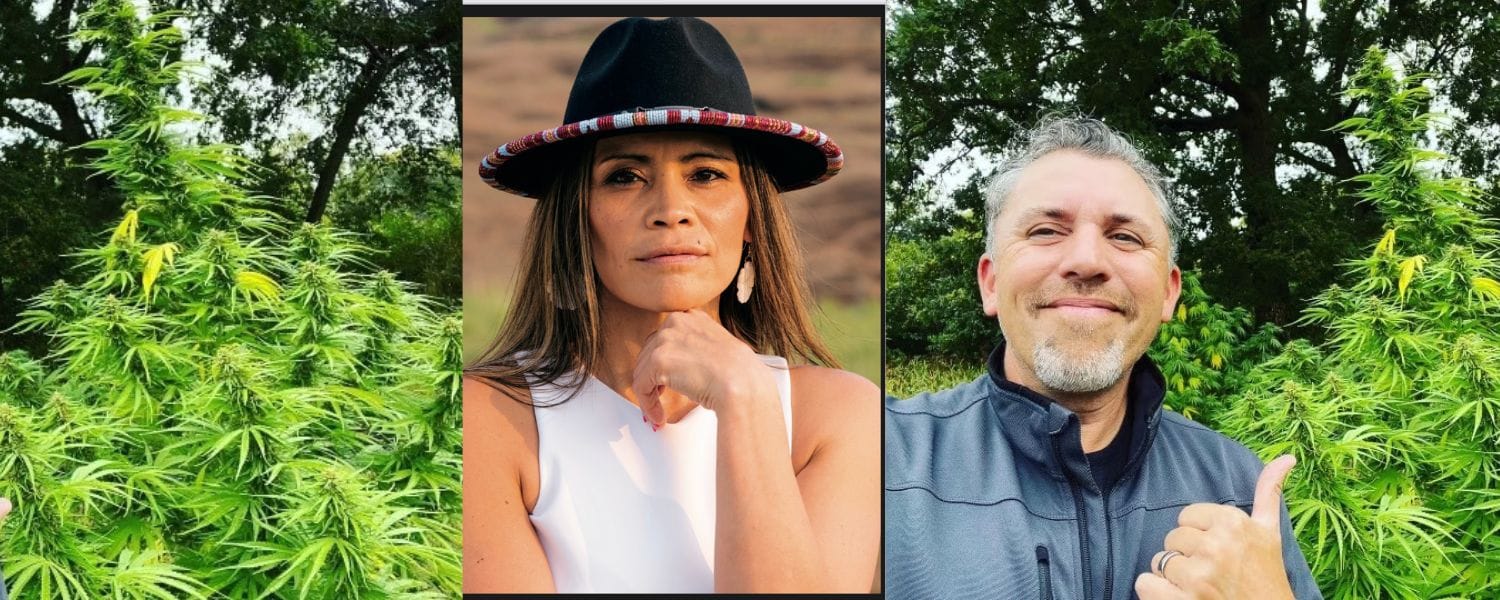

Indigenous Leaders Shaping Cannabis: Mary Jane Oatman & Rob Pero
As Indigenous Peoples’ Day approaches on October 13, the Indigenous Cannabis Industry Association and two of its leading voices—Mary Jane Oatman and Rob Pero—spotlight a pathway for equitable policy, cultural reclamation, and sustainable industry growth.
For generations, plant medicine has been woven into Indigenous life—spiritually, medicinally, and economically. Today, as cannabis policy evolves across the United States, Indigenous leaders are asserting not just a seat at the table, but a framework that centers sovereignty, equity, and cultural continuity. At the forefront of this movement is the Indigenous Cannabis Industry Association (ICIA), a first-of-its-kind organization dedicated to advancing the cannabis economy for the benefit of all Indigenous communities.
This month, as Indigenous Peoples’ Day arrives on October 13, the stories of ICIA executive director Mary Jane Oatman (Nez Perce, Delaware descendant) and ICIA founder Rob Pero (Bad River/Ojibwe) offer a powerful snapshot of where the movement is headed—and why it matters now.
Policy With Cultural Intention: Mary Jane Oatman
With more than a decade of advocacy in cannabis and hemp, Mary Jane Oatman has built a career at the intersection of policy reform, cultural reclamation, and community health. As ICIA’s executive director, she is working to embed equity and sustainable opportunity into cannabis policy nationwide, while expanding access to plant medicine for all communities.
Her leadership spans a broad coalition of organizations and initiatives. Oatman founded the Indigenous CANNabis Coalition (ICANNC) and serves as publisher of THC Magazine, elevating Indigenous perspectives in cannabis media. She sits on the founding board of the JUSTÜS Foundation and the board of the Association of Cannabis Health Equity and Medicine (ACHEM), and previously served on the Minority Cannabis Business Association board. Long before cannabis reform reached the mainstream, Oatman was shaping policy for youth and education: in 2009, she became the youngest member appointed by President Barack Obama to the National Advisory Council on Indian Education, and she served as the first Director of Indian Education for the State of Idaho.
Across these roles, her throughline is consistent: protect tribal sovereignty, restore traditional economies, and ensure that cannabis legalization does not replicate the harms of past policy eras. For Oatman, building an equitable industry is inseparable from honoring Indigenous knowledge and self-determination.
Enterprise as Self-Determination: Rob Pero
Where Oatman advances policy and narrative, entrepreneur and creative director Rob Pero builds market infrastructure designed to last. As the founder of Canndigenous—the first independent Indigenous-owned hemp farm and plant-medicine company in Wisconsin—Pero champions a business model rooted in community benefit and product integrity.
Canndigenous recently introduced a line of THC seltzers formulated for clarity and consistency: each can offers a balanced 1:1 low-dose profile of 5mg THC paired with CBG, CBD, or CBN, designed with a reported ~15-minute onset and a sessionable experience of about an hour. The beverages are low-calorie, made with a touch of real cane sugar, and positioned for consumers seeking predictable, approachable plant-medicine options.
Pero’s work extends beyond the farm. He co-founded the Indigenous Business Group, a nonprofit that supports Indigenous-led enterprises and economic development across Indian Country. Through his media company Perodigm, he produces award-winning films, leads strategic marketing campaigns, and advises organizations nationwide on Indigenous-focused diversity, equity, and inclusion. The connective tissue across these ventures is sovereignty through ownership: build brands, tell your own stories, and keep value circulating within the community.
The ICIA’s Mandate
Founded to serve as a hub for Indigenous cannabis advancement, the Indigenous Cannabis Industry Associationpromotes exploration, development, and data-driven policy for an equitable, just, and sustainable Indigenous cannabis economy. The association empowers entrepreneurs and creators while serving as a conduit of information for Tribal Nations navigating the fast-changing landscape of state and federal reform.
That mission takes center stage November 11–13 in Washington, D.C., when the Indigenous Cannabis Industry and Policy Summit returns—bringing together policymakers, healthcare leaders, entrepreneurs, and advocates to discuss sovereignty, public health, access, and capital. The timing is notable: with momentum building in both medical and adult-use markets, the summit provides a national platform to ensure Indigenous priorities are reflected in the next wave of reforms.
Why This Moment Matters
As cannabis continues its march toward mainstream regulation, Indigenous leaders are working to avoid a repeat of the extractive dynamics that often define new markets. For Oatman and Pero, success looks like tribally driven policy frameworks, culturally aligned product development, and durable, community-owned enterprises. It also looks like visibility—expanding the narrative so that “cannabis industry” includes the expertise, histories, and innovations of Indigenous peoples.
Indigenous Peoples’ Day is an invitation to honor that work—and to recognize that the future of cannabis policy and business can be more just when it draws from the oldest knowledge on the continent.
Learn More / Get Involved
- Indigenous Cannabis Industry Association (ICIA): indigenouscannabis.org
- Indigenous Cannabis Industry & Policy Summit: Washington, D.C., November 11–13
- Media & Interview Inquiries: For connections with Mary Jane Oatman and Rob Pero on Indigenous cannabis, equitable policy reform, and market development, contact Helen Anderson at helen@turnitup.marketing.
