
At Reykjavík’s Hemp4Future gathering, women, scientists, and advocates weave data, healing, and lived experience into a new vision for cannabis and wellness in Iceland.
Over two days, Iceland became a crossroads. Researchers from California traded notes with growers from Montana. Attorneys who have drafted global cannabis laws sat beside mothers who had carried their children through epilepsy and depression. A neuroscientist from UCLA compared data with hemp farmers from rural Europe. And the Icelanders hosting this event—many operating in a legal gray zone—stood alongside them, equal parts hopeful and exhausted.
The conversation was not about commerce. It was about how people stay alive.
A Story That Begins at Home
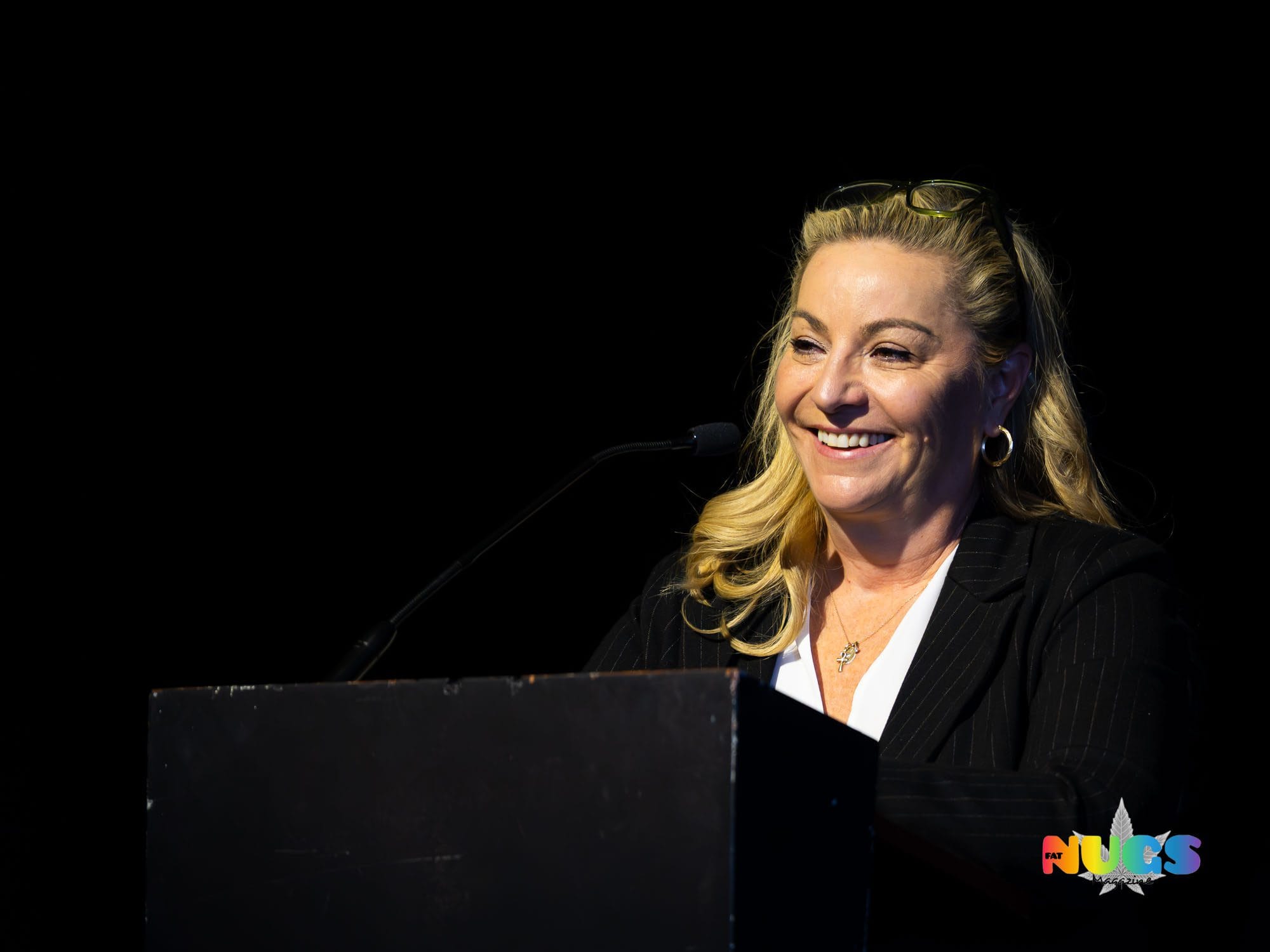
When keynote speaker Jamie Pearson stepped onstage, her voice was soft. But her message was sharp. She dedicated her talk to her father, Jim Pearson, a 75-year-old Navy veteran and longtime home grower who sat silently in the front row.
He has grown cannabis for six decades in Montana, in cold conditions not unlike Iceland’s own. He gives RSO oil to cancer patients for free, “to atone for the sins of his youth,” though—Jamie noted—there were never any sins.
He is proof of what the conference kept circling back to: most of the truth about cannabis lives in kitchens, garages, gardens, and quiet acts of care long before it ever reaches a lab.
Rejecting the Fear That Built Policy
Pearson didn’t spend much time on ideology. She talked numbers.
In Germany, youth use fell after legalization.
In Colorado, arrests dropped 68%.
In Washington, teen consumption stayed flat.
In 19 U.S. states, youth use declined as adult-use regulations matured.
“The fear was wrong,” she said. “It always was.”
But the fear wasn’t born in a vacuum. As Pearson put it, the status quo has worked out very well for alcohol, tobacco, and pharmaceutical industries. She asked the question hanging over every conversation of the week: Is Iceland delaying reform because the plant is unsafe, or because hemp is inconvenient for the people who profit from the delay?
A Room Full of Courage
Iceland’s Hemp4Future felt like an ecosystem in itself. There were scientists who could explain the difference between THCA and THC in their sleep. There were mothers whose children had survived only because someone dared to talk openly about psilocybin when nothing else worked. There were women who had grown tired of telling stories about harm when they were busy building futures.
“For Iceland, this is about human rights as much as it is about sustainability. Access to medical cannabis isn’ta luxury, it’s harm reduction and healing. And while not much grows in Iceland, hemp does. It’s our chance to build a new kind of green industry, powered by clean energy, glacial water, and a culture that believes in care over punishment,” said Þórunn Þórs Jónsdóttir, Co-founder of Hemp4Future Iceland
Jamie said it plainly: “Where a thought goes, a molecule follows.”
Her frustration with panels that focus only on struggle was palpable. “Talk about what you want to grow—not what you want to escape,” she told a group of women earlier in the weekend.
She wasn’t dismissing the harm. She was widening the horizon.
The Global Map in One Room
Attorney Bob Hoban, who has written cannabis legislation on almost every continent, offered a different kind of storytelling, one built from borders, loopholes, and the dance between legality and reality. His thesis was simple: No country gets cannabis perfectly right. Perfection is paralysis.
He talked about Morocco, Colombia, Germany, the Czech Republic. Each one a lesson in how cannabis moves even when laws don’t. “It’s messy,” he said. “It has to be.”
The mess, he argued, is where progress grows.
The Personal Testimony That Stopped the Room
A mother stood up near the end of the day. She described her daughter’s catatonic depression at 18, after seven years of pharmaceuticals. Psilocybin was a last resort. Three grams at home. Within hours, her daughter came back to herself.
Yesterday, that daughter boarded a plane to Barcelona.
Five years off medication.
The room went silent, not in shock, but in recognition. Everyone there had a story like this—if not their own, then someone they loved.
An Icelandic Lexicon of Wellness
Again and again, speakers reminded the audience that Iceland is already a wellness-based nation. The country measures success not by GDP alone, but by how well people live. And yet, cannabis remains criminalized, even as an active, thriving illicit market supplies one of the highest-use populations in Europe.
This contradiction hung over the conference like fog over the harbor.
If cannabis is already here—if teens already use it, if adults already rely on it, if wellness is already the cultural compass—then what is left to fear?
The Ripple That Starts in Reykjavík
What made Hemp4Future feel different wasn’t a single announcement or new dataset. It was the sense that Iceland, small as it is, could become a model for what courage looks like in public policy.
Regulation that protects youth.
Medicine that is accessible and affordable.
Hemp cultivation that regenerates land instead of exhausting it.
Policymakers willing to see citizens as capable of making safe choices.
The question wasn’t whether Iceland could do this. It was whether Iceland would do it now.
Pearson ended her keynote with a line that seemed to settle into the floorboards: “Courage is not the absence of fear. It’s the decision to act in spite of it.”
For a country whose citizens already use cannabis openly, whose scientists are ready, whose wellness ecosystem is admired globally, and whose policymakers are cautious but listening, the next move is not a leap into the unknown.
It is the decision to recognize what is already true.
And perhaps that is the quiet power of Hemp4Future: it gathered the people who have been living the future and finally placed them in the same room.
For more, visit https://hemp4future.is
