
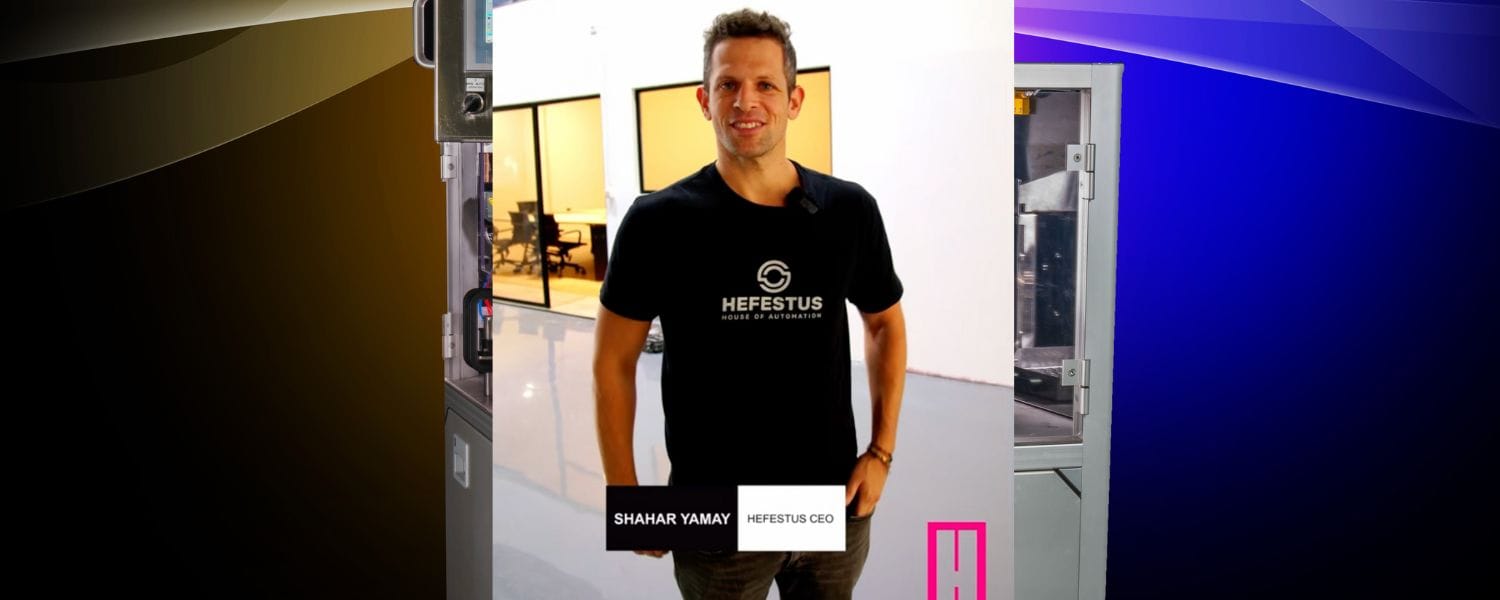

In an industry driven by efficiency, precision, and scale, few names carry the legacy and technical ingenuity of Shahar Yamay and his father, Yehuda Yamay, the original founder of Hefestus. What began decades ago as Yehuda’s engineering dream has evolved into a cutting-edge, automation-driven manufacturing powerhouse—now spearheaded by his son Shahar. Together, they have transformed Hefestus into one of the most respected producers of automated joint-production systems, known for reliability, durability, and an unmistakable hands-on engineering philosophy.
Today, Shahar walks through the “air production facility” with the same excitement his father once had building the very first prototypes.
A Father’s Foundation: Yehuda’s Vision for Practical Engineering
Long before Hefestus became known for its cannabis production technology, Yehuda Yamay had already built a reputation as a creator who prized function over flash. He was the kind of engineer who didn’t chase spectacle; he chased solutions. His machines weren’t designed to impress at first glance—they were designed to survive years of real, heavy use. They were simple by intention, repairable by necessity, and accessible to any operator who needed them.
Yehuda’s philosophy was always rooted in beginnings. Everything started with raw materials and the belief that a machine should be built from the ground up—not assembled from shortcuts. He insisted every surface that touched product must be food-grade. He believed technology should never trap people, so he engineered systems that could be supported remotely, even from across the world. And above all, he wanted his designs to be intuitive—machines that made sense, even to someone encountering them for the first time.
That philosophy didn’t stay in the past. It’s woven into Hefestus’s identity today, and it comes alive the moment you watch Shahar walk the production floor. The next generation didn’t just inherit the business; he inherited the ethos. And you can see it in every explanation he gives, every machine he touches, every detail he insists on showing you.
Shahar Takes the Lead: “Everything Starts With Stainless Steel”
“Hey, I'm Shahar from Fastest,” he begins with a confident grin, standing beside rows of stainless-steel components. “Thanks for stopping by the air production facility. Let’s check it out.”
The team can’t walk fully into one of the rooms—they’re preparing for a major shipment—but from the doorway, the amount of in-production equipment is impressive. Every machine is built from the ground up, starting with raw 316 food-grade stainless steel. Every plastic component is washable. Every part that touches cannabis is FDA-compliant.
Shahar explains:
“Everything is labeled, and everything that’s labeled on the machine is labeled inside our system. You can troubleshoot remotely, instantly. I’ll say this on camera—no matter what anyone claims in automation, sometimes you will need help. And we built our machines so we can support you over the phone, fast.”
This philosophy—the blend of honesty, engineering, and real-world practicality—is pure Yamay heritage.
The OR Machine: Simplicity Built Into Power
Shahar gestures toward one of their signature accomplishments: the OR machine, a compact yet powerful automated joint-filling system.
His team member demonstrates:
“The OR machine is ready to run. The operator just loads the cones here, fills the cannabis flower here—and that’s it. One person can run three machines. I’ve seen it.”
The simplicity is intentional. Shahar adds:
“We try to keep everything very simple. Every device is connected, every unit talks to our system. As long as you’re connected to the internet, we can log in, diagnose, and support you remotely.”
This “C-Me” (See Me / Connect Me) system is what sets Hefestus apart—machines engineered for real-world conditions, not just showroom floors.
Designed for Operators, Not Just Engineers
Space is money, especially in states where production square-footage is taxed or heavily regulated. That’s why the Hefestus machines are compact, mobile, and efficient.
“Some facilities pay more for their production area than for their grow area,” Shahar explains. “Our machines fit naturally into small spaces, and they can be moved from room to room. That flexibility is a big advantage.”
For small operators, one machine is enough to produce:
- 250,000 to 300,000 pre-rolls per month when run across multiple shifts.
For large multi-state operators, scaling is simple: add machines.
Customization: A Yamay Signature
Shahar is quick to point out that no two processors are the same:
“We’re machine builders. Every workflow is different, and that’s where we shine—adjusting, engineering, and tailoring solutions so your machine fits your process.”
This willingness to adapt—rather than force clients into rigid systems—is a trademark inherited directly from Yehuda’s earlier engineering approach.
A Legacy That Continues to Build
At the end of the walkthrough, a completed joint slides gently out of the machine—tight, consistent, and clean.
It’s more than a product. It represents the seamless merging of father and son, tradition and innovation, old-world engineering and new-industry creativity.
Hefestus is not just a company. It’s a multi-generational legacy of craftsmanship, precision, and uncompromising standards.
And under Shahar Yamay’s leadership, the legacy is not only preserved—it’s accelerating into the future.
For more, visit hefestus-tech.com.
