
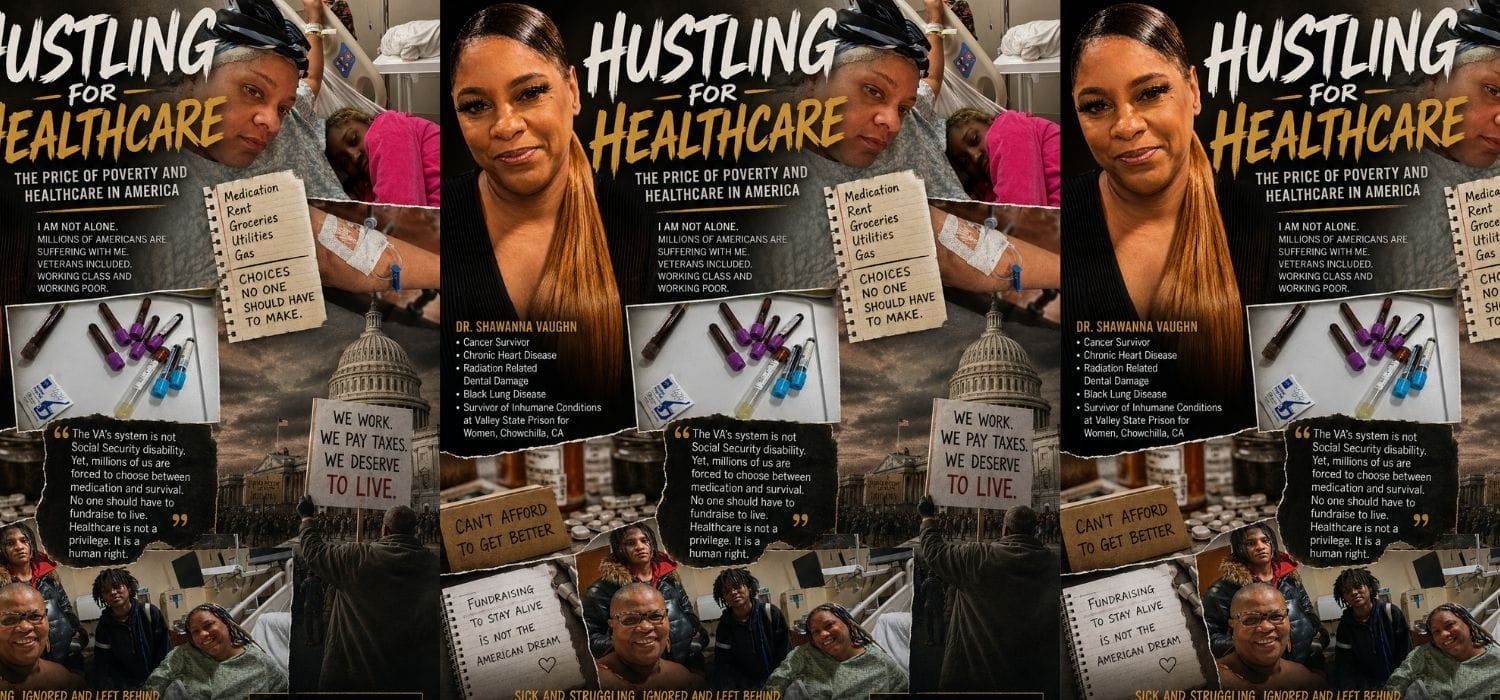
When I saw the headline asking how a candidate can run for the United States Senate while receiving a 100% VA disability rating, I was reminded of a much larger conversation America refuses to have.
We are clear that VA disability and Social Security Disability are not the same thing.
Veterans earned their benefits through service and sacrifice to this nation. VA disability compensation recognizes injuries, illnesses, and disabilities connected to military service. It is not a welfare program, and it is not the same as Social Security Disability Insurance (SSDI), which often limits income and employment opportunities.But while Americans debate who deserves benefits, millions of us are struggling with a more urgent question:
How do we stay alive?
I am Dr. Shawanna Vaughn. I am a three-time cancer survivor. I live with chronic heart disease. I have suffered the long-term consequences of radiation treatments, including significant dental deterioration. I continue to battle serious health complications while trying to support my family and maintain basic living expenses.
My story is not unique.
In fact, that is the problem.
Millions of Americans are suffering alongside me.
Veterans.
Working-class families.
The working poor.
People with disabilities.
Seniors.
Cancer survivors.
Single parents.
In America, poverty is expensive.
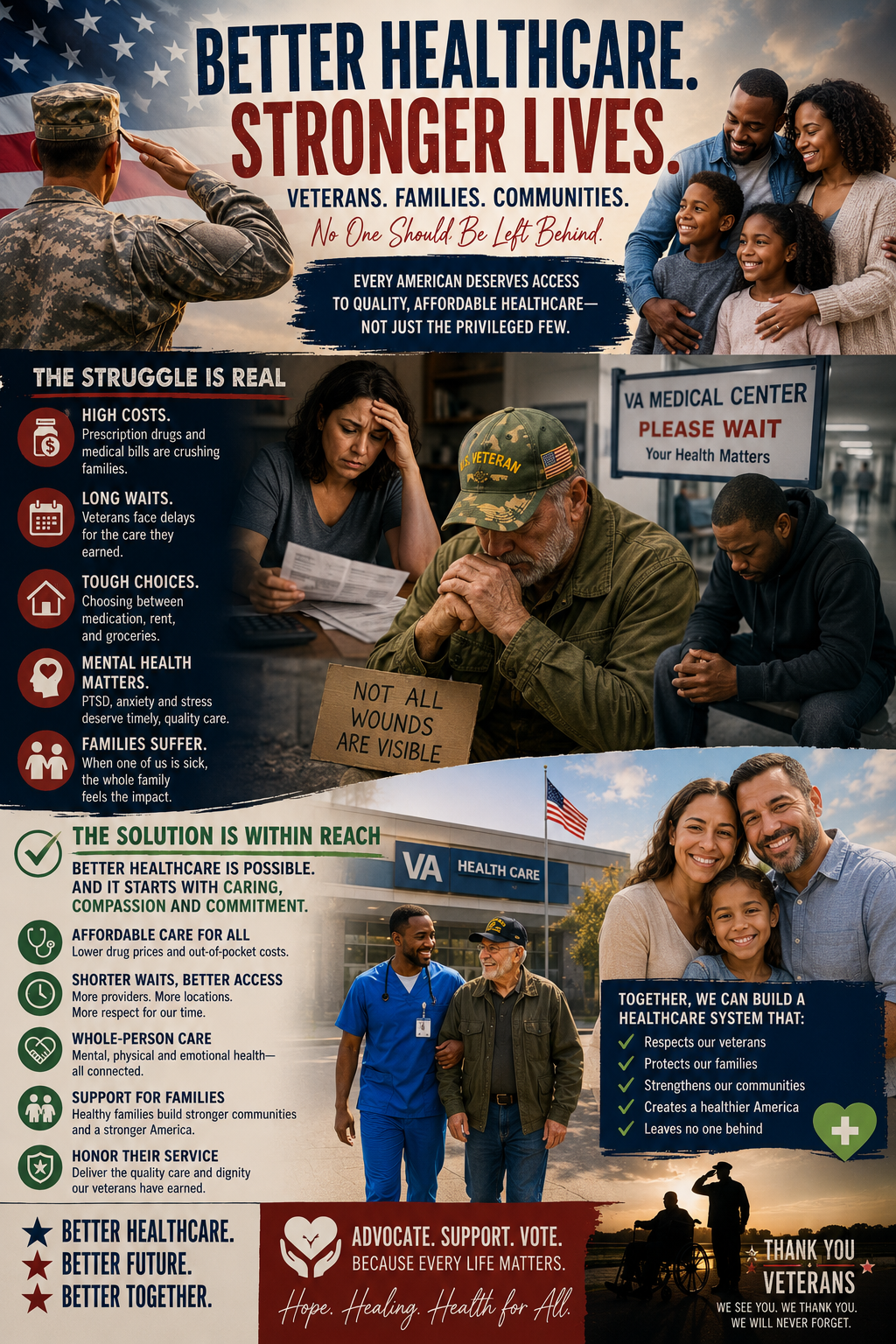
The people with the least often pay the most not because they are irresponsible, but because survival itself comes with a cost. Every day, millions of people are hustling to stay alive while navigating a healthcare system that treats life-saving medication, specialist visits, transportation, housing, and food as separate problems when they are all connected.
For those living with chronic illness, disability, cancer, heart disease, or other serious health conditions, the struggle becomes even more brutal. You are not simply fighting your illness. You are fighting insurance companies, prescription costs, denied claims, transportation barriers, lost wages, and the emotional exhaustion of constantly proving that you deserve care.
The cruel irony is that sickness often creates poverty, and poverty makes people sicker.
A mother choosing between medication and rent is not making a financial decision—she is making a survival decision. A senior cutting pills in half to make them last longer is not being frugal—they are being failed. A person working through pain because they cannot afford to miss a paycheck is not resilient—they are trapped in a system that values productivity over humanity.
People who are one prescription away from a medical crisis and one missed paycheck away from homelessness.
Meanwhile, the President, members of Congress, and many elected officials have access to healthcare plans that most Americans can only dream about.
The people making decisions about healthcare rarely have to choose between medication and rent.
Many Americans do.
I do. Today, I find myself fundraising simply to afford medication and basic necessities while trying to survive serious chronic illnesses.
That should never happen in the wealthiest nation on Earth.
The Numbers Tell the Story
The health disparities in America are not accidental.They are systemic.
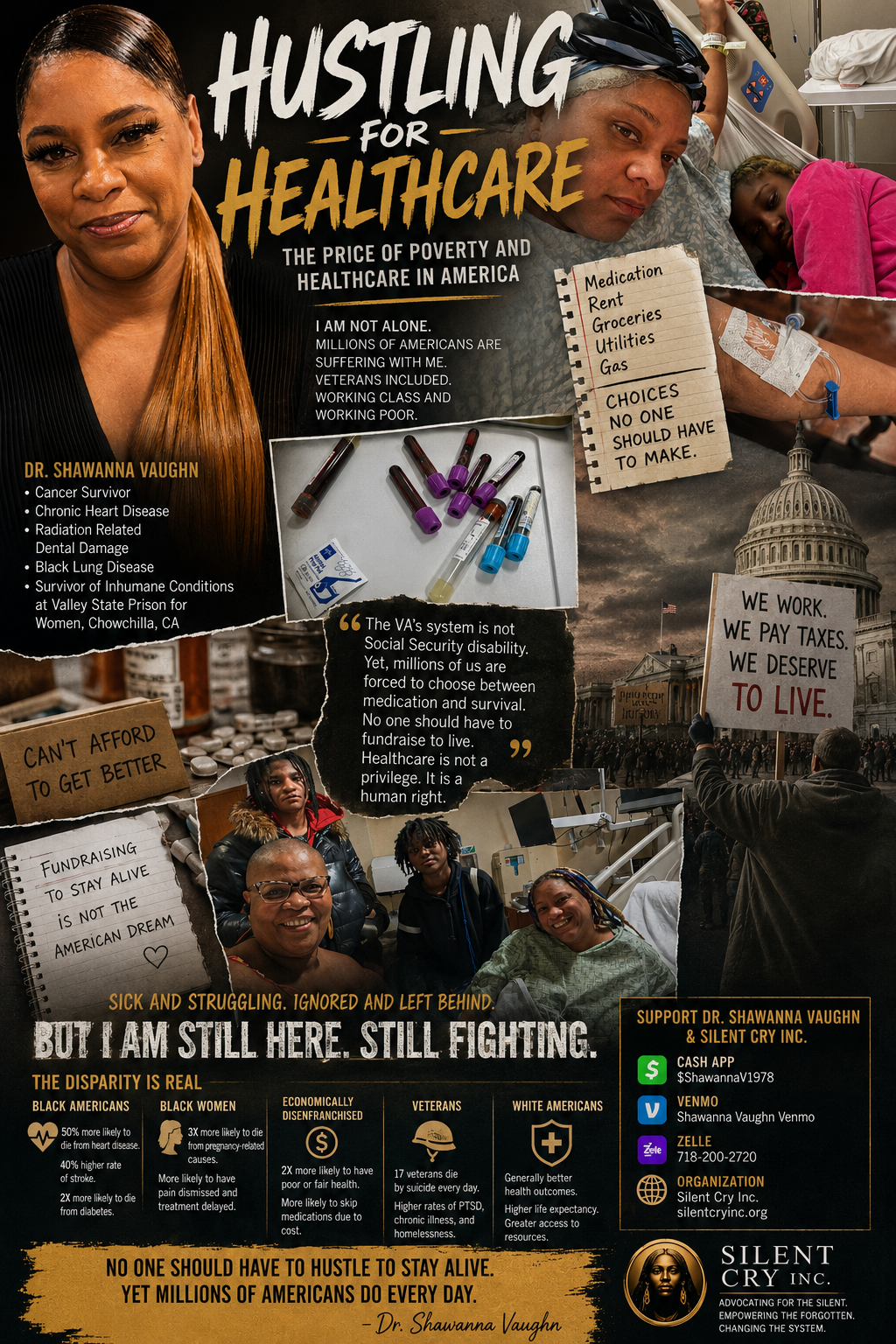
Black Americans
Black Americans experience significantly worse health outcomes across nearly every major category.
- Black women are approximately three times more likely to die from pregnancy-related causes than White women.
- Black Americans have higher rates of hypertension, stroke, heart disease, kidney disease, and diabetes.
- Black adults are more likely to die prematurely from preventable illnesses.
- Environmental exposure to pollution and toxic conditions disproportionately impacts Black communities.
Black Women
Black women face a unique intersection of racism, sexism, and healthcare discrimination.Studies consistently show that Black women report:
- Longer wait times for treatment.
- Higher rates of dismissed symptoms.
- Lower rates of adequate pain management.
- Greater barriers to specialty care.
Even when income and education are comparable, Black women often experience worse healthcare outcomes than their White counterparts.
Economically Disenfranchised Americans
Poverty itself is a health condition.
People living in poverty are more likely to:
- Suffer chronic illness.
- Experience food insecurity.
- Delay medical treatment.
- Skip prescriptions due to cost.
- Die younger than wealthier Americans.
Many families work full-time and still cannot afford healthcare.The phrase “working poor” should not exist in a nation with this level of wealth.
Veterans. Veterans face significant healthcare challenges as well. Many live with:
- Service-related disabilities.
- PTSD and mental health conditions.
- Chronic pain.
- Exposure-related illnesses.
- Long wait times for specialty care.
While VA benefits are critical, veterans continue to experience elevated rates of suicide, homelessness, and chronic health conditions compared to the general population.
The reality is that disability compensation alone does not erase the financial burdens associated with illness.
White Americans
White Americans generally experience better healthcare outcomes than Black Americans on most population health indicators.
They have:
- Higher life expectancy on average.
- Lower rates of maternal mortality.
- Greater access to wealth and healthcare resources.
- Lower rates of medical discrimination.
However, poverty remains devastating regardless of race.
Millions of White Americans living in rural communities and economically distressed regions also struggle to afford healthcare, prescription medications, transportation, and basic living expenses.
The common denominator is not only race.It is economic inequality. The Cost of Survival
I spent years inside Valley State Prison for Women in Chowchilla, California.
The conditions incarcerated women endure often create lifelong health consequences.
Many women leave prison carrying trauma, untreated illnesses, respiratory conditions, chronic stress, and disabilities that follow them for decades.
Today, I continue to navigate serious health challenges while advocating for others through Silent Cry Inc., fighting for women, families, veterans, and communities impacted by incarceration and poverty.
Yet despite all of that work, I still find myself in the same position as millions of Americans:
Trying to stay alive.Trying to afford medication.Trying to keep a roof over my head.Trying to maintain dignity in a system that often treats healthcare as a privilege instead of a human right.
We call on Congress to take immediate action by addressing the skyrocketing cost of prescription medications, increasing oversight and accountability of pharmaceutical companies, strengthening regulations that prioritize patients over profits, and expanding access to affordable, quality healthcare for all Americans.
It is time for a serious national exploration of Universal Healthcare and healthcare models used successfully around the world. Americans deserve an honest conversation about systems that reduce costs, improve outcomes, eliminate medical bankruptcy, and ensure that access to care is not determined by income, employment status, zip code, race, disability, or age.
My Plea
This is not a story about politics.
It is a story about survival.
America cannot continue to celebrate resilience while ignoring suffering.
People should not have to launch fundraisers to access life-saving medication.
Cancer survivors should not be choosing between prescriptions and groceries.
Veterans should not be sleeping on the streets.
People with disabilities should not be forced into poverty to qualify for assistance.
Healthcare should not be reserved for the wealthy, the connected, or the politically powerful.
It should belong to all of us.
Because at the end of the day, none of us are asking for luxury.
We are asking for a chance to live.
To heal.
To breathe.
To survive.
And to do so with dignity.
The cost of inaction is measured in lost lives, broken families, untreated illnesses, and preventable suffering.
The time for healthcare reform is now.
Because no one should have to hustle to stay alive.
Support Dr. Shawanna Vaughn
If you would like to support my ongoing medical needs, medications, and basic living expenses while I continue my advocacy work, please consider donating:
Cash App:
$ShawannaV1978
Venmo:
Shawanna Vaughn Venmo
Zelle: 718-200-2720
Organization:
Silent Cry Inc.
No one should have to hustle to stay alive. Yet millions of Americans do every day. Choose to support someone going through illness with minimal resources if you can because every gesture of kindness makes a difference. If it is your family member, your neighbor, a friend a coworker or just someone with a random act of kindness.
— Dr. Shawanna Vaughn
Founder & CEO, Silent Cry Inc.
Empathy Over Everything
