


By Tamerra Washington, #486364
For nearly fifteen years, I have been imprisoned not because the evidence proved my guilt—but because the system refused to examine the truth.
This is not a story about a violent criminal.
This is a story about over-sentencing, missing evidence, and constitutional collapse.
Arrested Without Probable Cause
On April 20, 2010, I was arrested in Detroit following what police labeled a “sting operation.” I was called by the alleged complainant to pick up money she claimed was owed. I complied. That call—recorded—would later prove that no robbery occurred.
Yet after my arrest, I was detained four days without charges, questioned about a robbery alleged to have occurred a week earlier, and eventually arraigned alongside a co-defendant labeled the “principal.” I was listed as “02.”
The warrant claimed I snatched a purse at midnight.
That allegation collapsed under oath.
Testimony That Destroyed the Case—Then Disappeared
At the May 19, 2010 preliminary examination, the alleged victim testified that:
- I never attempted to rob her
- I never took anything
- A different individual allegedly snatched a chain and $50
This testimony directly contradicted the arrest warrant, meaning the warrant lacked probable cause, a clear violation of the Fourth Amendment.
Those transcripts—required by law—were later removed from my file.
According to the Wayne County Court Reporter Supervisor, they were ultimately destroyed.
Evidence that disproved the case simply vanished.
An Exonerated Co-Defendant—and a Legal Absurdity
When the case was reissued, my alleged co-defendant was exonerated outright after proving he was in police custody at the time of the alleged robbery.
Instead of dismissing the case, prosecutors flipped the narrative.
I was now labeled the “principal.”
Bound over—not on evidence of robbery—but on the “probability of gambling.”
There is no such criminal element that supports armed robbery charges.
No one ever explained how this leap complied with Michigan law.
A Trial Without Evidence Is Not a Trial
At trial:
- No witnesses were called in my favor
- No impeachment testimony was allowed
- The Greektown Casino surveillance video—which would show the alleged victim was not wearing a chain at all—was never presented
- The recorded phone call that lured me to the meeting location was suppressed
- I was denied access to discovery, transcripts, and police records
The jury was never told that the alleged gunman had already been exonerated.
The prosecution was allowed to proceed on a theory of “collusion” with a person legally proven not to be there.
This is a direct violation of the Sixth Amendment right to a fair trial.
A Sentence That Defies Logic—and the Constitution
Despite the absence of evidence, I was sentenced to:
- 32–50 years for Armed Robbery
- 32–50 years for Assault With Intent to Rob While Armed
- Sentences run concurrently
- Enhanced under a fourth habitual offender designation based on multiple charges from a single prior incident
The alleged loss?
- $50
- A chain with no stated value
- A chain the video would show did not exist
This sentence is grossly disproportionate and violates the Eighth Amendment’s prohibition on cruel and unusual punishment.
The Final Injustice: Erasing the Record
In 2018, a court granted my Discovery Motion.
The records were never produced.
At a 2021 discovery hearing, the prosecution admitted:
- No police file exists
- No prosecution file exists
- No FOIA file exists
Even Wayne County Prosecutor Kym Worthy acknowledged that this was unacceptable for a 2011 conviction.
Yet here we are—approaching 2026—with nothing produced.
Without records, I cannot meaningfully appeal.
Without transcripts, I cannot prove perjury.
Without evidence, the system ensures my silence.
This violates the Fifth and Fourteenth Amendments—due process and equal protection under the law.
Why This Case Matters
This case is not unique because of what happened. It is unique because nothing exists to justify what happened. No physical evidence. No corroboration. No consistent testimony. No preserved record. Just words—some proven false, others erased.
I have been incarcerated for nearly fifteen years not because I am guilty, but because the system refuses to correct itself.
This Is a Call for H.E.L.P.
Holding Endless Lives in Peril is not a slogan—it is a warning.
When courts allow evidence to disappear,when prosecutors proceed without proof, when sentences exceed reason,justice becomes punishment. My case has been open with the Wayne County Conviction Integrity Unit since 2018.Integrity demands action.Freedom demands review. The Constitution demands better.
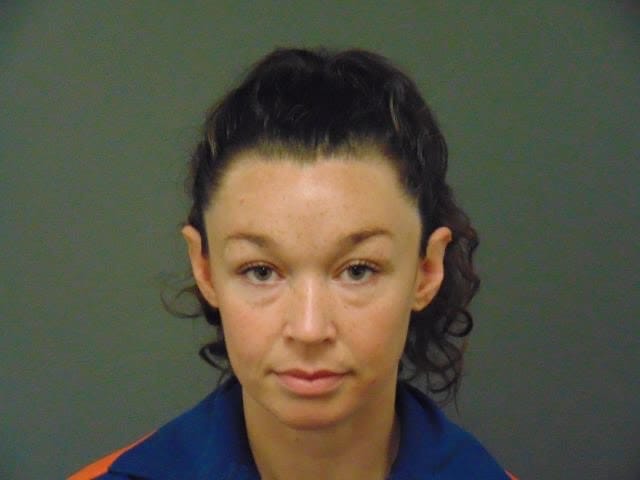
Tatiana Elena Antasia Fusari: When Survival Is Misnamed as a Crime
Domestic violence is real. Fear is real. And the damage it leaves behind does not end when the bruises fade—it lives in the nervous system, in the silence, and in the impossible choices survivors are forced to make.
Tatiana Elena Antasia Fusari, National Lifer President, Chapter 1014, Women of Huron Valley, knows this reality not as theory, but as lived experience.
For years, Tatiana survived unspeakable violence behind closed doors—violence designed to isolate, control, and break her will. She lived in a constant state of fear, cut off from family and friends, hunted when she tried to escape, and conditioned to believe that survival meant staying still. Her body endured trauma; her mind learned to operate under terror. This is what coercive control looks like.
When children are present in abusive homes, survivors often become shields. Tatiana absorbed the harm so her children would not. That instinct—to protect at all costs—is not criminal. It is maternal. It is human.
And yet, tragedy struck. A baby died.
That truth cannot be softened or ignored. A child’s death is devastating and deserves mourning. But tragedy is not the same as intent. Fear is not the same as guilt. Being beaten into physical and emotional paralysis is not a crime.
Tatiana did not harm a child. She is not a monster. She is a woman who was terrorized, exhausted, and trapped in a system that failed to protect her—then punished her for surviving it.
The question should never have been “Why didn’t she leave?”
The real questions are:
Why was the violence allowed to continue?
Why was her fear dismissed?
Why do we criminalize survivors instead of confronting abuse?
Today, Tatiana Elena Antasia Fusari stands not as a symbol of pity, but as a leader. As National Lifer President of Chapter 1014 at Women of Huron Valley, she advocates for justice, accountability, and truth for those wrongfully condemned by systems that misunderstand trauma.
Her story reminds us of a hard reality: when domestic violence is ignored, everyone pays the price—especially children. If we want to prevent these tragedies, we must stop blaming survivors and start dismantling the violence that cages them.
Domestic violence is real. Fear is real. And Tatiana’s life is proof that survival should never be mistaken for a crime.
