

Written by Charles Stockstill CG
They called it a raid. I call it a reckoning.
On July 11, 2025, ICE agents stormed Glass House Farms in Ventura County, California. According to the United Farm Workers (UFW), approximately 200 people were detained, including at least 10 minors. Tear gas and rubber bullets were deployed. Protesters clashed with federal agents. A 57-year-old worker, Jaime Alanís García, reportedly fell from a rafter while trying to escape—and died.
This isn’t the first time someone has died for weed. But it should be the last time we pretend it’s not our fault.
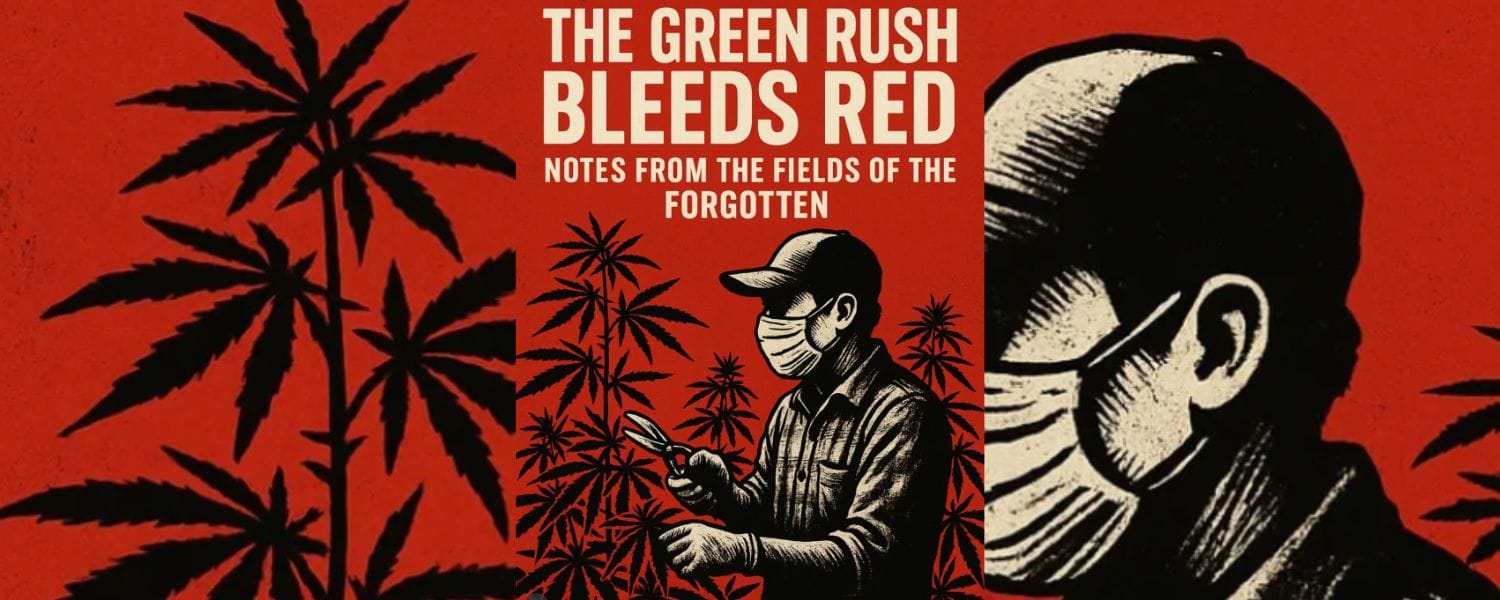
Because this industry is built on labor nobody wants to talk about. Workers paid in sandwich bags. Trimmers sleeping under tables. Undocumented people told to shut up and clip or go home empty-handed. And when the feds kick the doors down, it’s not the CEOs who get dragged out—it’s the people holding scissors.
Don’t act surprised. California’s hills have run red for decades. Go look up Murder Mountain if you think this is new. We just dressed the same system up in compliance language and glossy packaging.
Legalization didn’t fix the labor problem. It privatized it.
I’ve seen brands raise millions while their workers live in motels and work without breaks. I’ve watched people get ghosted for their pay. I’ve heard stories I wouldn’t tell out loud, because the victims still have to survive this business.
This raid didn’t happen in a vacuum. It happened in a legal market that has long relied on silent, undocumented labor. It happened in a state that talks equity and environmentalism while turning a blind eye to human exploitation. And it happened under the watch of an industry that keeps getting richer while the people who make the product remain invisible.
If you're in this business and you didn’t know, now you do. What matters is what you do next.
If you smoke weed, grow weed, sell weed, or profit from it in any way, you better start asking who’s bleeding to keep it in your hands.
Because if this community can’t stand up for its own workers, it’s not a culture. It’s just another commodity.
We didn’t come this far just to replace prohibition with privatized suffering. If the culture won’t protect its workers, it’s not a movement—it’s a machine.
