

We have to tell the truth about women in prison—in totality.
In America, women are harmed in ways the justice system still refuses to fully name: through violence before incarceration, through punishment during incarceration, and through a legal culture that too often treats women as less believable, less deserving of mercy, and harder to vindicate when the truth finally surfaces.
Wrongful conviction is not gender-neutral. According to the National Registry of Exonerations, women make up just under 9% of known exonerees—a figure that reflects not an absence of wrongful convictions, but how rarely women’s cases are revisited or believed. When women are exonerated, the patterns are telling: the Innocence Project has found that most exonerated women were convicted of crimes that never happened at all. Suspicion, stereotypes, and “caretaker blame” routinely replace evidence.
And even when courts finally admit the truth, the damage is irreversible—years lost, children separated, bodies broken, mental health deteriorated, and families left carrying grief with no pathway to repair.
Prison Was Never Designed for Women—and It Shows
We say “corrections,” but we practice containment.

We say “rehabilitation,” but we fund punishment. We talk about mental health and healing, but women’s prisons reflect degradation, neglect, and exposure to hazards no human being should be forced to breathe, sleep in, or work around.
In Michigan, Women’s Huron Valley Correctional Facility (WHV) has become a symbol of this national failure.
A federal judge has described conditions so severe—including mold infestation and ventilation failures—that they may violate constitutional standards. In early 2026, the Washtenaw County Board of Commissioners issued a formal resolution raising alarm over toxic mold, linked illnesses, and systemic failures to respond, specifically highlighting Krystal Clark and the serious health consequences she reports.
This is not only a “prisoner issue.”
It is a public health crisis.
Staff, nurses, counselors, officers, and maintenance workers breathe the same contaminated air every day. They walk the same floors. They face the same long-term health risks. And yet the question remains unanswered:
Where are the unions? Where is the protection for the workers placed in the very same hazardous conditions?
People Have Died. Families Have Begged. The System Kept the Cage Closed.
The story of Theresa Dunlap should haunt the conscience of Michigan. She was a woman with cancer whose supporters fought for medical release. She reportedly had mold in her medical port. She begged for help. She was not released. She died in custody
She is not the only one.
The list of casualties—physical, emotional, and spiritual—is longer than most people can bear to acknowledge. But we must sit with it, because there is no correction without humanity. If a facility cannot meet basic human standards, it cannot claim moral authority over human beings.
America’s Detention Centers Are the Mirror
This crisis extends far beyond Michigan. Across the country, prisons and detention centers increasingly resemble warehousing systems, where human beings are managed like liabilities instead of lives.
At Rikers Island, one of the largest county jail systems in the nation, people have been forgotten—left in isolation, neglect, and despair. Rikers has one of the highest death rates of any jail in the United States. For years, Glenn E. Martin has led the Close Rikers campaign, demanding dignity, accountability, and an end to human warehousing. Advocates continue to wait for decisive action from Governor Kathy Hochul and New York’s new mayor, Zohran Mamdani.
In Mississippi, incarcerated people are currently on hunger strike in protest of inhumane conditions. In ICE detention centers, people protest medical neglect and prolonged isolation. In private prisons and state-sanctioned facilities nationwide, people are subjected to conditions that would violate standards set for animals.
We have the SPCA.We have the Humane Society.Yet human beings remain locked in cages with mold, filth, neglect, and indifference.
This is a punitive country that speaks the language of mental health while practicing abandonment.
Oversight Must Belong to the People
Departments of Corrections cannot be allowed to oversee themselves. Oversight must be civilian, independent, and accountable to the people—not to political convenience or institutional self-preservation.
This is not about one governor, one legislature, or one administrator. It is about a fractured system that prioritizes profit over people and punishment over repair.
And yet—there is resistance.
Across the country, organizations are standing in the gap:
- Michigan Liberation and Nicholas Buckingham, leading healing and restoration rooted in lived experience
- Dream.org, with leaders like Sean Wilson and Brittany Lee, advancing policy grounded in empathy and evidence
- TimeDone for Advocacy, Freedom Agenda, and the Fire Collective in New Orleans
- Humanity for Prisoners, FORC, Detroit Action, Michigan United, WCJA NY, Sharon White Harrigan, A Beautiful Heart Ministries (Clover Perez), Community Interventions (Ucedrah Osby), Safe and Just MI. Michigan Roundtable Dr Yusef Shakur and many others refusing to let people disappear
They remind us that while systems may be broken, people are not.
Day of Empathy Is Coming—and Michigan Must Stand Up
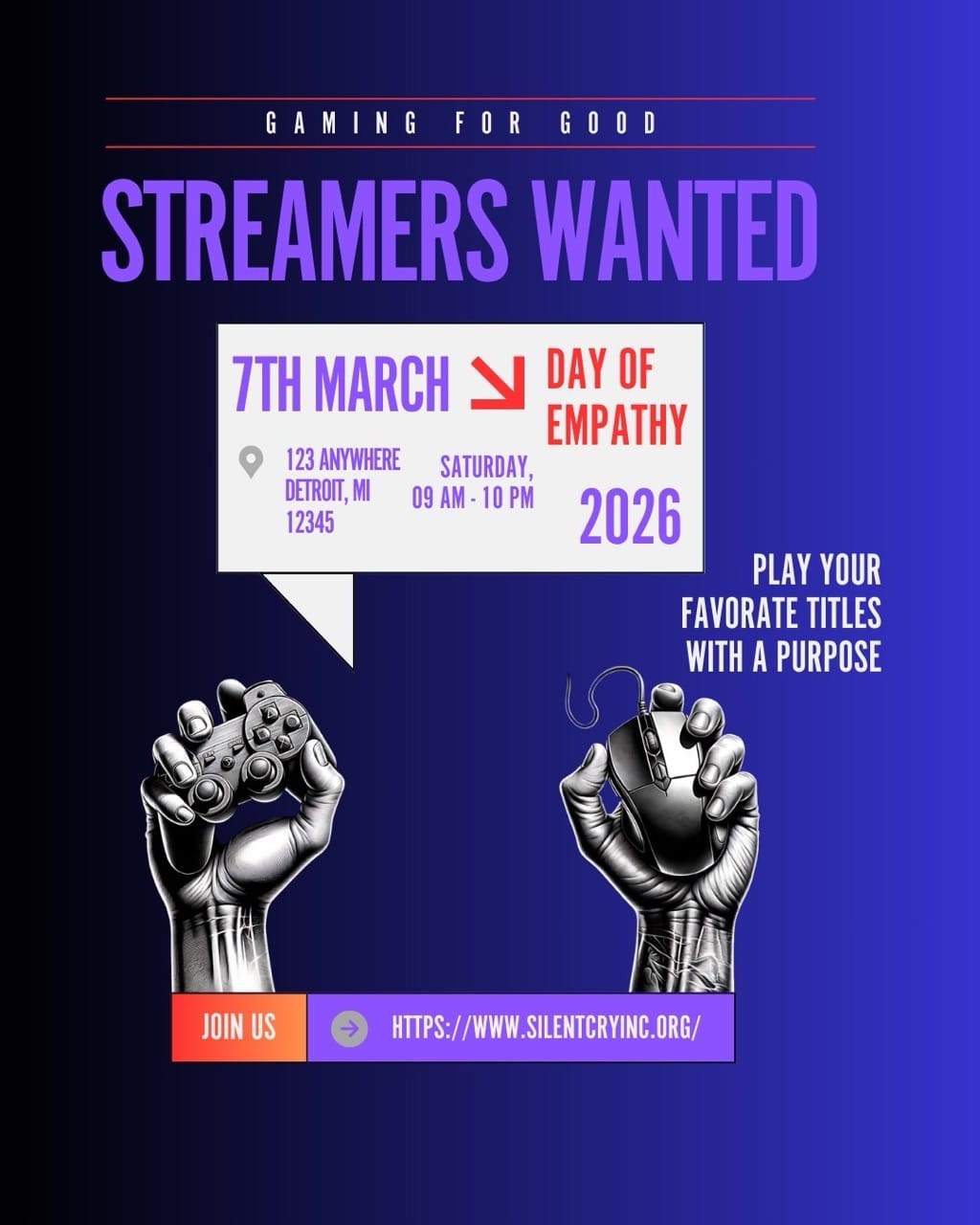
Day of Empathy, created nationally by Dream.org, is not just a date. It is a demand—to build civic power rooted in humanity.
Silent Cry Inc. will once again lead the State of Michigan, and this year we are asking for support like never before. These are perilous times, and silence is not neutral.
We need sponsors.We need partners. We need people willing to stand for something.
Because empathy is not weakness. Empathy is accountability. Empathy is the bridge to justice. And without justice, none of us are truly free.
https://drive.google.com/file/d/1d_bnC1kiXuetr8JJ-b-1Ap9-gEE88F9t/view?usp=sharing
Link for Sponsorship Deck.
Empathy in a New Climate: Who Gets a Seat at the Table
When we speak of empathy in this new political and social climate, we must be honest about what empathy truly requires. It is not symbolic language or invitation-only conversations. Real empathy demands investment, access, and the centering of those who are doing the work on the ground.
Funders play a critical role in shaping this ecosystem. Too often, funding models unintentionally exclude grassroots leaders, mutual aid organizers, and justice-impacted communities by privileging proximity to power over proximity to need. Empathy work cannot thrive in closed rooms. Mutual aid, by design, is collective, inclusive, and rooted in lived experience—not exclusivity.
To ensure longevity and accountability in this work, Silent Cry Inc. has added a 504 arm to strengthen our infrastructure and safeguard a permanent seat at the table for voices that reflect the full spectrum of our communities. This is about sustainability, representation, and ensuring that empathy is not seasonal—but structural.
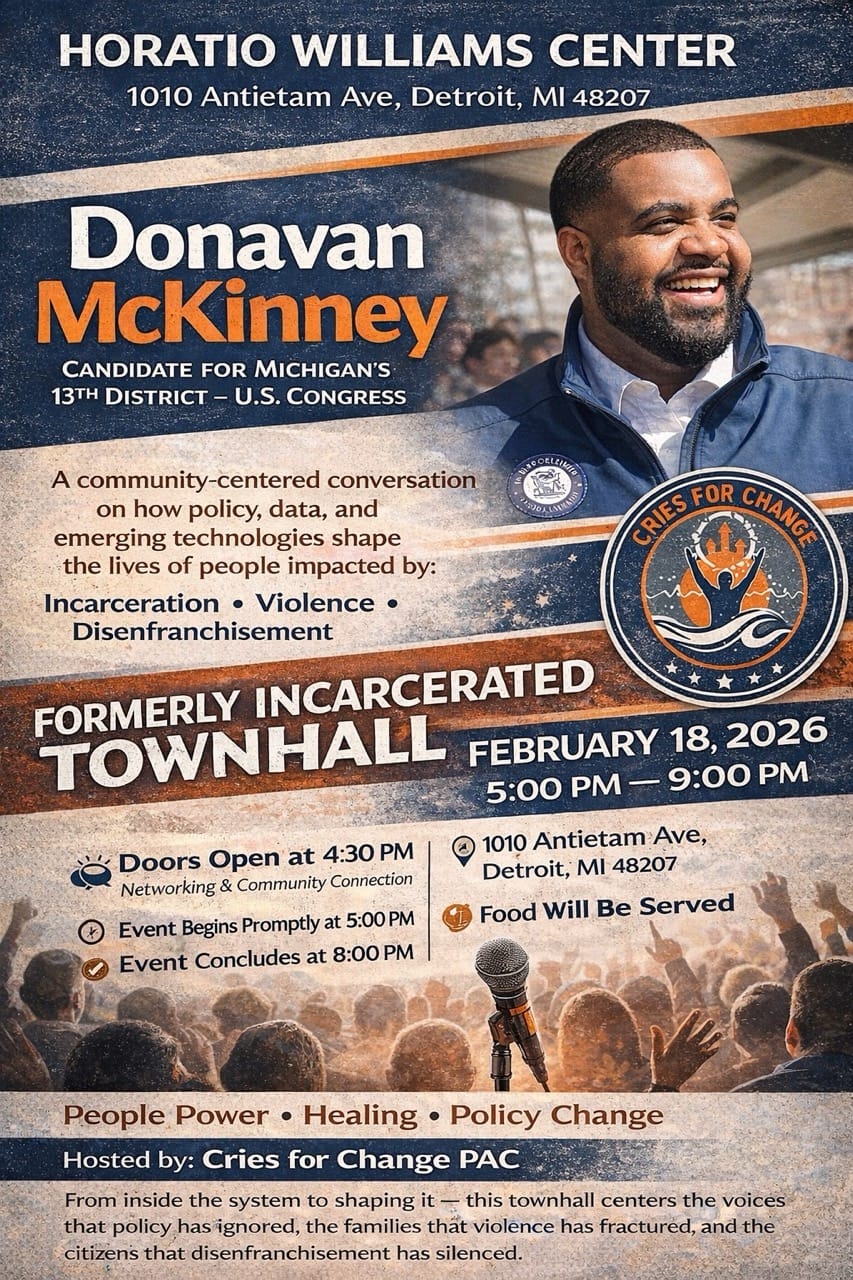
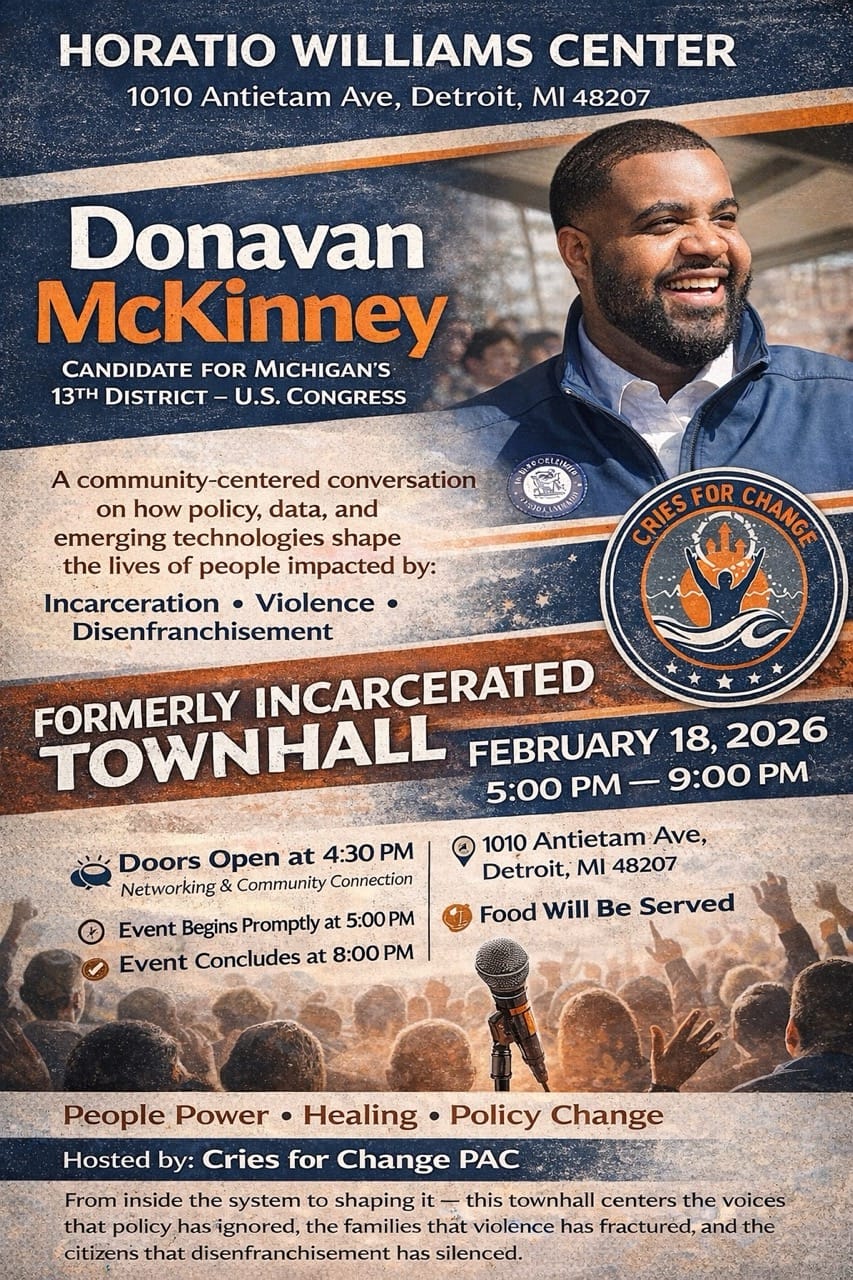
In parallel, Cries for Change PAC will continue to support candidates and campaigns willing to center these conversations authentically. Our goal is not just endorsement, but engagement—asking hard questions about who policies serve and who they leave behind.
We are also committed to addressing the digital divide. Artificial intelligence and emerging technologies are shaping the future, and political leadership must speak directly to how marginalized communities will remain relevant, protected, and empowered in this shift. Technology without equity widens harm. Research and data must be used responsibly—telling the truth of our communities while driving measurable progress.
This work also requires confronting longevity and quality of life: what it means to live full, healthy lives in communities that have been historically marginalized. Environmental injustice, systemic racism, medical neglect, and inequitable access to care are not separate issues—they are deeply connected.
We must ask candidates where they stand on:
- Criminal justice reform
- Universal income as a stabilizing and preventive system
- Community-centered solutions that move beyond punishment and scarcity
Empathy, when practiced fully, becomes policy. It becomes funding priorities. It becomes data-informed solutions rooted in humanity. And most importantly, it becomes a commitment to build systems that do not just acknowledge harm—but actively repair it.
