


Deepak Anand on Global Cannabis: Canada’s Lessons, India’s Potential, and a Market Built to Last
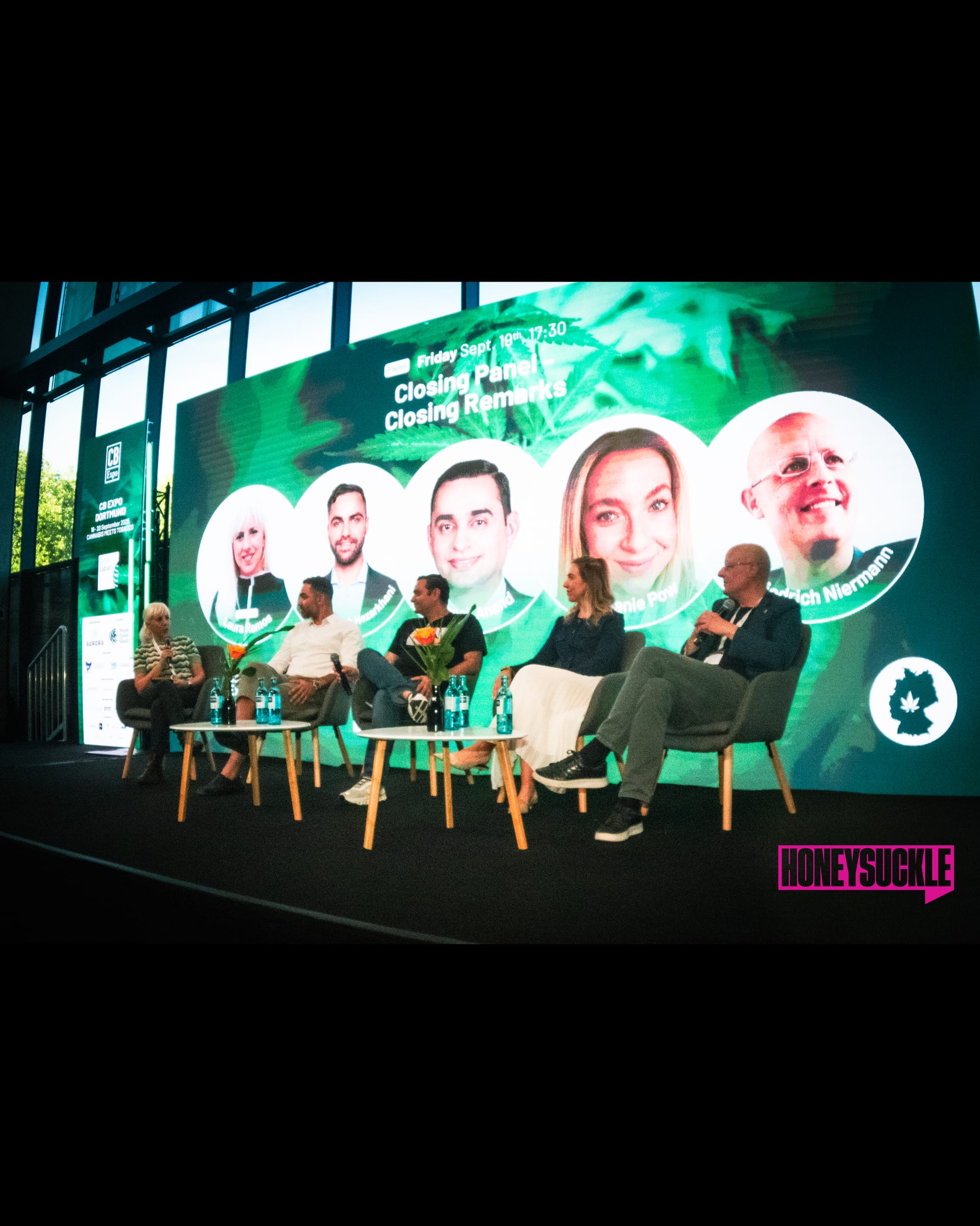
At Düsseldorf and Dortmund (Expopharm and Intertabac), amid the polished halls of Europe’s largest intersection for pharmaceutical, tobacco and plants, Honeysuckle caught up with Deepak Anand — one of the most recognized voices in global cannabis strategy. A longtime industry consultant, Anand has built his career advising companies and governments on international expansion/ market entry, regulatory frameworks, and market intelligence. From Canada’s pioneering days of legalization to Europe’s emerging medical systems, he’s witnessed firsthand the evolving landscape of cannabis worldwide.
From Pharma Skeptic to Cannabis Advocate
Anand didn’t begin in cannabis. In fact, during his early career in the pharmaceutical sector, he had his concerns with the plant. “I came to cannabis really from a therapeutic pharmaceutical approach. I used to be in the pharmaceutical industry which historically has been very opposed to cannabis” he said. But decades later, working in the industry in Canada to move toward legalization cracked open his perspective.
“When I started actually learning more about cannabis it really opened my eyes in terms of the stigma and some of the challenges that cannabis has for me and that had me really freshening and discovering what this plant was all about and the benefits for people globally. And then I decided to jump both feet in and started to fight for patient access both in Canada and then eventually in Europe and other markets.”
What began as skepticism became a mission: bridging the rigor of pharma with the lived truths of cannabis patients.
Why Expopharm Matters
Expopharm might look like pharma’s fortress, but Anand sees it as a proving ground. “Expo Pharm is a really large pharmaceutical conference, primarily targeted at pharmacists and pharmacists are at the center of medical cannabis in Germany,” he explained. “To date, opportunities for companies to be able to engage with their immediate clients who are pharmacists themselves and even patients. And it’s great to be able to actually hear from pharmacists on what they’re seeing and what patients are asking for in the market. It’s a great show to be able to understand where the market is, what’s moving, what’s not moving, what are some immediate challenges.”
In Germany, the pharmacist isn’t just a dispenser - they are the gatekeeper of access. For Anand, listening here is essential.
The Four Faces of Cannabis
“Well, I think that there's 4 broad classifications of Cannabis- there’s Pharmaceutical cannabis, Medical cannabis, Consumer Health & Wellness and then there's a Recreational component,” he said. “So I really think we are seeing each of these four categories being built out.”
Medical, pharmaceutical, wellness & recreational,: four lanes that overlap but don’t collapse into one. Anand’s insistence is clear cannabis is not monolithic, and regulation must reflect that.
Enter the Giants
Of course, no conversation about the future skips the giants circling the space. Anand didn’t hesitate: “We’re sitting here today, inside one of Europe’s largest tobacco shows, one of the largest tobacco shows in the world. And we’re now starting to see big tobacco companies very much look at the segment because if you look at their legacy business, which is cigarettes, that is a dying if not dead business currently.”
He continued, “Cannabis, there’s a lot of parallels actually with tobacco and you’re starting to see companies like that jump in… At the end of this cycle now I’m seeing big tobacco companies are actually wanting to come at this from a safety and an efficacy lens. We put products into a pre joint. We don’t know what that does to you in terms of your body. Yes, cannabis is generally safe, but inhaling a substance or burning a substance may have its side effects. And so when companies like that come into [the] sector, they bring that vision and they’re like, let’s do the research. Let’s actually understand, let’s pay for it and understand what it does to you. And they bring that and capital, quite frankly, which the cannabis industry [is] currently quite star[v]ed [for].”
It’s a paradox Anand doesn’t ignore: the same corporations that sold the world on cigarettes are now looking to elevate cannabis. The question, as always, is whether culture can survive the clash.
Banking, the U.S., and the Ripple Effect
On banking, Anand was crystal clear. “The US is at the epicenter of all things banking. And so I think when the US, hopefully things that are being proposed in the US once they do come through to safe banking, I think that really will have a ripple effect outside of the United States because the US dollar [is] the reserve currency of the world, banking flows through some way in the US so you’re not on an international level immune to that.”
Until then, the capital bottleneck will keep squeezing companies far beyond American borders.
India Rising
When Anand spoke of India, his tone shifted from analytical to personal. “There’s a lot of stigma in India around cannabis. So certainly what we are seeing is there is a bunch of stigma, but there are a lot of land race strains there. It really depends on the product and I think that on the one hand you are certain to witness a lot of backlash against narcotic drugs and cannabis is unfortunately lumped into that same category. So you do see quite a bit of enforcement. But then there is actually a segment of cannabis called Bhang, which is completely legal in India because it’s been used for centuries by Sandhu’s (monks) who for decades have been accessing it legally. So you see both of those interesting things play out.”
He added, “India will be the largest market [for] cannabis. It is starting to move in that direction. They are close to about maybe 12 to 14 companies that are actually cultivating cannabis legally in India now with 3 states fully embracing it from a business opportunity standpoint. So you will start to see that pick up… I was born and raised there, so I can’t wait for cannabis to be fully legalized in India and be able to help the market [for] cannabis.”
For Anand, India isn’t just a market; it’s a cultural homecoming for a plant woven into spiritual and social life for centuries.
Don’t Repeat Canada’s Mistakes
If there was one refrain Anand returned to, it was this: don’t repeat history. “Our federal government [in Canada] legalized [cannabis and] said that this is a process. Cannabis legalization is [a] process. It’s not an event, it’s not something that you do and it’s done… Because so much is evolving around cannabis, I think people and markets, people [need to] learn from each other. And one thing that I don’t see happening is you see Germany making the exact same mistakes that we made in Canada, and the UK and so on, right? It’s like when I come here [it] reminds me, it’s like déjà vu, 2017, 2018. A lot of money was raised, a lot of money was blown. The industry’s making the same mistakes, the governments are making the same mistakes. It’s like we’ve been there in North America… California, Canada are examples of what worked for sure, but also what didn’t work. And let’s learn from that and try and not make the same mistake.”
Hope, Still
Despite the warnings, Anand’s belief in cannabis’s future was unwavering. “Patients on a daily basis are dealing with a lot of pain, anxiety, all sorts of [conditions] that they may be suffering from. And I think really what is driving them through pharmacies and pharmacists is just being able to access a product that actually genuinely works for their condition with very few side effects,” he said.
“The goal is quite similar… getting people access to a medicine or product that they actually enjoy. And that is alcohol, tobacco, what have you. Patients want medicine that works. Consumers want products that they love. Access is what drives this industry forward.”
For more visit Deepek on Linkedin
