

The New Frontier: Inside the Most Fascinating Developments in Cannabis Science
Right now, some of the most fascinating developments in cannabis science are unfolding at the intersection of genetics, biotechnology, and previously unknown cannabinoids. Researchers are beginning to understand the plant not simply as an agricultural crop, but as a complex biochemical system—one that may function more like a programmable pharmaceutical platform than a traditional botanical.
At the center of this shift is a growing body of research into cannabinoids beyond THC and CBD. Scientists are studying compounds such as CBG, CBC, CBN, and THCV, exploring how they interact with the human body beyond the classic CB1 and CB2 receptors of the endocannabinoid system. Early findings suggest these cannabinoids may act across multiple biological pathways, potentially opening the door to a new generation of cannabinoid-based medicines.
The deeper researchers look, the clearer it becomes: cannabis may contain a vast pharmacological landscape that has only begun to be mapped. In many ways, scientists are discovering an entire library of biologically active compounds hidden within the plant.
For decades, cannabis culture revolved around a familiar language—strains, potency, flavor, and THC percentages. But as legalization expands and research barriers fall, scientists are examining the plant with the same tools used in pharmaceutical and biotechnology research. What they are finding is changing how cannabis is understood.
The Hidden Chemistry of the Cannabis Plant
Most consumers are familiar with the two best-known cannabinoids: THC, the compound responsible for cannabis’ psychoactive effects, and CBD, widely used for its therapeutic potential. Yet these two molecules represent only a small part of the plant’s chemical universe.
Scientists have now identified more than 100 cannabinoids, along with hundreds of terpenes and flavonoids that interact with the human body’s endocannabinoid system. Many of these compounds occur naturally in extremely small quantities, which historically made them difficult to study.
That is beginning to change.
Researchers are increasingly focusing on what are known as minor cannabinoids—molecules such as CBG (cannabigerol), CBC (cannabichromene), CBN (cannabinol), and THCV (tetrahydrocannabivarin). While present in only trace amounts in most cannabis plants, early studies suggest these compounds may offer distinct medical benefits.
CBG, for example, is being explored for its potential anti-inflammatory and neuroprotective properties. THCV has attracted attention for its possible role in appetite regulation and metabolic disorders. CBC is being studied for its effects on mood and pain response.
For scientists, the discovery of these molecules feels less like the refinement of an existing field and more like the opening of a new one.
In many ways, cannabis is beginning to resemble a pharmacological library hidden within a single plant.
Brewing Cannabinoids Without the Plant
One of the most unexpected breakthroughs in cannabis science isn’t happening in greenhouses or grow rooms. It’s happening in laboratories.
Through a process known as synthetic biology, scientists have learned how to insert cannabis genes into microorganisms like yeast. These engineered microbes can then convert simple sugars into cannabinoids during fermentation, much like the process used to produce insulin or certain vaccines.
Instead of cultivating acres of cannabis, researchers can produce cannabinoids in stainless-steel bioreactors.
This approach offers several advantages. It allows scientists to manufacture rare cannabinoids that plants produce only in microscopic amounts. It also creates pharmaceutical-grade compounds with consistent purity and potency, something that can be challenging in traditional cultivation.
Perhaps most intriguingly, synthetic biology could eventually allow researchers to create entirely new cannabinoids that do not exist naturally in the plant.
For pharmaceutical companies and biotech startups, this possibility has opened the door to a completely new category of cannabinoid-based medicines.
Decoding the Cannabis Genome
While biotechnology is expanding how cannabinoids can be produced, another major scientific milestone has been unfolding at the genetic level.
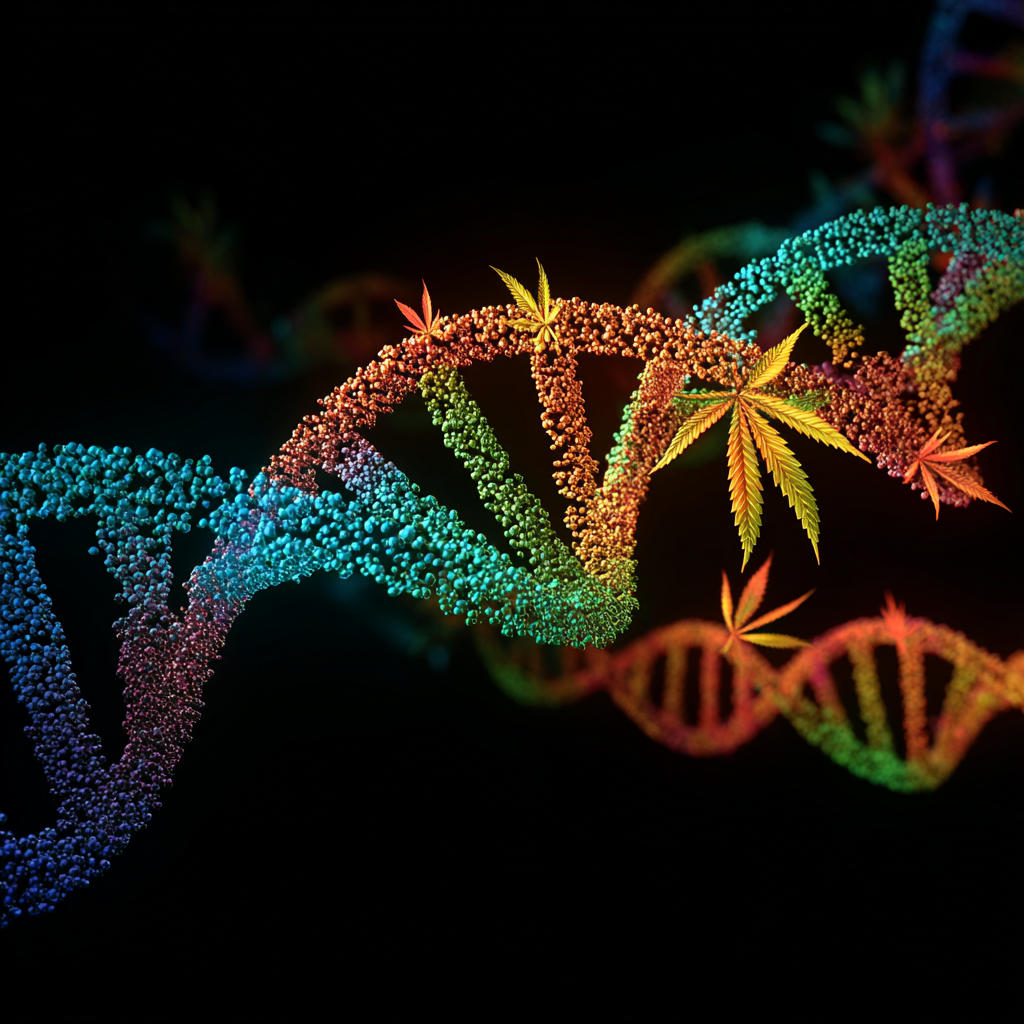
Over the past several years, researchers have made enormous progress in mapping the cannabis genome, the complete set of genetic instructions that determine how the plant grows and what compounds it produces.
This work is helping scientists understand how different cultivars express unique combinations of cannabinoids and terpenes. It also explains why certain strains produce intense citrus aromas, while others lean toward gas, fruit, or earthy spice.
With modern gene-editing tools such as CRISPR, researchers can now theoretically adjust these genetic pathways.
In practical terms, this could allow breeders to develop cannabis varieties that are precisely tailored to produce specific compounds. Plants could be engineered to generate higher levels of rare cannabinoids, unique terpene combinations, or improved resistance to pests and disease.
For cultivators, this could mean more stable genetics and more predictable harvests. For medical researchers, it could mean plants designed to produce highly targeted therapeutic compounds.
From Counterculture to Biotechnology
The cannabis plant has always existed at the intersection of culture and science. For decades, growers and breeders experimented through intuition and experience, selecting plants based on flavor, potency, and yield. Today, those traditional practices are increasingly being paired with advanced laboratory techniques.
The result is a new phase in the evolution of cannabis—one where cultivation, genetics, and biotechnology are converging.
For the broader industry, this shift signals something important: cannabis is no longer simply an agricultural product. It is becoming a platform for scientific discovery.
And while the global cannabis market often focuses on branding, retail expansion, and regulatory battles, the real long-term transformation may be happening behind the scenes in research labs.
Scientists are only beginning to understand how cannabinoids interact with the human body, how the plant’s chemistry evolved, and how its molecules might be harnessed for future therapies.
If the past decade was about legalization and normalization, the next may be about something deeper: unlocking the full scientific potential of one of the most chemically complex plants on Earth.
For cannabis science, the frontier is only just beginning.
