
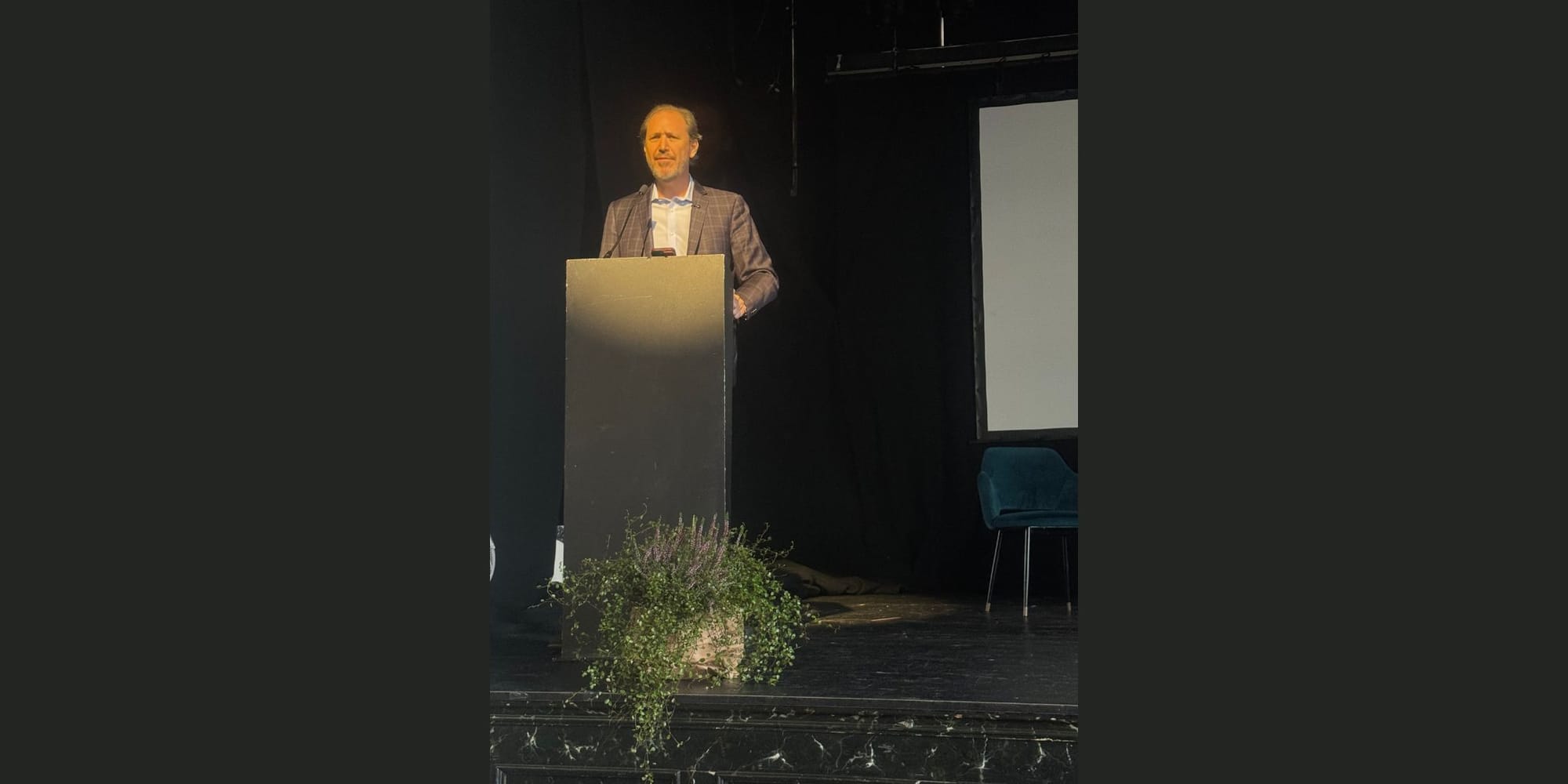

Bob Hoban at Hemp4Iceland: Finding the Rhythm Behind Global Cannabis Reform
When veteran cannabis attorney Bob Hoban took the stage at Hemp4Iceland, he opened with a phrase that captured the contradictions of global policy: “It depends.”
Across continents, the legal status of cannabis remains a patchwork of paradoxes. In some nations, adult-use is legal but medical programs lag behind. Elsewhere, CBD is restricted while THC finds pathways into regulated markets. “It’s a strange symmetry,” Hoban told the Reykjavík audience, “where the same plant means totally different things depending on which side of a border you’re standing.”
The Rhythm Behind Reform
Hoban argued that the driving force behind cannabis policy is always a nation’s “why.”
- For some, reform stems from economic opportunity.
- For others, it’s about criminal justice reform.
- Many focus on patient access—or a blend of all three.
Yet increasingly, he noted, two global priorities stand out: reducing illicit markets and shaping cultural change. Together, they’ve built momentum strong enough to spur the United Nations toward a more coherent global framework.
Three Phases of Regulation
Hoban outlined three inevitable phases that every country faces:
- Creating a Legal Framework – Defining who can grow, what can be cultivated, and how supply chains are structured. Without alignment, legality and regulation become a paradox.
- Eliminating Barriers to Market Entry – Governments may license farms and require GMP certification but fail to provide real pathways into markets. In some cases, illicit actors even infiltrate regulatory systems, stunting growth.
- Balancing Domestic and Export Markets – Sustainable success requires both. Export-only systems stagnate; domestic-only systems lack scale. “It’s like a bank that accepts deposits but doesn’t lend money,” Hoban quipped.
Lessons from Uruguay, Colombia, and the U.S.
Examples abound of mismatched frameworks:
- Uruguay legalized cannabis to address public health and security, but struggled to balance pharmaceutical dispensing with export.
- Colombia restricted flower exports for two years, forcing operators into costly oil production—benefiting a few entrenched players while stifling broader growth.
- The United States, despite flourishing state-legal markets, remains locked out of the global trade by federal prohibition. Meanwhile, hemp-derived THC beverages proliferate.
If U.S. federal rescheduling or descheduling occurs, Hoban cautioned, American genetics could disrupt international markets: “That Colombian flower might have a good price point, but it probably can’t compete with high-level California genetics.”
Iceland’s Opportunity
Turning to Iceland, Hoban highlighted its unique natural advantages—abundant geothermal and hydro power, pristine air, and clean water—that could position the nation as a hub for sustainable cultivation. Yet Iceland’s hemp framework remains incomplete, with restrictions on extracts and ambiguity around CBD and THCA.
With nearly **22% of Icelanders using cannabis regularly—almost double the global average—**Hoban urged policymakers to recognize reality: “The cannabis is here, it’s being sold already. You might as well regulate it and tax it. Not overtax it, but regulate it in a way that makes sense.”
He recommended starting with a broad medical framework, using “severe pain” as a qualifying condition—an approach proven effective elsewhere in Europe.
Rejecting Perfectionism
A key theme of Hoban’s talk was rejecting the chase for flawless policy. Too often, he argued, reform is delayed by attempts to design a perfect system. “Perfect doesn’t work,” he said. Instead, policymakers should focus on evolving existing markets into regulated ones, prioritizing safety and compliance.
A Global Industry in Motion
Hoban reminded the audience that cannabis already exists across five channels:
- Industrial (fiber, food, materials)
- Adult-use (regulated and hemp-derived THC)
- Medical (natural and pharmaceutical)
- Wellness (CBD, superfoods, cannabinoids)
- Illicit markets
Instead of ignoring these realities, regulators should design frameworks that reflect them.
Hoban praised the Icelandic cultivators he visited, calling the industry “small but growing” and full of “characters, dedication, and intelligence.” He urged attendees to use their expertise to shape a balanced system that serves both domestic needs and international opportunities.
“The rhythm of reform is messy,” Hoban concluded. “But progress comes when we stop chasing perfection and start creating systems that reflect the reality of how cannabis is already used, traded, and valued around the world.
