
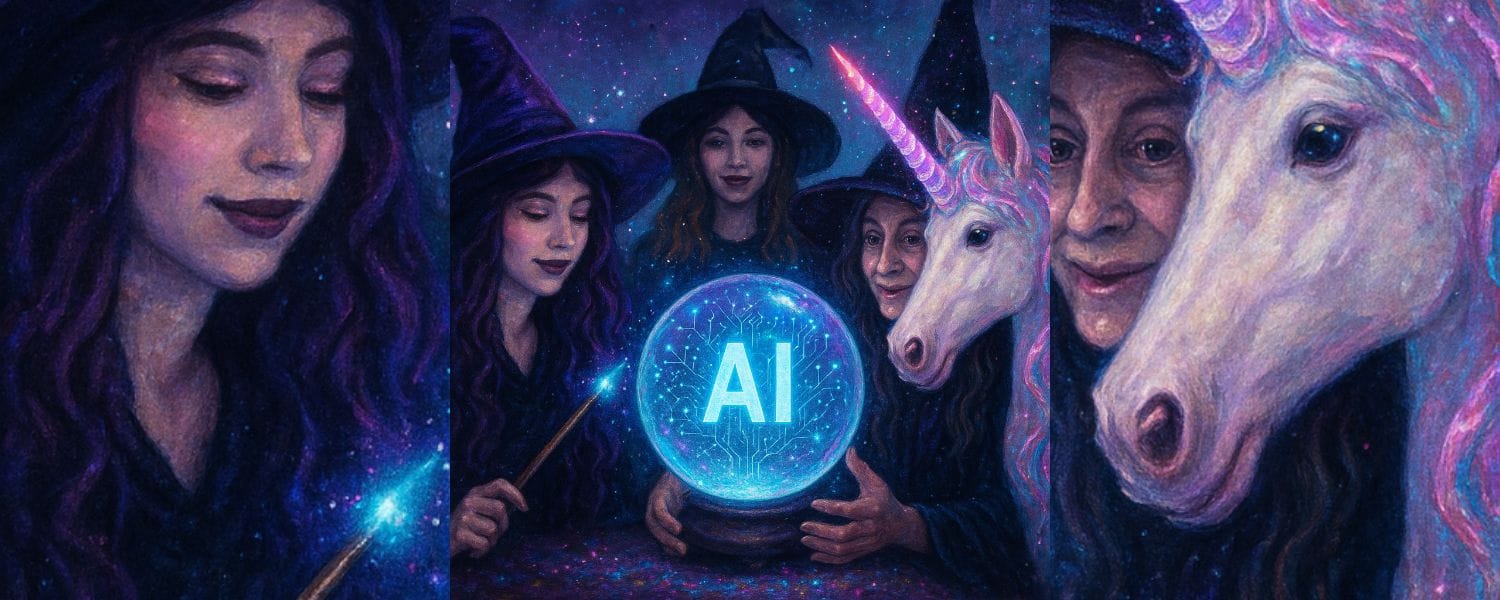

Hypermodern Mysticism: AI Tarot, Algorithmic Astrology, and the Digital Occult
The Algorithm as Oracle
Once upon a time, seekers shuffled cards or traced constellations in the night sky. Today, some are asking ChatGPT to pull their daily tarot, or running their birth charts through blockchain-backed astrology engines. The occult has always been about pattern recognition, and isn’t that exactly what AI does best?
“AI tarot” apps are spreading like digital grimoire pages, offering instant readings that blend ancient archetypes with algorithmic interpretation. Meanwhile, astrologers are experimenting with code—writing scripts that calculate transits in milliseconds and adding machine learning layers to predict cycles. The result: algorithmic astrology that feels both eerily precise and a little uncanny.
Why Mystics and Machines Belong Together
Tarot, astrology, numerology—all of these practices are built on symbolic systems, rule sets, and repeating motifs. Machine learning thrives on the same.
The witchy whisper here is that AI isn’t replacing human intuition, it’s amplifying it. Imagine a tarot deck that has read every journal entry about The Fool, every dissertation on The Tower, every forum post about reversed Cups. When it turns over a card, it pulls not just on your personal energy, but on a vast digital unconscious.
It’s not the death of mysticism. It’s a hypermodern remix.
The Rise of Mystic Tech
The trend is already bubbling:
- AI Tarot Decks → Neural networks generating entirely new symbolic decks, trained on thousands of illustrated archetypes.
- Algorithmic Astrology → Platforms mapping planetary alignments with predictive analytics, some even gamifying daily horoscopes.
- Occult Chatbots → Digital familiars trained on magical texts, offering guidance, affirmations, and spell recipes in real time.
What was once divined with cards, stars, and intuition is now cross-stitched with code. This is mystic tech—and it’s wildly shareable. Screenshots of AI-pulled spreads or “algorithm says Mercury retrograde will glitch my WiFi” circulate across TikTok and Instagram like modern-day talismans.
Witchcraft in the Age of AI
Skeptics roll their eyes—what can a machine know of spirit? But the occult has always evolved with tools of the age. Astrology once used clay tablets, later telescopes. Tarot’s evolution has included woodcuts, photography, even VR. Why not AI?
The digital cauldron is bubbling, and witches, seekers, and the simply curious are stirring it. Neural nets become oracles. Algorithms become star charts. Spellcraft meets system design.
The question isn’t whether AI can be mystical—it’s how we choose to enchant the machine.
Neural Magic and the Future
The real magic, perhaps, isn’t in the tech at all but in what it reveals about us. AI tarot doesn’t know your destiny—but it knows how humans have written about destiny for centuries. Algorithmic astrology can’t make the planets speak—but it can mirror back our hunger for cosmic narrative.
In this sense, neural magic is less prophecy than poetry: a way to see ourselves reflected in the circuitry, the stars, and the archetypes all at once.
Maybe the algorithm is just another deck of cards. Maybe the stars are just another dataset. Maybe the machine has always been part of the mystery.
